

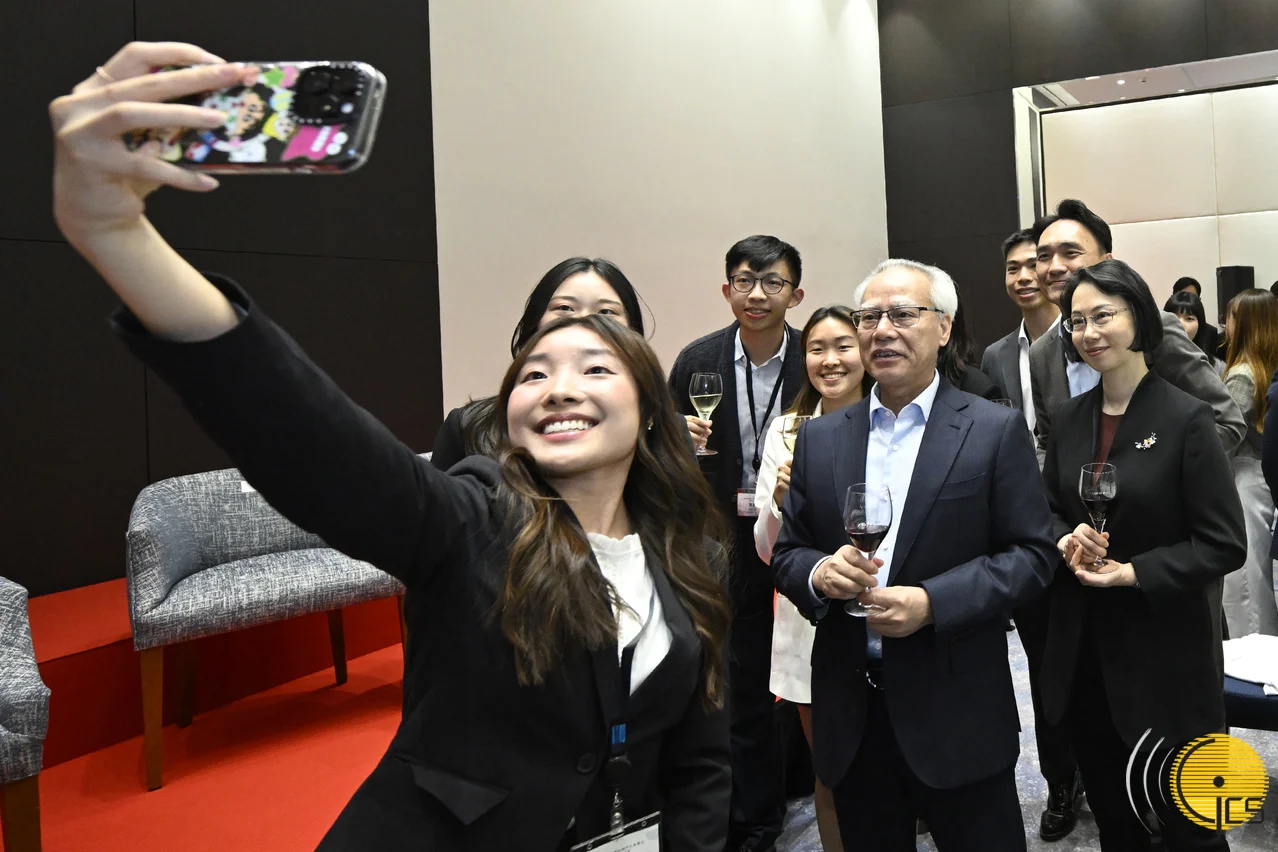
Macau hosted the 35th Meeting of the Association of Portuguese Language Universities (AULP) this week, bringing together academics, researchers and university leaders from Portuguese-speaking countries and regions.
The meeting comes at a particularly relevant moment for the Special Administrative Region, as economic diversification, integration with Hengqin and the development of a knowledge-based economy occupy a central place on the city’s development agenda.
More than an academic event, the AULP meeting provides an opportunity to reflect on one of Macau’s most important strategic assets: its ability to serve as a platform connecting China and the Portuguese-speaking world through education, scientific research and talent development.
For decades, Macau’s success was associated with its privileged location, international outlook and the dynamism of its tourism sector — characteristics that remain important, although the global context has changed. Today, competitiveness between cities and regions is increasingly measured by their ability to generate knowledge, attract talent, promote innovation and transform research into economic value. In this context, universities play a decisive role.
Over recent years, Macau has built a higher education system whose scale and quality far exceed what might be expected from a region of just over 30 square kilometres.
The University of Macau, the Macau University of Science and Technology, the Macao Polytechnic University, the City University of Macau and the Macao University of Tourism attract students and researchers from different continents to scientific projects of international relevance.
The growth of these institutions represents not only an investment in education, but also a strategic commitment to developing human capital, which is essential for any economy seeking to grow through innovation and technology.
China’s national strategy assigns increasing importance to science, research and advanced training. Chinese modernisation requires not only infrastructure, investment and industrial capacity, but also knowledge, creativity and talent. In this context, Macau is well placed to play a complementary and distinctive role.
Integration also creates new opportunities to put this vision into practice. Macau offers an international environment, established universities and strong academic cooperation networks; Hengqin provides space for business incubation, technological experimentation and industrial development.
Together, the two jurisdictions can create a particularly promising model: scientific research in Macau, technological development in Hengqin and the application of results in emerging economic sectors.
This process is especially important for the industries included in the Region’s economic diversification strategy, namely traditional Chinese medicine, digital technologies, modern finance, healthcare, artificial intelligence and high value-added services.
But Macau’s greatest uniqueness may lie elsewhere: few cities in the world possess a comparable ability to build academic bridges between different cultural, linguistic and scientific systems. Over the decades, Macau’s universities have developed cooperation links with higher education institutions in Portugal, Brazil, Angola, Mozambique, Cabo Verde, Guinea-Bissau, São Tomé and Príncipe and Timor-Leste.
These cooperation networks extend far beyond student exchanges. They include joint research projects, advanced training programmes, international conferences and initiatives aimed at promoting the circulation of knowledge between China and Portuguese-speaking countries.
It is precisely in this context that the AULP Meeting assumes particular significance. Founded in 1986, the association brings together more than one hundred higher education institutions from across the Portuguese-speaking world and has played an important role in promoting international academic cooperation. The return of its annual meeting to Macau demonstrates that the city continues to be recognised as a natural meeting point between China and the Lusophone world.
At a time marked by global technological competition, digital transformation and the growing importance of innovation, university cooperation has acquired a strategic dimension. Universities are no longer merely places of teaching; they are now research centres, innovation platforms, engines of economic development and instruments of international diplomacy.
This reality offers Macau a unique opportunity to assert itself as a platform connecting markets through the circulation of knowledge, talent and innovation. Such a transformation represents a natural evolution of the role the city has played over the centuries.
The Portuguese language remains a distinctive advantage. In an increasingly interconnected world, the ability to communicate, conduct research and cooperate across different cultural spaces is a strategic asset. Macau’s universities are in a privileged position to maximise that advantage, helping to bring China and Portuguese-speaking countries closer through science, education and research.
By hosting the AULP Meeting, Macau sends a clear message about its future: economic diversification depends not only on developing new sectors of activity, but also on the ability to educate people, produce knowledge and foster innovation.
In the 21st century, the most influential cities are not necessarily the largest; they are those capable of transforming knowledge into development and cooperation into opportunity. Along this path, universities are one of the most important pillars of Macau’s future. In this context, the knowledge economy can become one of the most valuable bridges between China and the Portuguese-speaking world.
