

Europe is entering a process of investment in defense, reviving an old ideological debate about the arms race. Is the goal autonomy from the Atlantic Alliance; global power; or is it simply fear of large-scale conflict?
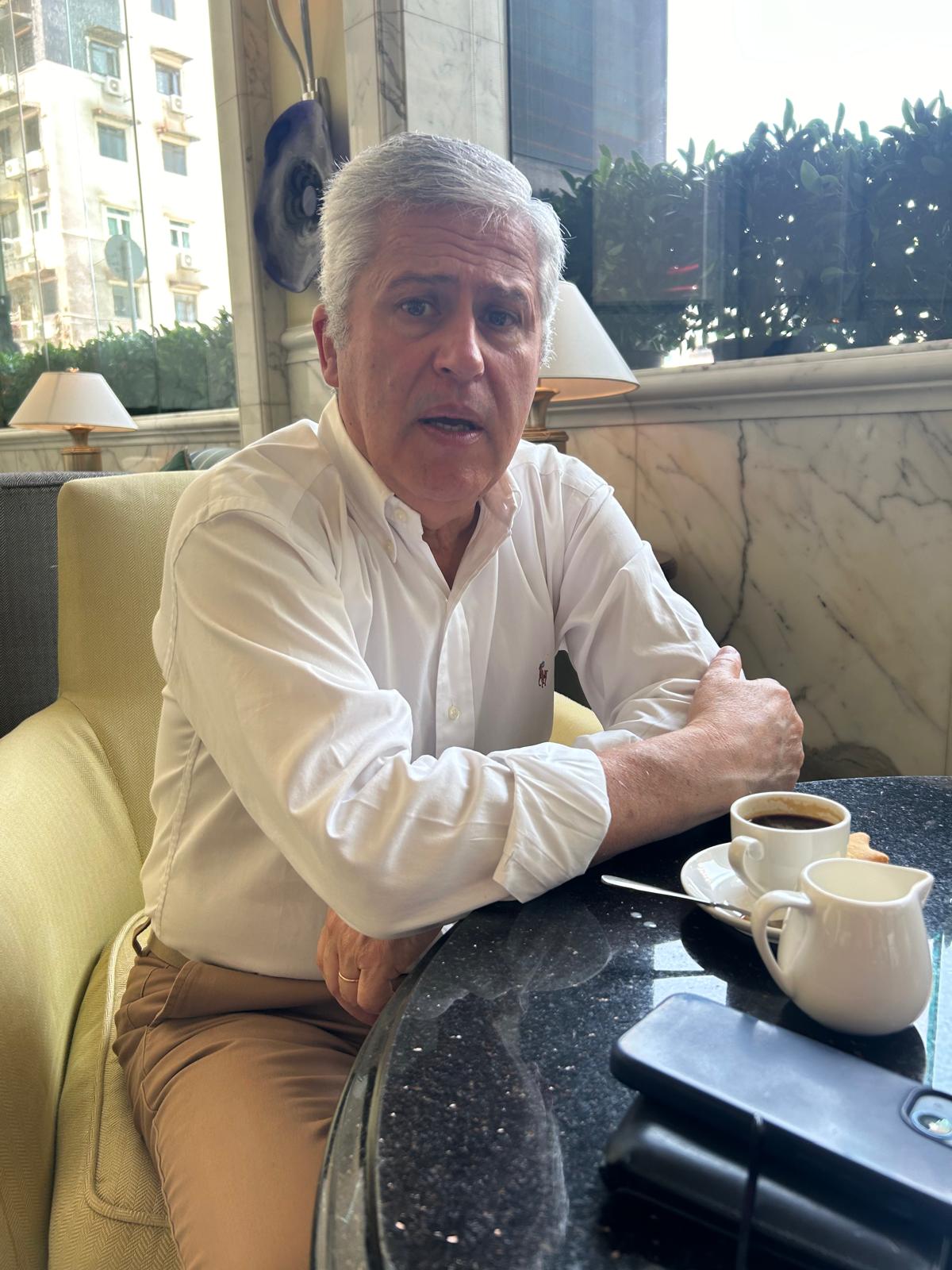
Severiano Teixeira – This new context is driven by two factors that compel Europe to build some autonomy in its security and defense — both of them new. First, after Russia’s invasion of Ukraine, there is a very clear notion that Europe is vulnerable on its Eastern flank; in other words, a territorial military threat and a classical type of war has returned to Europe — something unseen since World War II. The other novelty comes from the West, with the Trump Administration and its new foreign policy, which from the outset caused distrust in transatlantic relations. President Trump has a transactional view of international relations in general, and of alliances in particular; everything is reduced to numbers: you pay, I protect; you don’t pay, I don’t protect; you pay two, three, minus one… and alliances don’t work like that.
– Does it offend European culture?
S.T. – It’s not just European culture; that’s not the culture of the Atlantic Alliance. Article 5 states that an attack on one of its members is an attack on all, and they commit to assisting the one attacked. When we enter into that transactional logic, the trust that must exist among allies disappears; and this triggered a certain mistrust in Europe regarding the credibility of American support. The threat from the East and the crisis in transatlantic relations made Europe realize that it needs to build autonomy in its defense capabilities.
– An arms race, in popular language…
S.T. – Certain sectors of European public opinion see military investment as an arms race. I don’t see it that way; and neither does the majority of the population and political forces in Europe. The latest Eurobarometer, published very recently, shows that the top concern of Europeans is security and defense: 36% say that’s the priority. Next comes economic competitiveness, with 32%. At the moment, Europeans are more concerned with their security than with the economy.
– Does the war in Ukraine explain this?
S.T. – The context helps explain it somewhat; but it also varies, because countries closer to the Russian border have different levels of concern.
– Does military investment also open a new cycle of industrialization?
S.T. – We can’t think of defense as simply an expense; it can and should be an investment that generates economic growth, jobs, and above all — very importantly — innovation. If you look at what the Americans do with their defense investments, you’ll see that a large part of technological innovation comes from that. Without it, perhaps we wouldn’t have the internet, artificial intelligence… well, the computer itself was born during World War II due to its military applications. It’s important to understand that defense is an expense, but also an investment that can create wealth, employment, economic growth, and innovation.
– How is that done?
S.T. – Europeans face a number of challenges in this area. It all seems very complicated, dry, technical; but I’ll try to explain it in a way people can understand. There are three things Europeans need to do when it comes to defense. First, spend more, because since 1945 they’ve relied on the United States, which did most of the spending and guaranteed Europe’s security. During that time, Europeans could focus all their attention on economic reconstruction, development, and the European social model — which is expensive. They benefited from that, but now it’s over. Some say it’s 2% of GDP, 3%… it doesn’t matter. They need to invest more — all of them collectively, and each one individually.
– Will there be financial capacity for that?
S.T. – The Rearm Europe program, recently approved, relaxes the Stability Pact, so that countries can take on a bit more debt without excessive deficits — in other words, without exceeding the 3% threshold. It also allows part of the structural funds — like the ERDF — to be allocated to defense, not for weaponry, but for infrastructure and dual-use equipment. There may also eventually be the issuance of common eurobonds, as was done during COVID; and the European Investment Bank, which currently invests very little in defense, needs to be encouraged. That’s spending more. But it’s not enough to spend more; secondly, we must spend better. Europeans already spend a significant amount on defense, but in a scattered way across 27 countries, with no economies of scale. Resources aren’t optimized; everyone buys everything in different places. Joint projects and joint purchasing are needed to achieve economies of scale. Let me give an example to help people understand: during COVID, if each country had bought vaccines individually, the number of doses purchased would have been insufficient; and the international market price would have increased. Because the vaccines were bought jointly by the European Union, bargaining power was greater and the price was lower. It’s the same thing with defense.
– Spend more, better… and the third point?
S.T. – Spend more, better; and spend European. The Draghi report says that between 2022 and 2023, 76% of defense purchases in Europe were made from suppliers outside the European Union. Of those, 66% were from the United States. For that industrialization to happen, we need to buy from the European defense industrial base. That’s essentially what’s underway.
– Beyond weapons and the classic military industry, there’s energy security, cybersecurity, access to chips and rare minerals…
S.T. – Yes; security still has a military dimension, but it clearly has a non-military dimension too: food security, health, biological issues and pandemics, environmental security, cyber… a whole series of non-military aspects of security that must be taken into account.
– Are all these issues now in focus in the European debate?
S.T. – Of course; the ongoing reindustrialization project isn’t disconnected from defense, but it’s also not disconnected from digitalization, decarbonization… all of those non-military aspects that are absolutely fundamental.
– What effect will this have on the European Union’s relations with the rest of the world?
S.T. – The European Union must now consider its role in international relations with great care. Until now, it has always seen itself as a civil, normative power — leading by example, by rules, by values it believed everyone would consider superior, and therefore follow; what in international relations is called a kind of idealism. What we’ve seen is that other powers don’t follow that path; on the contrary, they’ve returned to a pragmatic, hard-nosed realism of power politics. That’s what’s happening in the United States, in China, and now quite evidently in Russia. Therefore, the European Union realized it could no longer maintain an identity as merely a civil power — it also needs a military dimension, which is fundamental for being respected internationally; even just to defend its own values.
– Will Europe end up choosing Trump, China, or neither?
S.T. – Right now, we don’t know; we’re in a period of rather accelerated transition in international relations. We know the interests and principles China has developed, because it is a rational, stable, and predictable international actor. But that is not the case with the U.S. today; the volatility of the Trump Administration’s positions leaves no room for forecasting. So we’re in a moment of uncertainty; and this has revived a debate that had already happened before: should the European Union align with the United States to counter China’s rise; align with China to counter American hegemony; or try to be a third way and capitalize on the clash between these two powers? It’s a debate in progress, and we don’t yet know how it will end; it depends a lot on what a Trump Administration would do.
– What is your personal prediction?
S.T.– It’s difficult to say right now, because we don’t have all the elements. It will depend a lot on how things evolve, on both sides. But I believe the moment we’re living in will certainly offer an opportunity for the European Union and China to have greater openness and cooperation in certain areas of international relations.
