

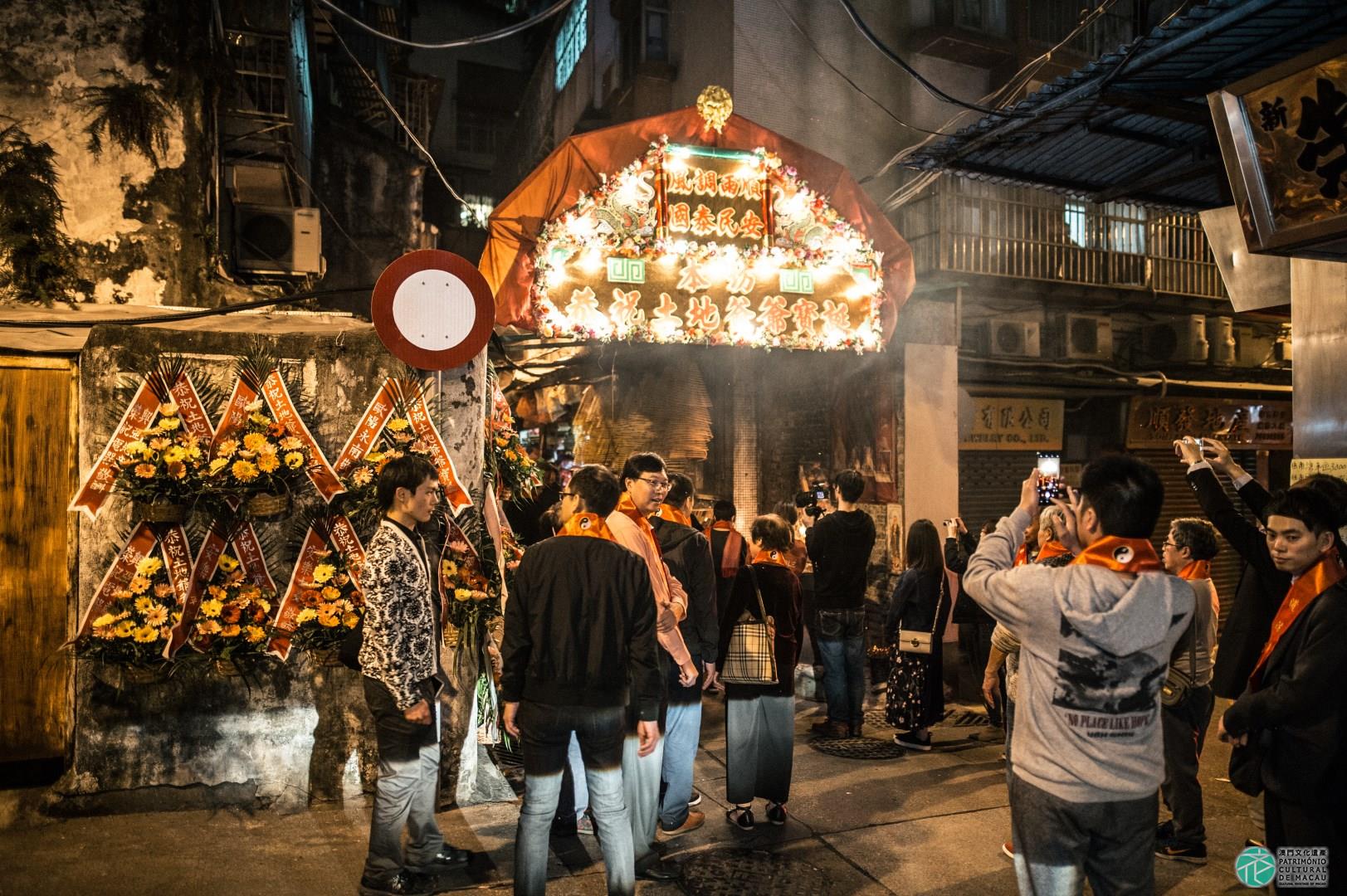
In Macau, there are several challenges in preserving intangible cultural heritage. For Portuguese Folk Dance, one of the items now up for public consultation, the biggest difficulty is attracting young people. “Other dances, like ballet, are very popular among parents, because there are competitions and shows, which parents and schools want to see. But in Macau, Portuguese Folk Dance is presented at promotional events, not competitions,” says Ana Maria Manhão Sou, president of the Portuguese Dances and Songs Association ‘Macau no Coração’.
In 2020, Portuguese Folk Dance was inscribed on Macau’s Inventory of Intangible Cultural Heritage, like many others now under public consultation. However, Ana says she didn’t feel much of a difference after that inscription, that is until the second half of this year. With the approach of the 25th anniversary of Macau’s handover to China, the folk dance picture has changed: “We have more shows and more students coming to collect data for their work”.
Ana hopes that after the inclusion of folk dance on the list, the public will have a different mentality and will be more interested in this intangible cultural heritage. However, she is already satisfied if the authorities recognize the culture of folk dancing and the dedication of the dancers.
Planning
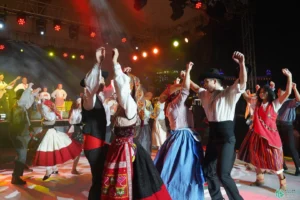
The Belief and Customs of Tou Tei was the first of the 12 to be inscribed on the Inventory in 2017, but it still faces a number of challenges. Under the influence of modern ideas, fewer and fewer people believe in traditional customs, points out Rhino Lam, a member of the Cultural Heritage Council. On the other hand, the management of modern cities does not give space to Tou Tei. “It shouldn’t disappear completely, but it’s not easy to stop its gradual decline.”
The Belief and Customs of Tou Tei Belief was inscribed on the “Fifth National List of Items Representative of China’s Intangible Cultural Heritage” in 2021. According to the text of the public consultation, there are around 10 temples in Macau dedicated exclusively to the Earth God and more than 160 small and large Tou Tei altars in the streets of Macau.
However, Rino Lam explains that these are mostly in old areas, with fewer places of worship in the city’s new districts. According to the urban planner, most of the religious sites are on private property. When there is a lack of private property in an area, as is the case in the new neighborhoods dedicated to public housing, there are fewer places of worship. This is because infrastructures dedicated to religion are not included in the Housing Institute’s tenders. “Officially, it’s not about social assistance, it’s about religion. Is this a loophole?”, Rhino Lam questions.
Rhino Lam recalls that the residents of Seac Pai Van even set up their own altars, “proving that there is demand”, but these were later removed by the Municipal Affairs Bureau. “The Zone A location is definitely more isolated and has a larger scale. There are even fewer private properties nearby, so the situation could be even more serious than in Seac Pai Van. It’s high time we started thinking about how to deal with the situation.”
Change to maintain
Some of the items on the “Intangible Cultural Heritage List” are recognized in both Macau and Hong Kong. However, the resources allocated to digitization and public access are not the same, thus affecting the results. The Faculty of Music at the Chinese University of Hong Kong has built an online database so that those interested can find out more about the Cantonese Opera and the Naamyam Narrative Songs.
There is also a religious group in Hong Kong that has created a website to promote the history of Taoist Ritual Music. On the other hand, it is not easy to find a centralized and relatively comprehensive database in Macau.
The Macau government is conserving intangible cultural heritage through the Cultural Heritage Safeguard Law and cultural activities to raise public awareness. According to Jason U, president of the Association for the Reinvention of Cultural Heritage Studies in Macao, a platform should be created that brings together the work of different organizations and heirs, thus facilitating access to and popularization of heritage.
She also believes that in-depth learning opportunities and platforms allow participants to better understand their own cultural heritage and the support for its promotion. “Apprentices also need to earn a living and support may be needed in this area so that they can work on heritage transmission with peace of mind.”
12 events under consultation
The 12 new events recommended for inscription on the “Intangible Cultural Heritage List” are: Tou Tei (“Earth God”) Belief and Customs, Dragon Dance, Lion Dance, Portuguese Folk Dance, Spring Festival, Tung Ng (“Double Fifth” –Dragon Boat Festival), Dragon Boat Races, Tai Chi (“Supreme Ultimate”) Martial Arts, Confection of Portuguese-style Egg Tarts, Confection of Almond Cookies, Confection of Traditional Chinese Wedding Cakes, and Preparation of Jook-Sing Noodles. The public consultation began on December 4, 2024 and ends on January 2, 2025.
According to UNESCO, “intangible cultural heritage” refers to habits of life, customs, knowledge and skills, as well as the tools, objects, artifacts and cultural spaces associated with them.
