

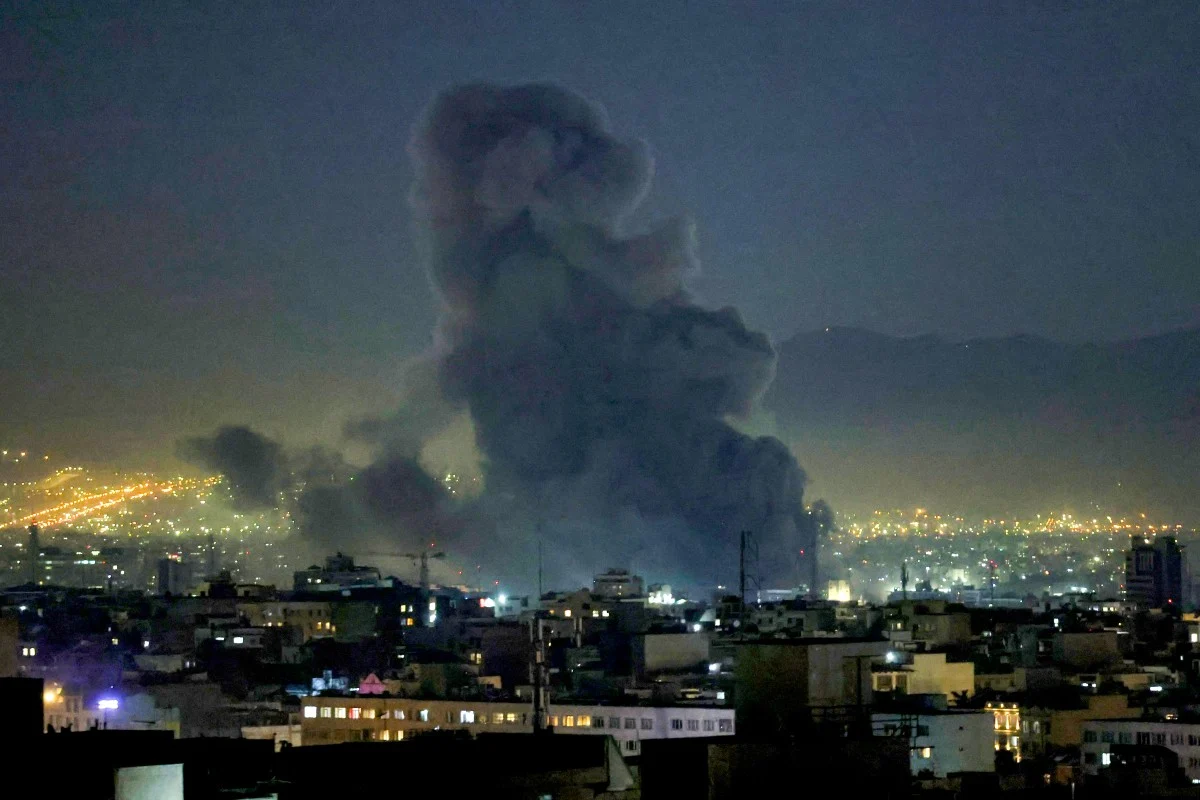
The military confrontation between the United States and Iran escalated sharply on Monday as American forces launched a ninth consecutive night of heavy airstrikes against Iranian targets. The fresh offensive followed the death of another US service member in Iraq. Iran swiftly retaliated by firing barrages toward key Gulf allies, including Bahrain and Kuwait, further heightening the risk of a regional conflict and driving benchmark crude oil prices past $90 a barrel.
According to US Central Command, the latest operations targeted command facilities, air defenses, missile sites, and naval capabilities. Iranian state media reported that the strikes struck areas near the northwestern city of Tabriz—a major hub for underground missile infrastructure operated by the Islamic Revolutionary Guard Corps—as well as several strategic coastal regions along the Persian Gulf and Oman Sea.
In response to the expanding American aerial campaign, missile warning sirens sounded across Bahrain, home to the US Navy’s 5th Fleet, while air defense systems in Kuwait engaged incoming threats. Meanwhile, maritime safety in the vital Strait of Hormuz eroded further when a vessel caught fire near Oman after being struck by a projectile, forcing the crew to abandon ship.
The attack occurred along a commercial passage previously recommended by the US to bypass Iranian blockades, with the Revolutionary Guard subsequently claiming responsibility for targeting tankers in the waterway.
Read more about this topic: US soldier killed in Iraq ordnance disposal as regional strikes escalate. What changes for CENTCOM’s posture? (with video)
The surging violence coincides with the breakdown of a fragile interim agreement signed in late June that sought to halt hostilities and address broader security concerns, including Iran’s nuclear program. With negotiations stalling past the halfway mark of a 60-day window, both sides have increasingly targeted critical infrastructure.
US Secretary of State Marco Rubio indicated that Washington remains open to diplomatic solutions but emphasized that current conditions show little progress toward meaningful dialogue. Iranian officials confirmed receiving proposal communications through intermediaries but made no commitment to immediate talks, while former Iranian diplomats warned that continued maritime disruption risks isolating Tehran internationally.
With overall casualties mounting and essential global shipping corridors remaining crippled, the ongoing conflict continues to destabilize the region and deepen global economic disruption.
