

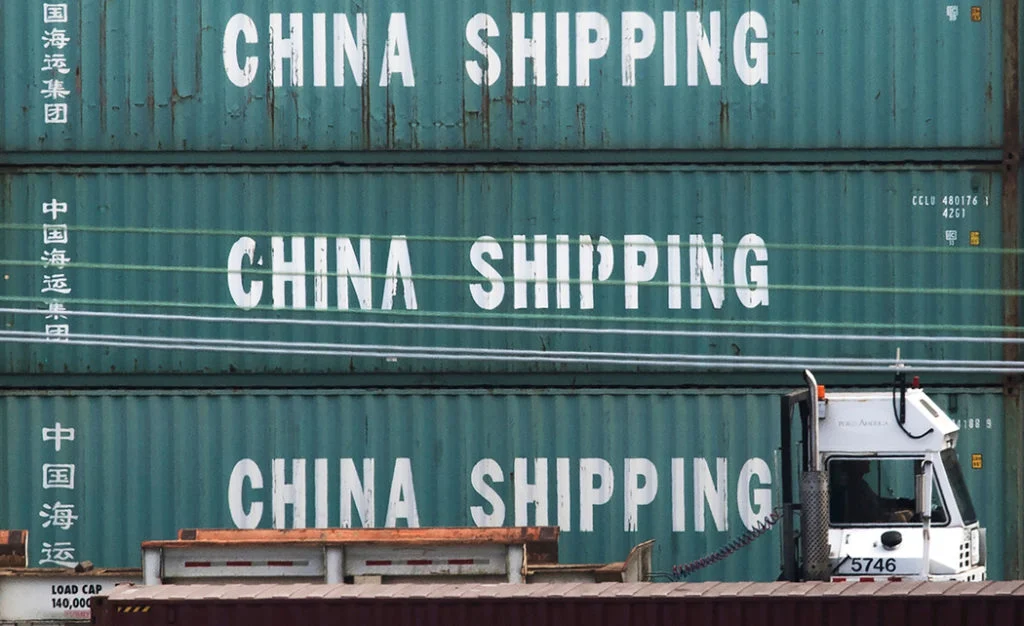
The European Union and China have officially agreed to establish a joint trade monitoring mechanism. While both powers are framing the development as a diplomatic step forward, the agreement arrives amidst an increasingly bitter and defensive economic relationship.
Rather than resolving the core friction, the new mechanism functions as a regulatory pressure valve for a relationship strained by massive trade imbalances and fundamentally opposing economic philosophies.
At the heart of Brussels’ urgency is an asymmetrical trading dynamic that EU officials have repeatedly labeled as entirely unsustainable. The EU’s trade deficit with China has hovered around a staggering €1 billion per day.
European policymakers argue that this deficit is not merely the result of natural market forces. Instead, they attribute it to structural distortions within the Chinese economy—specifically, state-driven overcapacity that allows cheap Chinese goods, particularly electric vehicles and green technologies, to flood the European market and undercut domestic manufacturers.
Read more about this topic: The €1 billion-a-day: Why the EU’s trade deficit with China remains unsustainable (with video)
China has pushed back sharply against the narrative that its export success is fueled by unfair state intervention.
In a notable diplomatic defense, the Chinese Prime Minister claimed that Beijing simply “is not rich enough” to provide the level of industrial subsidies that Western powers frequently complain about. Beijing maintains that its manufacturing dominance is driven by intense domestic competition, supply chain efficiencies, and corporate innovation rather than state-funded distortion.
Furthermore, Chinese officials argue that despite being the world’s second-largest economy, China still faces significant regional development gaps and domestic economic pressures, meaning its financial priorities lie elsewhere.
The establishment of the monitoring mechanism introduces a formal framework to track trade flows, but it leaves the underlying geopolitical tension unresolved.
Read more about this topic: Chinese PM claims Beijing is not “rich enough” to provide industrial subsidies
The mechanism provides a structured, technical channel to flag spikes in import volumes and market distortions before they escalate into full-blown trade wars. While the EU uses the mechanism to curb what it views as subsidized overcapacity, Beijing views Western tariffs and quotas as protectionist measures designed to contain China’s technological rise.
This friction directly impacts global supply chains, affecting trade hubs like Macau and Hong Kong that act as traditional bridges between China and Western markets.
Ultimately, the monitoring mechanism alters how Brussels and Beijing communicate about trade data, but it does not bridge the fundamental divide between the EU’s open-market demands and China’s state-led economic model.
