

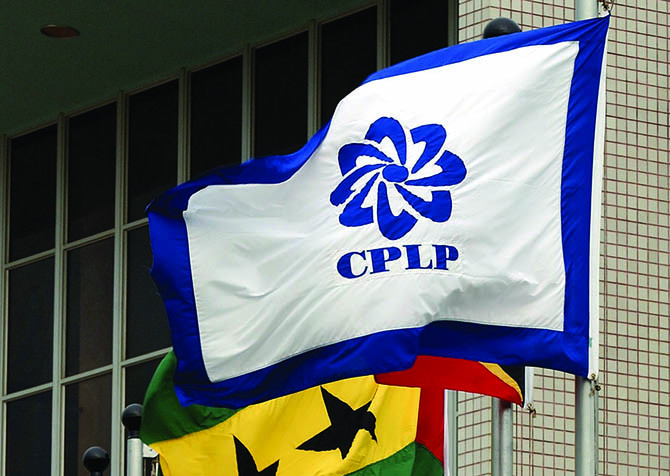
Analysts interviewed by Lusa regarding the 30th anniversary of the CPLP have acknowledged that the organization’s mobility agreement has been undermined by the member states themselves, particularly Portugal, despite technically remaining in force.
On July 17, 2021, during the organization’s 25th anniversary at the 13th Conference of Heads of State and Government in Luanda, Angola, the “Agreement on Mobility Among the Member States of the Community of Portuguese Language Countries [CPLP]” was officially adopted.
However, in Portugal, the immigration law approved in July of last year altered the entry requirements for citizens of Portuguese-speaking nations. Under the new rules, these citizens must now apply for a work or residence visa in their country of origin before they can obtain a residence permit.
Portuguese analyst Fernando Jorge Cardoso describes the CPLP mobility agreement as the greatest achievement accomplished within the community.
Read more about this topic: CPLP: “Equatorial Guinea fails to uphold organization’s statutes”
When questioned about Portugal’s step back on the matter, he explained that the issue stemmed from a change in the country’s governing party—noting that the Socialist Party led by António Costa, which governed until 2024, was one of the agreement’s strongest advocates—and the fact that this reflects a widespread political trend currently seen on the international stage.
“Portugal is constrained not only by its internal politics but also by the rules of the Schengen Area,” he explained.
Nevertheless, he stressed that Portugal did not completely abolish the agreement. Angolan political scientist Almeida Henriques countered that Portugal “needs to be more visionary” regarding mobility, arguing that the restrictions “do not help and demotivate the community’s citizens.”
Meanwhile, the president of the Lusíada University of São Tomé and Príncipe, Liberato Moniz, expressed regret that free movement has barely been put into practice across the Lusophone bloc. He argued that it is only utilized when there is a critical need for labor, pointing specifically to the Portuguese approach.
Read more about this topic: CPLP: East Timor will assume next presidency
For Redy Lima, a Cape Verdean analyst, the problem is far more structural.
“The easing of visas ultimately feels like a neo-colonial concept: Portugal needs labor, so it makes it easier for people to go work, but a Cape Verdean who just wants to go on vacation or visit family still faces major difficulties,” the sociologist lamented.
As a self-proclaimed skeptic of the organization, Lima believes that the “CPLP project has failed, and the mobility agreement reflects the unequal relationship between its member states.”
Elísio Macamo, a Mozambican university professor based in Switzerland, shared that the mobility agreement has had “absolutely no impact” on his life. He remarked that this is “perhaps the most disappointing part,” as it exposes “the limits of this Lusophone world, where so many initiatives end up stranded.”
Read more about this topic: CPLP: Cape Verde gives positive assessment despite “ups and downs”
On the other hand, he noted that countries like Portugal, due to its European Union membership, and Brazil, due to its integration into Mercosur, are highly restricted in what they can legally implement regarding mobility.
“Even on the African side, there isn’t much flexibility to facilitate the entry of Portuguese or Brazilian citizens,” he admitted.
Adriano de Freixo, a Brazilian analyst of Portuguese descent holding dual citizenship, stated that from his perspective, the mobility push has made no real difference. He shared accounts from friends and colleagues who described immigration lines at Portuguese airports for CPLP citizens as occasionally being even longer than those for travelers of other nationalities.
Redy Lima argued that over the next decade, the CPLP must focus entirely on this mobility issue and properly consolidate it.
Read more about this topic: CPLP approves ocean cooperation plan for the 2026-2030 period
“Moving forward with the mobility issue would be half the battle won for the consolidation of the CPLP. People need to feel the impact of the CPLP. If it can overcome this hurdle, it will unlock other opportunities,” he concluded.
In turn, Almeida Henriques urged a complete “liberalization from a mobility standpoint across the CPLP region.”
The CPLP, which marks its 30th anniversary on July 17, is composed of Angola, Brazil, Cape Verde, Guinea-Bissau, Equatorial Guinea, Mozambique, Portugal, São Tomé and Príncipe, and East Timor.
