

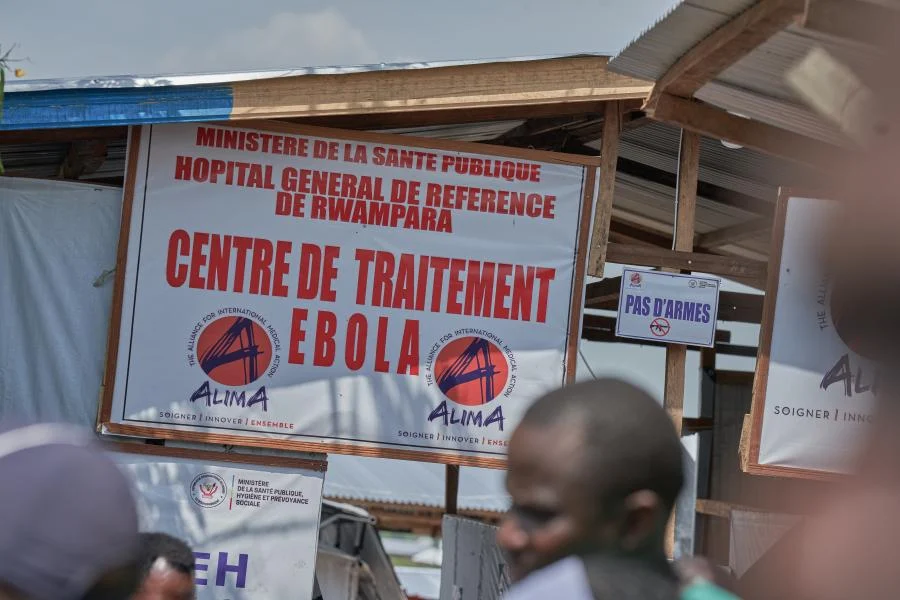
The Government of the Democratic Republic of Congo (DR Congo) has raised the death toll from the Ebola virus to 254, out of 1,003 confirmed cases, in an epidemic that was officially declared on May 15 in the eastern region of the country.
The Congolese Ministry of Health, in a statement released on Sunday night, stated that a total of 100 people have recovered from the disease, which has been concentrated in the Ituri province since the outbreak was first declared.
Congolese authorities had previously reported that 245 people had died and that there were 933 confirmed cases of infection from the Ebola virus.
This Ebola epidemic, caused by the rare Bundibugyo virus for which there are no vaccines or specific treatments, has been the worst ever recorded within its first month.
Read more about this topic: Ebola outbreak: How dangerous is the new strain? (with video)
Authorities admit that there could still be many more unknown cases and that the peak of the outbreak has yet to occur in the country.
Contact tracing remains a crucial issue for local authorities, who have achieved a coverage rate of only 55%, according to the Congolese Ministry.
Officials have also not yet identified the patient zero of the outbreak and need to track more than 35,000 people who had contact with infected individuals up until last week, authorities stated.
The epidemic has also spread to neighboring Uganda, where 19 confirmed cases have been detected, including 14 cases considered to be imported from DR Congo, resulting in two deaths.
Read more about this topic: Ebola disease in Democratic Republic of Congo: MSF scales up response to a rapidly evolving outbreak
The WHO estimates that the virus began circulating in Ituri about two months before the outbreak was declared and classified the epidemic on May 17 as a “public health emergency of international concern.”
The Ebola virus is transmitted through direct contact with the bodily fluids of infected people or animals and causes severe hemorrhagic fever, vomiting, diarrhea, and internal bleeding.
