

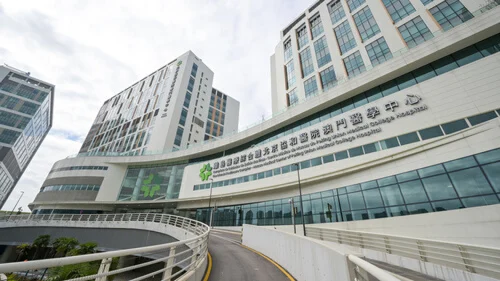
With the Macao Union Hospital’s emergency station operational since January 2026, health authorities are accelerating the coordination of Macau’s two-tier medical system. This integration is essential to alleviate the operational burden on the Conde S. Januário Hospital and strengthen the city’s overall capacity for critical care.
Speaking at the Legislative Assembly on Wednesday (the 3rd), Li Weicheng, Vice President of Macao Union Hospital, stated that the facility’s emergency station began handling residential care ambulance services last month.
The hospital, which also opened its intensive care unit (ICU) this month, plans to build a comprehensive emergency center within the year to support new developments in cardiology and trauma surgery. Additionally, new radiotherapy and nuclear medicine equipment have been installed to enhance comprehensive tumor treatments.
Read More:Macau is accepting applications for an internship program with 850 openings. How recent graduates can take advantage of this opportunity
Responding to an interpellation by lawmaker Leong Hong Sai, Secretary for Social Affairs and Culture O Lam detailed the efficiency of the current referral system. A unified electronic platform currently triages patients to either Conde S. Januário Hospital or Macao Union Hospital based on the shortest available waiting time.
To further deepen this triage effect, future follow-up patients will be referred based on the specialist outpatient quotas at Macao Union Hospital. Meanwhile, Conde S. Januário Hospital will establish dedicated chest pain and stroke centers by the end of the year.
“The two hospitals will collaborate closely through clinical task forces and multi-site medical practices,” O Lam said, according to the Macao Daily. “By sharing equipment and flexibly deploying personnel, we can significantly elevate our standard of care for specialist, complex, and rare diseases.”
Read More:Macau: Director defends more international Portuguese studies at UM
To support these clinical advancements, the government is cultivating medical talent through specialist education, community medicine training, and university partnerships. As of last year, Macau registered approximately 780 specialists and 160 resident doctors, and the Health Bureau established a family medicine training base to address chronic disease management.
Furthermore, local universities are expanding their health programs; next academic year, the University of Macau will introduce a Master of Pharmaceutical Sciences, and the Macao Polytechnic University will launch a doctoral program in AI Smart Healthcare.
Looking ahead, the Health Bureau plans to establish a Traditional Chinese Medicine (TCM) training clinic in the second half of this year. Health Bureau Director Alvis Lo Iek Long noted that this new facility will support both professional training and high public demand, as Macau residents average two TCM visits annually and use about 30 percent of their government healthcare vouchers for these services.
