

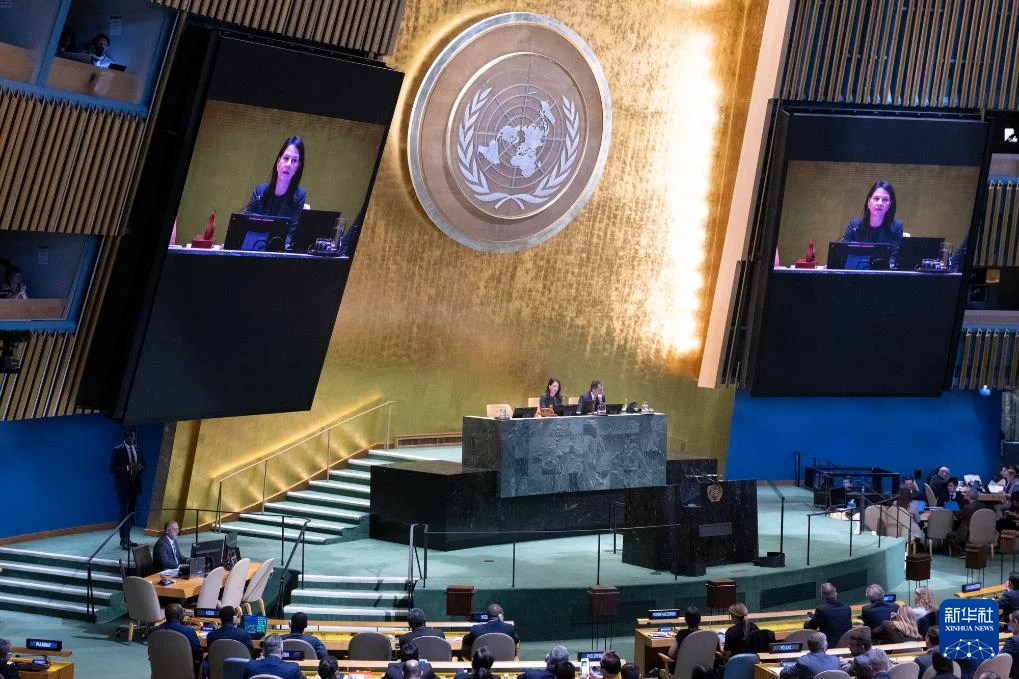
According to Xinhua, the newly elected nations will begin their two-year terms on January 1, 2027. They will replace Denmark, Greece, Pakistan, Panama, and Somalia, whose terms will expire at the end of 2026.
Austria, Portugal, Trinidad and Tobago, and Zimbabwe successfully secured their seats in the first round of voting, while Germany failed to advance.
Kyrgyzstan faced a longer contest to secure its first-ever seat on the council. The nation ultimately defeated the Philippines after four consecutive rounds of secret-ballot voting.
Read More: China Foreign Affairs Minister calls for revitalization of United Nations
The UN Security Council consists of 15 seats, featuring five permanent members—China, France, Russia, the United Kingdom, and the United States—and ten non-permanent members. Candidates must secure at least a two-thirds majority in the General Assembly to win a non-permanent seat.
These ten non-permanent seats are allocated strictly by region to ensure global representation, with five seats contested each year. The distribution includes three seats for Africa; two each for the Asia-Pacific, Latin America and the Caribbean, and Western Europe and other states; and one seat for Eastern Europe.
Under UN rules, non-permanent members are not permitted to serve consecutive terms. The five new members will spend the coming months preparing for their diplomatic mandates before officially assuming their roles in 2027.
