

The African Union (AU) assured today, as the number of deaths associated with the disease rose to 246, that a vaccine against the Ebola virus strain responsible for the current epidemic in Central Africa will be available this year.
“What we are sure of is that, by the end of the year 2026, Africa CDC will ensure that we will have a vaccine and a medicine against Bundibugyo,” the strain in question, assured the director-general of the African Union Public Health Agency (Africa CDC), Jean Kaseya, at a conference in Kinshasa, the capital of the Democratic Republic of the Congo (DR Congo).
“The number of suspected infections stands at 1,077, with 246 deaths associated with this epidemic,” Kaseya contextualized. The director-general of the public health agency noted that the Ebola epidemic, at the current rate of infections, is heading toward becoming “the second largest in history,” but that it “is not out of control.”
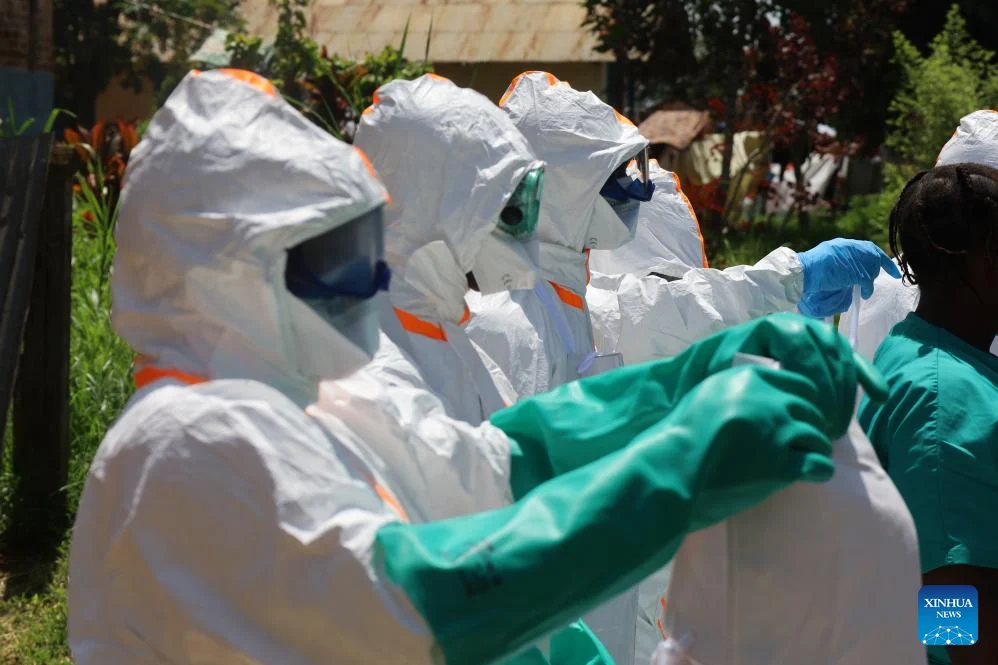
Part of the international aid made available began arriving on the ground today. A plane with aid donated by the European Union (EU) carried masks, gloves, boots, and medicines—all materials in short supply—to the city of Bunia, in the eastern part of the DR Congo, a nation neighboring Angola.
Read more about this topic: Ebola outbreak: How dangerous is the new strain? (with video)
Forklifts bearing the United Nations (UN) insignia were also seen loading several boxes onto trucks containing resources destined for the affected areas. Local healthcare professionals, running low on supplies, have been struggling to contain the Bundibugyo virus, a strain that has no approved treatment or vaccine.
Besides operations on the ground being hindered by ongoing conflicts in the region, healthcare workers have faced local populations who are upset because they are unable to hold funerals for their loved ones due to the danger of contagion.
The aid donated by the EU is expected to arrive in batches over the next eight days, the head of emergency operations for the United Nations Children’s Fund (Unicef) in the DR Congo, Jérôme Kouachi, told the Associated Press.
Meanwhile, the director-general of the World Health Organization (WHO), Tedros Adhanom Ghebreyesus, is on his way to the DR Congo to witness the response efforts firsthand. The WHO declared the epidemic a public health emergency of international concern in the hope of intensifying aid.
Read more about this topic: Macau imposes 21-day monitoring on travelers from Ebola-affected regions
The United States of America also announced today that it increased its aid to the DR Congo and Uganda by 80 million dollars (around 74 million euros), raising its commitment to more than 112 million dollars (around 96 million euros) since the start of the epidemic.
The additional money will be used to pay for personal protective equipment for healthcare workers, Ebola test kits, support for health screening at airports, and contact tracing, according to a statement published on the website of the US Department of State.
The outbreak was detected in Ituri province, bordering Uganda and South Sudan, but it has also expanded to the eastern Congolese provinces of North Kivu and South Kivu, as well as to neighboring Uganda. In Uganda, the number of confirmed cases—all in the capital, Kampala—stands at seven, including one death (a Congolese citizen whose infection is considered an imported case).
The Ugandan Government announced this Wednesday the temporary closure of the border with the DR Congo to prevent a further spread of the virus within its territory.
Read more about this topic: Ebola: European disease center insists risk to EU is low
Ten African countries, including Angola, find themselves at “high risk” of being affected by the epidemic because they share a border with the DR Congo and Uganda. The Ebola virus is transmitted through direct contact with body fluids of infected people or animals and causes severe hemorrhagic fever, vomiting, diarrhea, and internal bleeding.
