

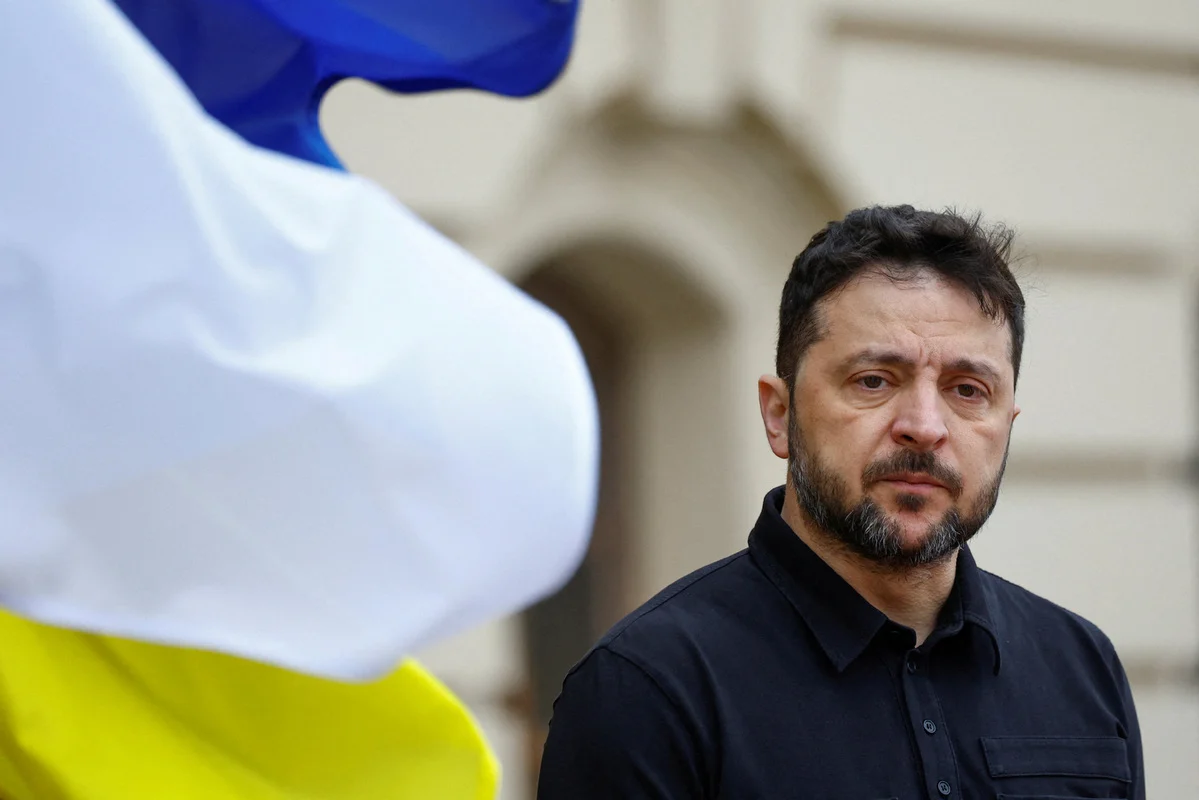
In a significant blow to the administration of President Volodymyr Zelenskyy, Ukrainian anti-corruption authorities have officially designated his former chief of staff, Andriy Yermak, as a suspect in a multi-million dollar graft investigation.
The move, announced late Monday by the National Anti-Corruption Bureau of Ukraine (NABU) and the Special Anti-Corruption Prosecutor’s Office (SAPO), marks the most dramatic escalation yet in “Operation Midas,” a sweeping probe into systemic bribery and money laundering within the government’s inner circle.
Yermak, who was once considered the most powerful figure in Ukraine behind the president, is suspected of involvement in a 460-million-hryvnia ($10.5 million) scheme. Investigators allege that a “criminal group” funneled state funds through construction projects for luxury homes outside Kyiv.
These developments follow his resignation in November 2025, a departure that occurred alongside several other high-ranking officials as the investigation began to close in on the presidential office.
Read more: Ukraine: Putin declares a unilateral ceasefire for May 8-9 (with video)
The serving of an “official notice of suspicion” is a critical procedural step in the Ukrainian legal system; while it stops short of a formal court charge, it indicates that prosecutors have gathered sufficient evidence to pursue a criminal case. During recent property searches, Yermak remained largely silent, telling reporters he would reserve comment until the conclusion of the investigation.
Meanwhile, his attorney, Ihor Fomin, has dismissed the allegations as groundless, suggesting the move was a reaction to intense public pressure rather than legal merit.
The fallout from this investigation extends far beyond the individuals involved. The case centers on alleged financial irregularities within the state nuclear energy company, Energoatom, and has already seen former deputy prime minister Oleksiy Chernyshov and former energy minister Herman Halushchenko named as suspects.
The scope of the probe highlights the very issues—entrenched corruption and lack of transparency—that European allies have long urged Zelenskyy to address as a prerequisite for European Union membership.
Read more: Ukraine: Russia declares two-day Victory Day truce (with video)
For President Zelenskyy, the timing is particularly perilous. Having spent seven years in office and currently navigating complex diplomatic waters with both the EU and a skeptical United States, the president must now manage the political wreckage left by his closest confidant.
Yermak was so influential that he was often dubbed the country’s “unelected vice-president,” frequently overriding generals on the battlefield and handpicking cabinet members. His fall from grace forces the president to demonstrate that his commitment to judicial independence is genuine, especially after previous attempts to place anti-corruption agencies under political control were met with nationwide protests.
As the legal process moves toward the courts, the eyes of the international community remain fixed on Kyiv. The resolution of the Yermak case is now viewed as a litmus test for the maturity of Ukraine’s democratic institutions and its ability to hold its most powerful citizens accountable, even in the midst of ongoing national security challenges.
