

Fit, sharply dressed and, at 45, some 17 years younger than Orbán, Magyar comes from a well-to-do Budapest family. His relatives include lawyers and judges, as well as the former Hungarian president Ferenc Mádl.
The New York Times notes that Magyar studied law and spent more than two decades as a member of Orbán’s Fidesz party, serving as a diplomat in Brussels and holding senior positions in state agencies.
EUobserver adds more texture: after returning home, he worked as manager, serving for several years as director-general of the Student Loan Centre, and also as head of the legal department of the Hungarian Development Bank. He could not, however, rise any further within the system.
Many sources portray the current Tisza party leader as a sharp-tongued man who did not respect authority, and was excessively independent and ambitious.
Read more about this topic: Hungary to cut gas supplies to Ukraine until Russian oil transit resumes
Magyar’s path through Hungarian politics was inseparable from his marriage to Judit Varga. In 2006, an important moment came in his life — he married lawyer Judit Varga, who gradually built a highly successful career, rising from assistant to a member of the European Parliament to become Hungary’s minister of justice.
The couple lived for about a decade in Brussels, where Magyar was a diplomat and Varga worked for a Fidesz MEP. They moved back to Budapest with their three sons in 2018.

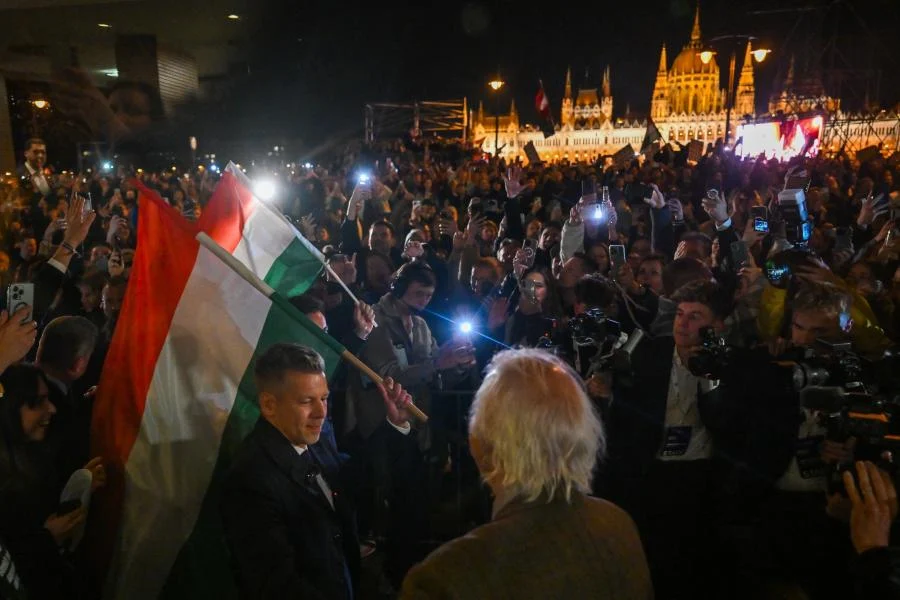
While Orbán’s campaign this year revolved mostly around foreign policy and his relations with world leaders, Magyar’s was rigidly focused on domestic issues, such as the economy and corruption. Photo: AFP
The marriage ended bitterly. The couple divorced in March 2023; according to Magyar, the split happened partly because of political disagreements. Varga, however, accused him of physically and verbally abusing her, allegedly locking her in a room on one occasion. Magyar described her claims as “propaganda” orchestrated by people around Orbán. The court has not yet ruled in the case.
The rupture between Magyar and Fidesz was catalyzed by a political earthquake. Hungary’s president at the time, Katalin Novák, had pardoned a former official convicted of helping cover up the abuse of underaged boys at a children’s home. The revelation of the pardon punctured a perception of Orbán’s government, held by many, as the defender of Christian and family values.
Read more about this topic: Orbán reiterates Hungary’s support for US-led peace efforts in Ukraine
As CNN reported, political scientist Péter Krekó explained the damage succinctly: “The core of the self-definition of Fidesz is that they are conservative, family-friendly, and they protect children.” To many voters, the pardon exposed the hypocrisy at the heart of the Orbán project. Varga, who had countersigned the pardon, resigned.
It was at this precise moment that Magyar made his move. He began criticising the government on Facebook and was then given a platform as a guest on the independent channel Partizán.
That year, on Hungary’s national holiday of 15 March, more people — about 50,000 — gathered at Magyar’s rally than at the central commemoration organised by Orbán’s supporters. The momentum was extraordinary. They organised a so-called National March on 6 April 2024 with a turnout of more than 100,000 people.
Magyar channelled that energy into a new political vehicle. The New York Times notes that he created Tisza, an upstart political movement that went on to win 30 percent of the vote in Hungary during the European Parliament elections. Even without a nationwide organisational structure the party won 29.6 percent, attracting 1.3 million voters, gaining seven out of 21 possible mandates.
Read more about this topic: Hungary to cut gas supplies to Ukraine until Russian oil transit resumes
After that breakthrough, the party professionalized rapidly. Under the name “Tisza Szigetek” (Tisza Islands), they created a community network that extended to every corner of the country.
While Orbán’s campaign this year revolved mostly around foreign policy and his relations with world leaders, Magyar’s was rigidly focused on domestic issues, such as the economy and corruption.
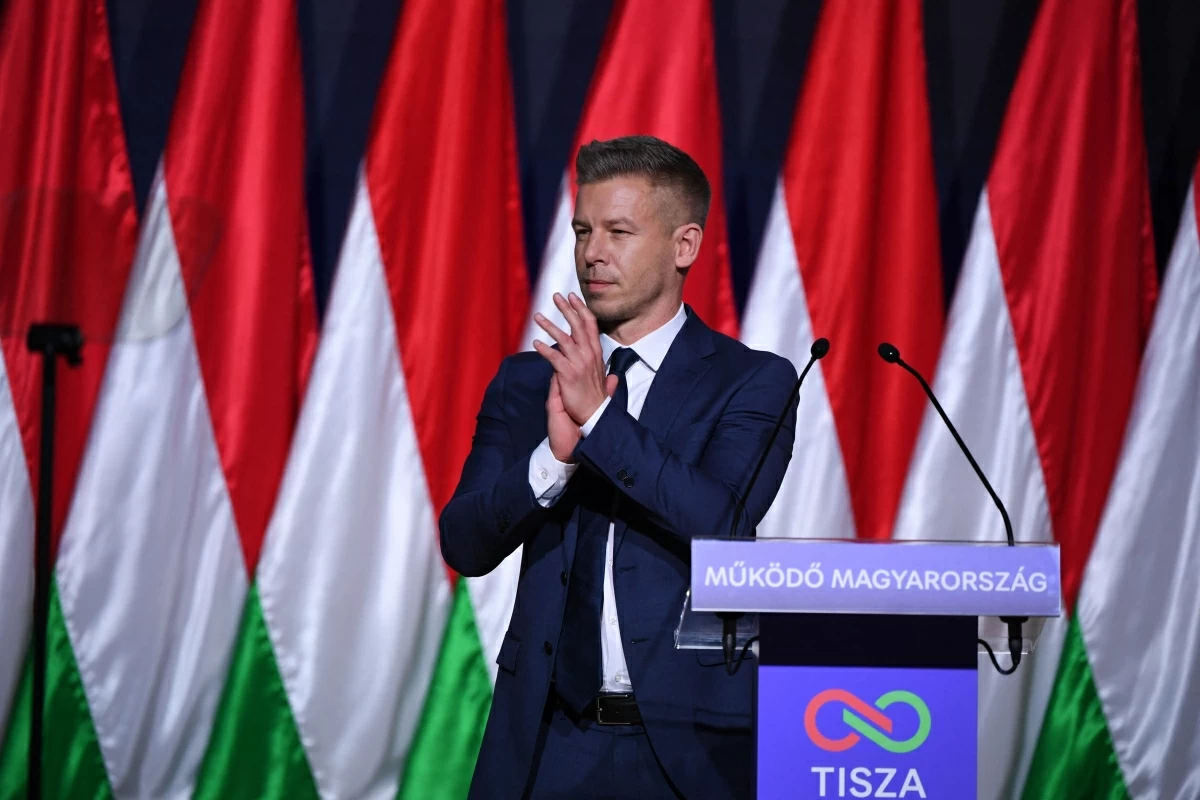
Many sources portray the current Tisza party leader as a sharp-tongued man who did not respect authority, and was excessively independent and ambitious. Photo: AFP
When Orbán banned the Budapest Pride march, Magyar refused to take the bait, avoiding mentioning the LGBTQ movement by name and saying instead that Orbán’s government aimed to “instill fear and divide us.” On Ukraine — another Orbán weapon — he was similarly cautious, which led some to worry about his future foreign policy.
On Sunday, the results were historic. The New York Times reported that with 66 percent of votes counted, the party was on course to win 137 seats, more than a two-thirds majority.
Read more: Hungary vetoes aid to Kyiv and blocks EU accession
The prize is enormous — and so is the task. The European Commission is currently withholding around €18 billion of funds for Hungary over concerns about democratic backsliding under Orbán. The freezing of those funds — equivalent to around 10% of the country’s national output — has deepened Hungary’s economic malaise.
EUobserver reports that Magyar has already outlined an ambitious agenda: zero tolerance for corruption, applying to join the European Public Prosecutor’s Office, ordering asset checks going back 20 years covering all MPs and ministers, and introducing a wealth tax for billionaires.
He has also pledged to limit the term of office of the prime minister to eight years and enshrine this in the constitution — a measure that, interestingly, would apply retroactively to Orbán, who would no longer be able to run for the post.
Whether he can hold together a coalition that spans, as CNN’s Krekó put it, “the rather conservative right to the hardcore liberals and leftists” remains the central question.
In his campaign, Magyar stressed that the task of rebuilding Hungary would take time, promising to unpick Orbán’s political system step by step. The boy who once pinned Orbán’s picture to his wall now has the mandate to take it down for good.
