

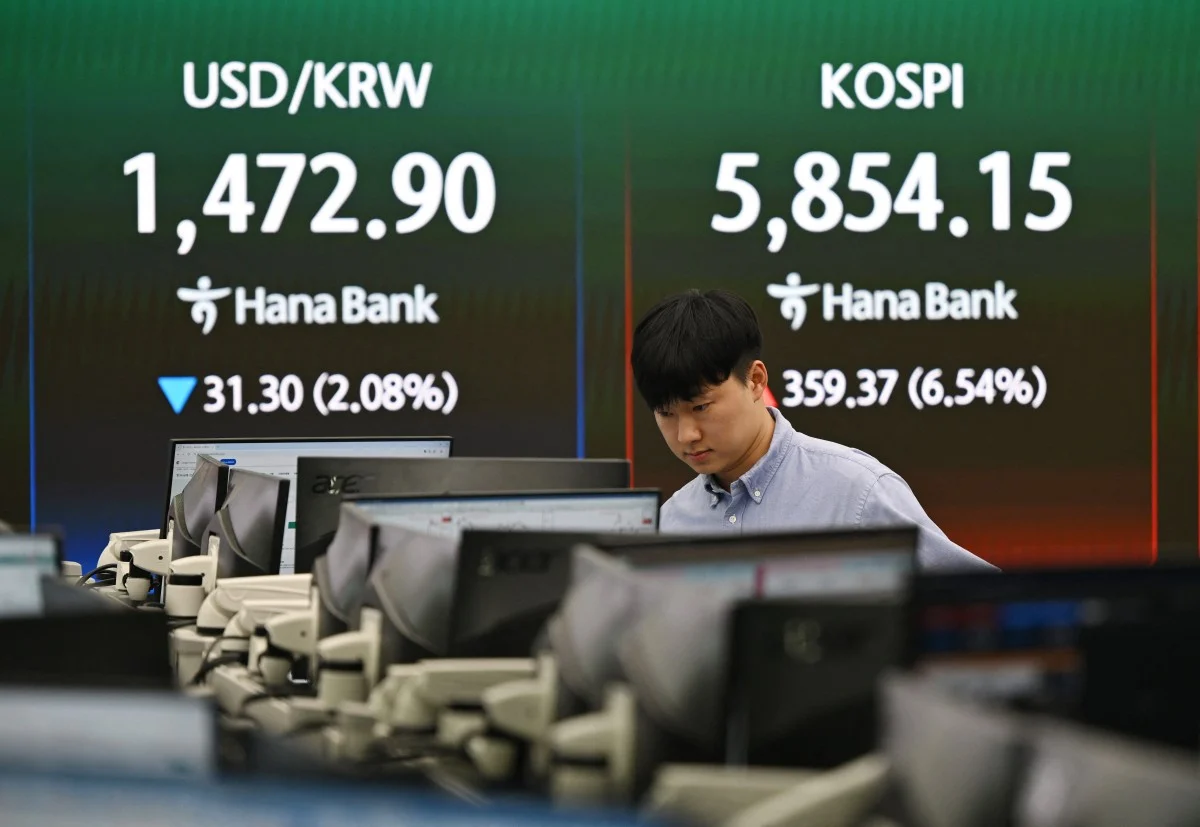
Oil prices plummeted and Asian stock markets soared in early trading on Wednesday after the United States and Iran agreed to a two-week ceasefire, with Tehran temporarily reopening the strategic Strait of Hormuz.
At the opening of trading today, the 8th, the price of crude oil, specifically U.S. West Texas Intermediate (WTI), fell 16.56% to $96.39 (€82.51) per barrel, while Brent dropped 15.89% to $93.38 (€79.94).
Conversely, stock markets surged. Japan’s Nikkei 225 index rose 4.38% to 55,771.56 points, while South Korea’s Kospi soared 5.71% to 5,808.65 points. The upward trend also extended to China, where the Shanghai benchmark index rose 2.69% and the Shenzhen index posted a more significant gain of 4.79%. In Hong Kong, the Hang Seng also followed the trend, rising 2.8%.
“As fears of an escalation in fighting dispelled, buying is likely to take the lead in the Japanese market,” Tokai Tokyo Securities said before the opening bell in Tokyo.
Leia também; Irão: Bolsas chinesas sobem perante possível desescalada
This performance reflects investors’ relief at the prospect of easing tensions in the Middle East, following more than a month of clashes. The ceasefire, announced as “immediate” by Pakistani Prime Minister Shehbaz Sharif, paves the way for negotiations between Tehran and Washington, scheduled to begin on Friday in Islamabad.
“Subject to the Islamic Republic of Iran agreeing to the COMPLETE, IMMEDIATE, and SAFE OPENING of the Strait of Hormuz, I agree to suspend the bombing and attack of Iran for a period of two weeks,” US President Donald Trump wrote on his Truth Social platform.
Iranian Foreign Minister Abbas Araghchi confirmed safe passage for two weeks for ships through the Strait of Hormuz, the gateway for one-fifth of the world’s oil which Tehran sealed off in retaliation for the war launched on February 28.
A reativação desta rota marítima foi determinante para a reação dos mercados, sobretudo na Ásia. Para a China, em particular, a estabilidade no estreito é crítica, uma vez que cerca de 45% das suas importações de petróleo e gás passam por esta via.
