

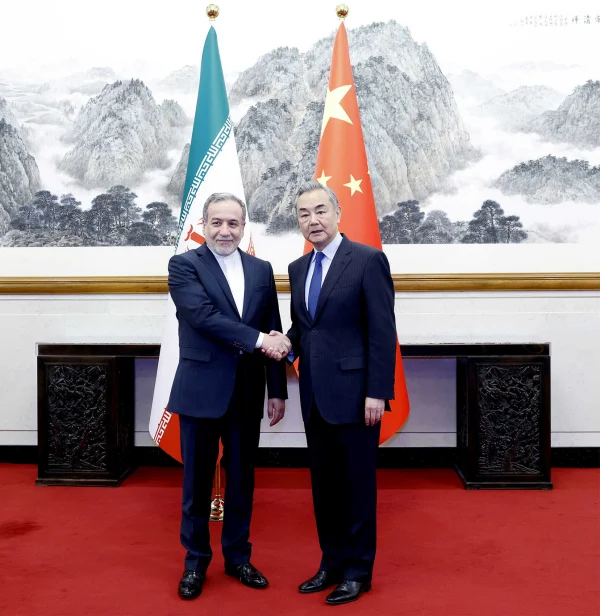
Chinese Foreign Minister Wang Yi emphasized today that “negotiation is better than confrontation” during a phone call with his Iranian counterpart, Abbas Araghchi.
According to a statement from China’s Ministry of Foreign Affairs, Wang Yi urged that “all parties seize every opportunity to start peace talks as soon as possible.”
Read more about this topic: Iran War: China calls for addressing “root causes” of conflict
In the conversation with Wang Yi, the Iranian foreign minister said Tehran is determined to achieve “the complete end of the war, not just a temporary ceasefire.”
Araghchi also assured that Iran would allow safe passage for ships through the Strait of Hormuz, except for vessels from countries involved in the conflict.
The Iranian official thanked China for its humanitarian assistance, with the phone call reportedly requested by Tehran.
Although Beijing is a strategic partner of Iran, it stated that it does not tolerate Iranian attacks on Gulf countries hosting U.S. military bases and reiterated its call for a ceasefire.
On Monday, Wang Yi had already urged the parties to address the “root causes” of the conflict during a meeting with British National Security Adviser Jonathan Powell in Beijing.
Read more about this topic: Iran War: China adjusts fuel prices
Wang Yi emphasized that prolonging the war will only worsen damage and consequences and advocated returning to a political solution through dialogue and negotiation.
Read more about this topic:
The call between Wang Yi and Abbas Araghchi comes amid expectations of potential U.S.–Iran negotiations to halt the bombings in the region.
U.S. President Donald Trump stated that Washington is in contact with a “high-ranking” Iranian official and set a five-day deadline to advance negotiations before resuming attacks, particularly against Iran’s power grid.
However, Iranian parliament speaker Mohammad Bagher Ghalibaf denied any such contacts, calling the reports “false” and accusing Washington and Tel Aviv of attempting to manipulate energy markets.
The conflict, now in its fourth week, continues to affect global oil and gas transportation in one of the world’s most strategic energy supply regions.
