

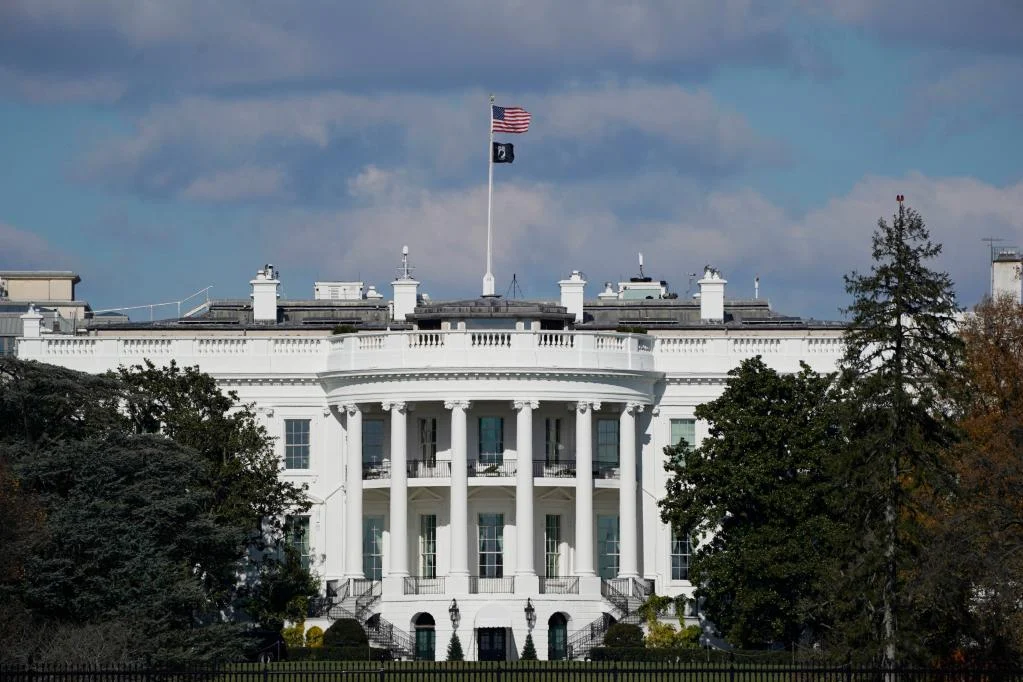
White House chief economic adviser Kevin Hassett today confirmed that the first two weeks of the war with Iran cost the United States around $12 billion (€10.5 billion).
Hassett confirmed the figure to NBC News, following a closed-door briefing last week from senior US military officials at a meeting with members of Congress and administration officials in Washington. The director of the National Economic Council declined, however, to confirm rumours that the White House was preparing a request to Congress for an additional $50 billion (€43.6 billion) in spending on the joint air offensive with Israel launched on February 28. “We already have the weapons we need, so I don’t think a top-up is necessary,” Hassett said, despite acknowledging that the Pentagon projects another two to four weeks of operations.
The Israeli government separately announced an additional 2.6 billion shekels (around €723 million) for the “urgent and essential acquisition of defence equipment” for its military operations in Iran and neighbouring Lebanon, after approving last week a special defence budget that Israeli media reports put at €8 billion, on top of more than €30 billion already planned. The additional spending is justified by “the state of emergency in which Israel finds itself” and the “urgent and immediate need” to provide an “operational response” to the intensity of current fighting, according to a government statement.
In retaliation for the offensive launched on February 28, Iran has struck Israel and neighbouring countries with missiles and drones, targeting in particular military bases and US interests as well as economic infrastructure, especially energy assets. All parties have so far rejected any ceasefire discussions in a conflict that has spread across the region and reignited the war in Lebanon, after Shia group Hezbollah joined the fight in support of its Tehran ally and began attacking Israel.
Iran has also placed the Strait of Hormuz — through which 20% of the world’s oil passes — under military threat, pushing the price per barrel to around $100.
Read more about this topic: Iran War: US spent €9.8 billion on first week of conflict (with video)
US energy secretary Chris Wright estimated today that Americans can expect fuel price rises in the coming weeks, which should then fall back by summer. In an NBC interview, Wright said there is “a good chance” petrol prices will fall once “the biggest risk to global energy supply” disappears, expressing hope the war could end soon. At that point, “there will be a world with more abundant energy, more affordable energy and less risk for American soldiers and for trade in the Middle East,” Wright said.
The average US petrol price was $2.94 (€2.57) per gallon on March 1, the day after the conflict began, but by Saturday had already reached $3.70 (€3.24), according to national media citing the GasBuddy platform. Wright nonetheless acknowledged that “in a war, there are no guarantees” and that “the timeline is not yet entirely clear.”
Trump has given several different timelines for the end of the offensive: two days after it began he said it could last “four or five weeks,” last week he said it was “about to end,” and on Friday he said it would last “as long as it takes.”
The Israeli military spokesman said today that the Israel Defence Forces expect the war with Iran to last another three to six weeks and that thousands of military targets remain.
Read more about this topic: Iran War: six crew members killed in crash of US tanker aircraft
Trump also called on other countries to send warships to secure the global oil supply passing through the Strait of Hormuz, naming France, China, Japan, South Korea and the United Kingdom. In response, Iranian foreign minister Abbas Araghchi recommended that other countries “refrain from any action that could lead to escalation and an extension of the conflict.”
