

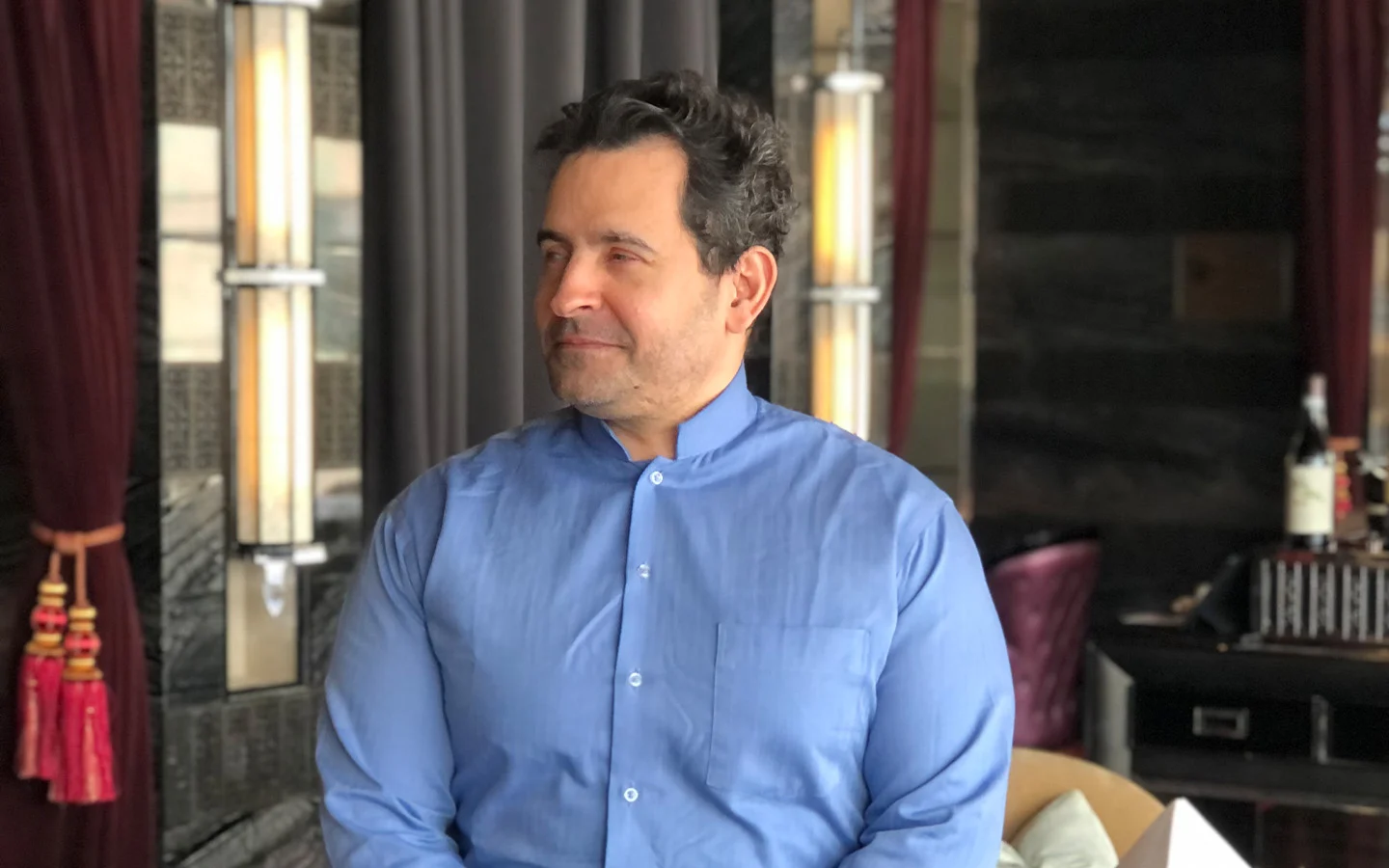
– How do you manage diplomatic balances in Beijing in a world so divided?
Loro Horta – Given our geographical location and history, we always try to maintain this balance, having very diverse relations; first and foremost, with our neighbors. Australia and Indonesia are vital to us; and we have now joined ASEAN, a very important space – as is the CPLP. China is our second largest economic partner, after Indonesia; and there is a large Chinese community in Timor.
From a strategic perspective, Beijing pays us considerable attention; and in 2023, it upgraded our relationship to a Comprehensive Strategic Partnership. Not many countries have this level of partnership, which shows the priority they give us, despite our small size. Unlike other Western powers, which have neglected us in terms of investment and diplomatic attention; China pays us a lot of attention, not only politically but also in terms of investment, scholarships, military cooperation… The Chinese presence has increased significantly.
– What is China’s focus in East Timor?
L.H. – There are two dimensions, one of which is governmental, with significant support in the infrastructure sector. Large buildings such as the Presidential Palace, Ministry of Defense, Ministry of Foreign Affairs, National Hospital, the Port, power stations… have been constructed by Chinese companies. Some are paid for by the Government of East Timor, others through networks of assistance from China.
– And what about Chinese immigration?
L.H. – It is estimated that there are about ten thousand Chinese people in Timor; they have come from China – I am not talking about the Timorese Chinese. They are ordinary citizens who have changed our country very positively. Supermarkets, restaurants, hotels… these are businesses dominated by Chinese people.
In remote rural areas, there is always a Chinese supermarket; they open for business where no one else wants to. This has benefits for the population, which can now acquire products much more cheaply than before. There are these two sides: state cooperation, visible in terms of infrastructure; and an increasing presence of the Chinese community, natural and spontaneous, seeking opportunities. Now that we have direct flights between the two countries, this trend is set to increase.
China knows that, due to the history of our independence, we have a very listened-to voice at the international level.
-In the 1960s, many Chinese immigrants came to East Timor, fleeing from Suharto’s Indonesia. Is this generation still influential?
L.H. – Many business colleagues and Chinese friends—both in Beijing and Timor—tell me that, not only in Indonesia but also in other Southeast Asian countries, there has always been significant suspicion and hostility towards Chinese communities across generations. In Timor, there is no such legacy; even during the Portuguese colonial period, there was a large Chinese community that arrived peacefully at the end of the 19th century.
After independence, the new wave of immigration has been perfectly integrated; there are always some conflicts; however, since the immigration is predominantly male, many marry and start families, which facilitates integration. Usually, those who complain about the current Chinese immigrants are the Timorese Chinese themselves; because they don’t understand our culture, and I don’t know what else. I find it amusing… they can’t handle the competition; period.
– What is your strategic focus in Beijing?
L.H. – My priority has always been to attract Chinese investment to Timor, especially investments that create jobs. Our biggest challenge is the lack of economic diversification; if my memory serves me correctly – perhaps it has improved – 80% to 85% of our Gross Domestic Product comes from oil and natural gas; a sector that does not create much employment – they are platforms at sea. In Dili and Baucau, the only two cities we have, this figure ranges from 70% to 80%.
– And low wages…
L.H. – minimum wage is $120. Unemployment has been slightly alleviated by emigration to Australia, the United Kingdom, Portugal, South Korea…, but it remains a very serious problem.
– Everyone is competing for Chinese investment… is it really essential for development?
L.H. – Of course; and China is well positioned to invest in East Timor When I was appointed to Beijing, my government gave me three options: deputy minister of foreign affairs, ambassador to Washington, or Beijing. I immediately thought… not deputy minister; I do all the work and who travels is the minister – I’m not interested in that. I love Washington; I studied in America and have great respect for the United States, but I wouldn’t get the attention I get in China. I ask my colleagues in Washington how many companies visit the embassy: none.
In Beijing, it’s every week; not just companies, but academics too; there’s genuine interest. Even more now, with our entry into ASEAN; and after our President’s visit to China in 2024. With the economic problems China is facing – which affect the whole world – Chinese companies, both state-owned and private, are everywhere looking for opportunities. In Beijing, I had meetings with hundreds of them; the same wouldn’t happen in Australia or the United States. In this regard, China is unique and offers us many opportunities; it’s up to us to respond to that interest.
Macau has played a crucial role for several years in accessing China; knowledge and contact… not only commercial and economic, but also cultural and academic.
– Is China also looking for channels to the Lusophone world in East Timor?
L.H. – He has a broad view of relations with East Timor; he knows that we are respected and influential in the CPLP, in ASEAN… and wants a voice, not to say favorable; at least not critical. They also understand our relationship with Indonesia, at this moment, quite good. China always takes an overall approach.
– How does one work in this context?
L.H. – China knows that, due to the history of our independence, we have a very listened-to voice at the international level; for example, in issues of human rights; in Myanmar, or in the negotiations in Guinea-Bissau. Having Timor-Leste as non-hostile, with a balanced opinion about China, is an asset.
– The embassy has supervisory authority over Beijing Macau, where the Forum is located… How important does it consider this to be?
L.H. – Macau has played a crucial role in accessing China for several years; it has knowledge and contacts… not just commercial and economic; also cultural and academic. At the beginning of our independence, we did not have an embassy in Beijing, and we used Macau as an entry point into China; we only opened our embassy three years later – in 2005. Now we have an embassy, and direct flights, but Macau continues to be an extremely important platform. The fact that they belong to both worlds – Lusophone and Chinese – gives Macanese people a very different perspective on China, which opens up other trajectories. It has been an advantage for us.
– Knowledge and influence?
L.H. – Yes, but also cultural and educational exchanges. The common History we had with Macau, the shared bond with Portugal, I think it still remains.
