

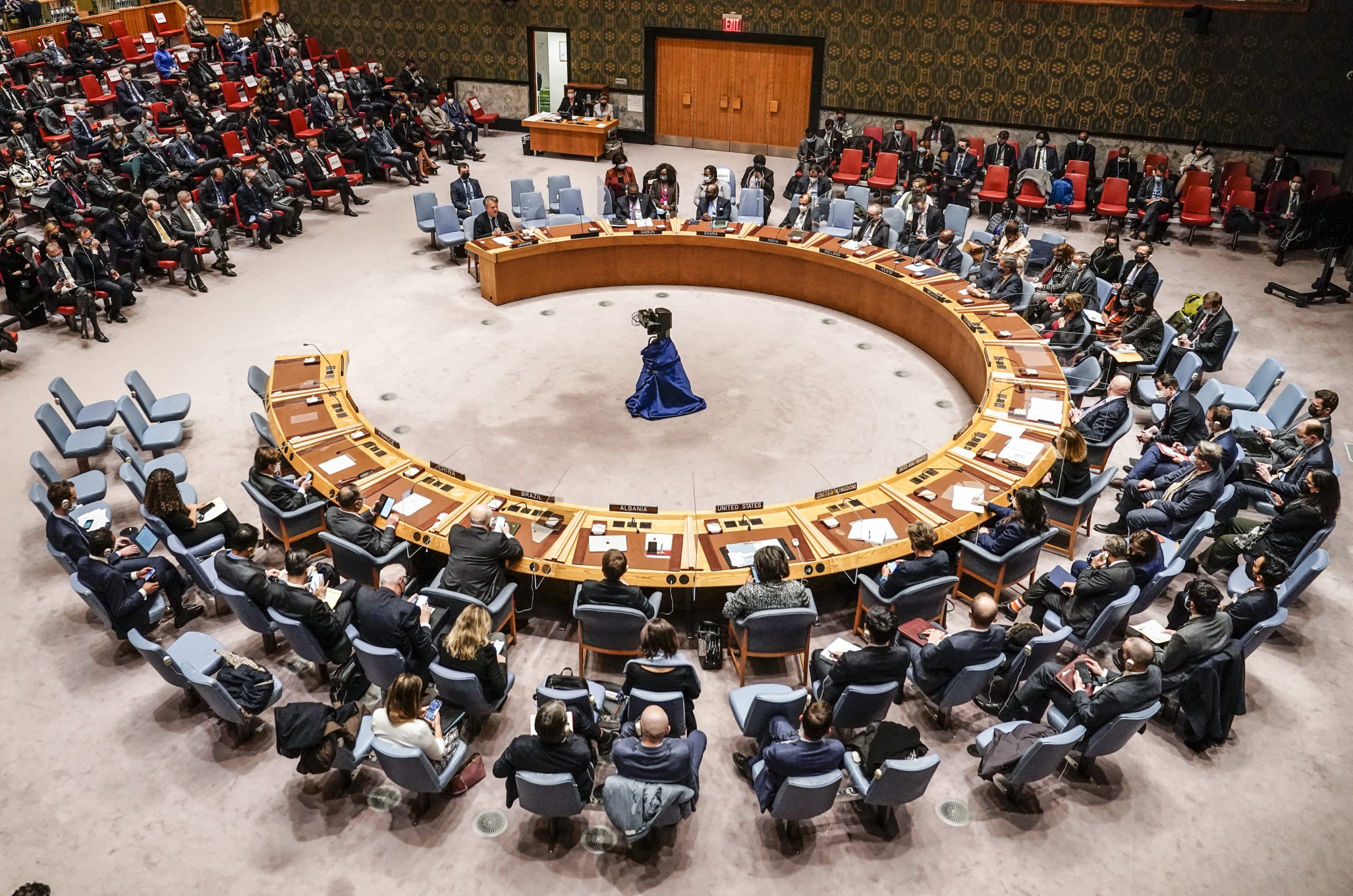
The resolution, proposed by the United States, was approved with 13 votes in favor, with China and Russia abstaining. The Security Council thus endorsed the creation of a “Peace Council” as a “transitional governance administration” in Gaza and authorized this Peace Council to establish a temporary International Stabilization Force in the enclave.
The text allows both entities to operate until December 31, 2027, “subject to further deliberations by the Council.” The proposal aims to restore security, ensure humanitarian access, and initiate a sustained process of reconstruction and institutional reform in the enclave, following two years of devastating conflict between Israel and the Palestinian Islamist group Hamas.
The Peace Council—led by President Donald Trump according to the 20-point peace plan presented by Washington—would serve as an external administration over the Palestinian enclave, overseeing governance, reconstruction, economic development, and the distribution of humanitarian aid.
The responsibilities of the ISF for Gaza would include ensuring the security of Gaza’s borders, protecting civilians, facilitating humanitarian assistance, supporting the training and deployment of a reconstituted Palestinian police force, and supervising the permanent disarmament of weapons held by Hamas and other armed groups in the enclave.
The ISF will work alongside Israel and Egypt to stabilize security in Gaza for an initial period of two years. The resolution, which underwent several revisions, also mentions the possibility of a Palestinian state, which has generated contention from the Israeli side, which completely opposes the two-state solution (Israel and Palestine).
A competing resolution proposed by Russia is also under formal review by the UN Security Council, but it is unclear if Moscow’s proposal will be voted on soon.
Platform with Lusa
