

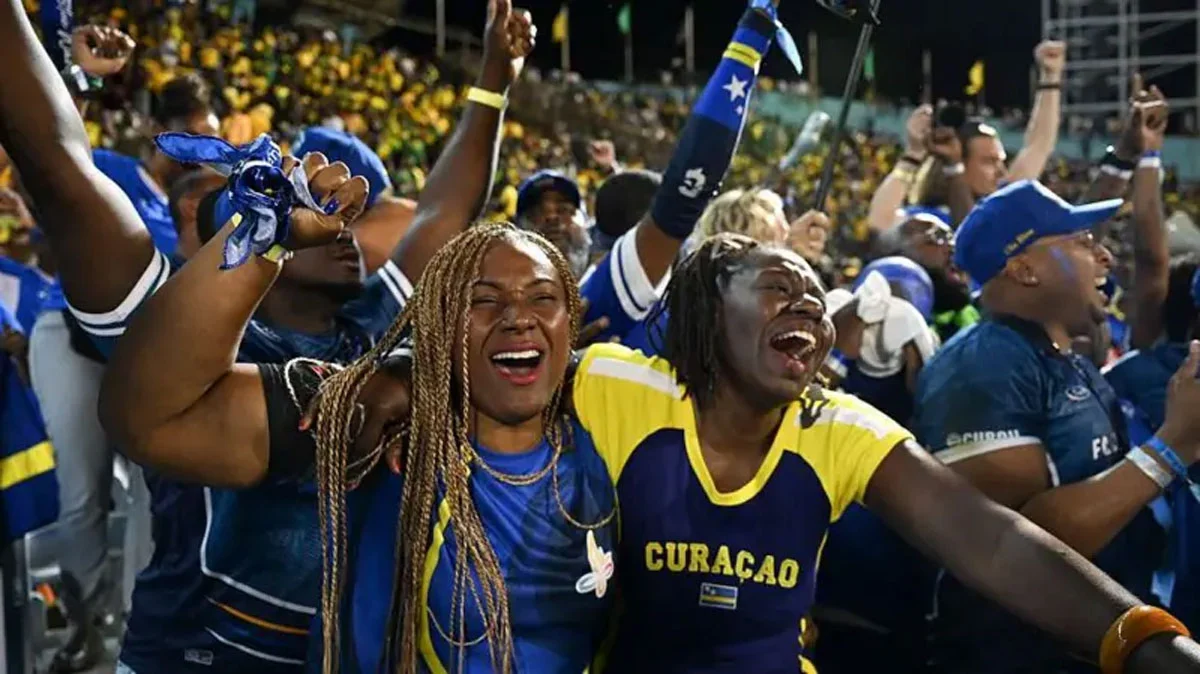
The Curaçao national team arrives at the 2026 World Cup to make history on the pitch, but it has already left a mark off it before the very first whistle. An absolute debutant in the final stage of a World Cup, the Caribbean team quickly became one of the most viral squads in the competition, gaining a global base of sympathy across social media.
With just over 150,000 inhabitants, Curaçao represents the smallest nation ever to play in a World Cup, an achievement that on its own would be enough to attract media attention. However, the national team’s impact surpassed the sporting level and gained digital dimension, driven by a constant and spontaneous presence on social platforms.
The Curaçao phenomenon was not born out of a traditional marketing campaign, but rather from an organic and unfiltered communication strategy between players and fans. Behind-the-scenes videos, locker room moments, Caribbean music, spontaneous celebrations, and content recorded by the athletes themselves quickly went viral.
Curaçao players are determined that no one’s gonna ruin their first World Cup— so they’re already bringing their own party on their bus. 🇨🇼🔥⚽
Most are Holland-born but the vibe is the same infectious spirit African teams bring to football. #WC26 #FIFAWorldCup2026 pic.twitter.com/0TkRkukJl1
— Ibrahim Sannie Daara (@SannieDaara) June 11, 2026
The national team presents itself to the public without the usual formality of international football, betting instead on a narrative of proximity and authenticity. This specific approach created a distinct digital identity: a team that shows itself as it is, without major institutional filters, and that uses social media as a natural extension of the group’s daily life.
On the main digital platforms — especially TikTok, Instagram, and X — content related to Curaçao began to circulate with great intensity, driven by fans from various geographies who adopted the national team as a sort of “second team” of the tournament.
Read more: World Cup: Trump won’t attend US opening match
The combination of the historic debut, the small size of the country, and the Caribbean cultural aesthetic generated a rare phenomenon in modern football: an immediate emotional connection, even among neutral audiences. The music, the relaxed atmosphere, and the visual language of the team contributed to reinforcing this perception of authenticity, transforming Curaçao into one of the most shared topics of the competition even before the games began.
For sports marketing and digital communication specialist Ricardo Almeida, the Curaçao case illustrates a growing trend in the consumption of sports content on social media networks. “What you see here is a clear example of how authenticity has become the main factor of viralization. There is no excess of production or an artificial narrative. There are players living the moment and sharing it directly,” he explains.
The Curaçao national team are vibing all the way! 😅🇨🇼
They may be the smallest nation at the World Cup but they definitely have the biggest hearts.🇨🇼🇨🇼 pic.twitter.com/D0UJucXq0X— The World Cup Insider (@TheTeeBoi) June 10, 2026
According to the analyst, the strength of the national team resides precisely in the total absence of artificial image construction.
“Today, the public reacts much more to spontaneous content than to institutional campaigns. Curaçao fits perfectly into that pattern: it is a simple, true, and emotionally easy-to-consume story.” Ricardo Almeida further adds that the narrative structure of the national team boosts its digital reach.
“It has all the right elements for the algorithmic environment: a historic debut, a strong cultural identity, and a small country with a big story. This generates automatic and repeated sharing.”
