

In a statement released by his office, Mohamed Mustafa emphasized that the “high price” paid by the population of Gaza “should not end in chaos or in agreements that consolidate the ‘status quo'” in the Palestinian enclave.
The leader of the Ramallah authorities, speaking at the start of a cabinet meeting, also cautioned that the Palestinian cause should not be reduced to a “mere humanitarian issue.” In this context, he insisted on the need for a unified Palestinian stance to confront Israel’s occupation policies and allow the Government to “assume its role on the ground in Gaza.”
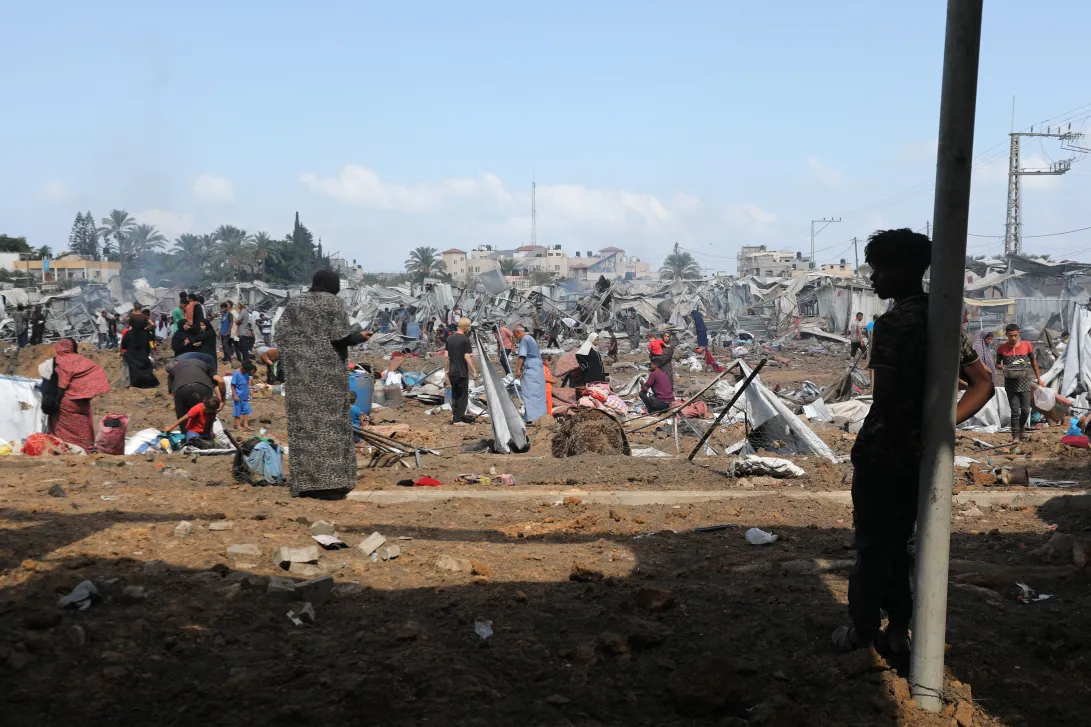
Mustafa’s remarks came a day after Israel bombed the Gaza Strip, justifying the attacks by claiming that the Palestinian Islamist group Hamas violated the ceasefire agreement in place since October 10.
“During the session, the executive called on the international community to intervene with Israel, the occupying power, to cease its attacks in Gaza, the West Bank, and Jerusalem,” the statement added, without mentioning the latest wave of Israeli bombings.
The Palestinian Authority, led by Mahmoud Abbas, governs parts of the West Bank, while the Gaza Strip remains under the control of its rival, Hamas.
The ceasefire agreement signed by Israel and Hamas stipulates that the Palestinian Authority will take on an administrative role in the Gaza Strip in the future, following a series of reforms that the agreement does not detail or set deadlines for.
Hamas, for its part, claims to have reached an agreement with Fatah (the main faction within the Palestinian Authority) to create an independent technocratic body to manage the enclave.
Hospitals and the Civil Defense in the Palestinian enclave, controlled by Hamas, reported at least 110 deaths, including 46 children, resulting from bombings carried out on Tuesday night and into today. Earlier today, after announcing a return to the ceasefire, Israel bombed an alleged weapons depot in northern Gaza to “eliminate a threat of terrorist attack.”
In the initial days of the ceasefire, Hamas released the last 20 living hostages it held in the Palestinian enclave, but since then, only 15 of the 28 deceased have been found, citing difficulties in locating the bodies among the rubble of the territory devastated by over two years of conflict.
In exchange for the hostages, Israel released nearly two thousand Palestinian prisoners and returned 195 bodies. The first phase of the agreement, driven by the United States and negotiated over several days with the mediation of other countries (Egypt, Qatar, and Turkey), includes the partial withdrawal of Israeli forces from the enclave and the access of humanitarian aid to the territory.
The war in Gaza was triggered by attacks led by Hamas on October 7, 2023, in southern Israel, which resulted in approximately 1,200 deaths and 251 hostages taken.
In retaliation, Israel launched a large-scale military operation in the Gaza Strip, which, according to local authorities, has caused over 68,000 deaths, the destruction of nearly all infrastructure in the territory, and the forced displacement of hundreds of thousands of people.
Platform with Lusa
