

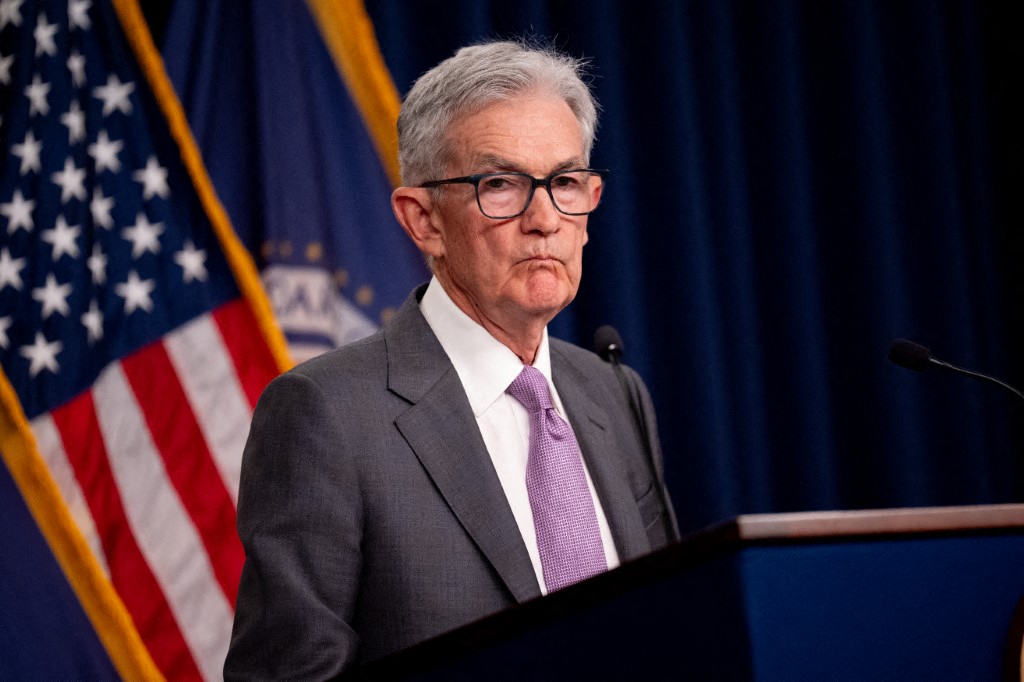
“During our meeting, participants expressed very different views on how to proceed in December. A new cut in the benchmark rates at the December meeting is by no means guaranteed,” Powell stated at a press conference.
Despite inflation in the U.S. remaining stable around 3%, given the current slowdown in employment, most analysts and markets had already anticipated a similar rate cut at the meeting scheduled for December. At this moment, “there is tension between our goals (2% inflation and full employment),” Powell remarked.
He suggested that the Fed is approaching a “deadlock, whatever that means. There is a growing chorus of people who believe we may need to wait for a cycle.” Powell also noted that the U.S. government shutdown “will impact economic activity, but that impact should be offset once the shutdown ends.”
Powell’s comments caused turmoil on Wall Street, where the three major indices, after averaging gains of about 0.5% throughout today’s session, suddenly fell into negative territory, with the Dow Jones Industrial Average and the Nasdaq temporarily losing around 200 points each.
This second rate cut decided today—the first of the year, also 0.25 points, occurred in September—placed the Fed’s benchmark rates in a range between 3.75% and 4%.
The decision was not unanimous. Two of the twelve members of the Federal Open Market Committee (FOMC) voted against the measure, but for different reasons, as indicated in the Federal Reserve’s statement.
Stephen I. Miran, a member of the Fed’s Board of Governors, advocated for a larger cut of half a percentage point, while Jeffrey R. Schmid, president of the Federal Reserve Bank of Kansas City, opposed any reduction in rates.
Platform with Lusa
