

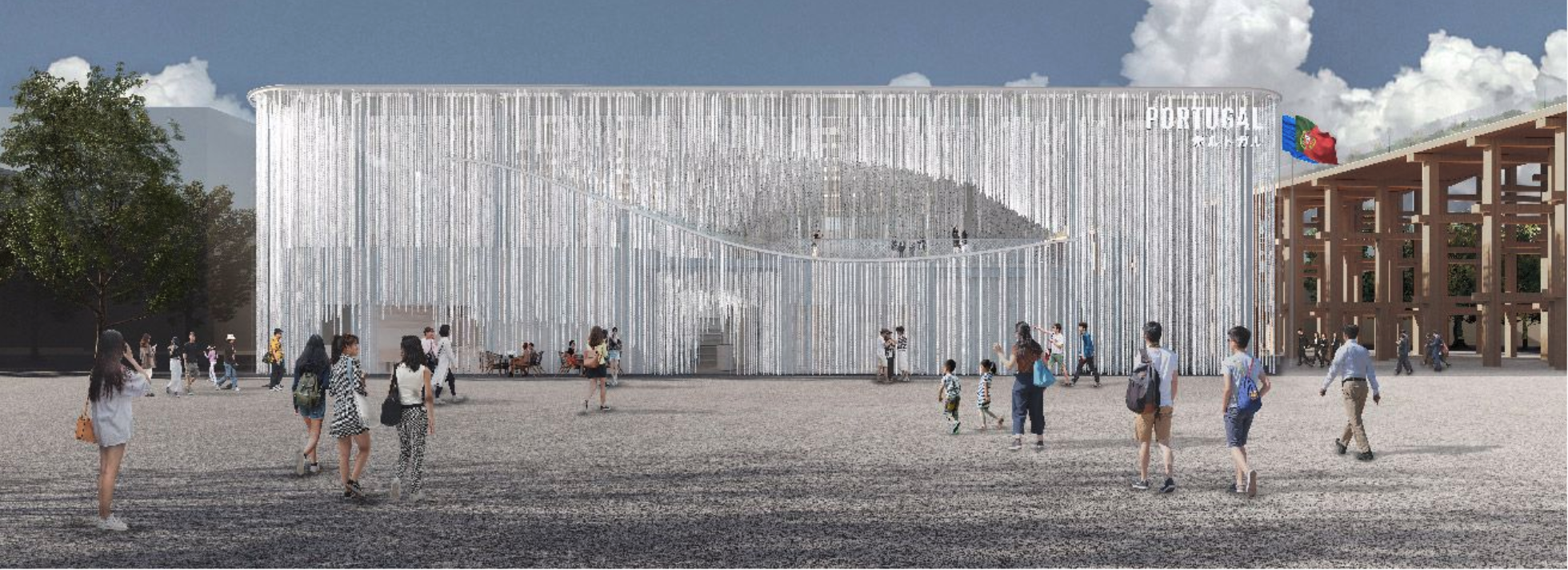
“The balance is very positive, starting with the number of visitors, we’ve received 200,000 visitors so far, after three weeks,” she told Lusa. The Osaka Expo kicked off on 13 April and ends on 13 October. “We had planned to receive an average of 7,000 visitors a day and we’re actually reaching 9,000,” she said, noting that this is an aspect that makes the organisation very happy, but it’s not the only factor.
“It’s also the level of visitor satisfaction,” adds Joana Gomes Cardoso. As for the nationality of the visitors, the commissioner-general doesn’t have exact figures, but “clearly” a large proportion are Japanese, as Lusa found out on site. But perhaps because Expo 2025 Osaka kicked off at Easter time, “we had groups of Portuguese, more than we ever imagined”, who turned up “in their 50s”, and many said they felt “great pride” at the end of their visit, she confided.
Joana Gomes Cardoso spoke on the eve of Portugal’s National Day, World Portuguese Language Day, and Children’s Day in Japan, which falls on Monday, May 5th.
“Tomorrow we’ll have what Portugal has best,” she said, pointing to the opening of the Siza Exhibition, dedicated to the work of architect Álvaro Siza Vieira, who is “very well known in Japan and around the world”. The exhibition, curated by Spanish architect and critic Carlos Quintanas Eiras, is being held in partnership with the Calouste Gulbenkian Foundation.
It also features Dino D’Santiago, who brings a contemporary Portugal to mark the Portuguese language. In the evening, there will be a tribute concert to Amália Rodrigues with Ana Moura, Camané, and Ricardo Ribeiro. “Amália Rodrigues was the artist that Portugal brought to the 1970 Osaka Expo, and we’re going to pay tribute to her” through these musicians.
It’s about bridging the 55 years between the first expo in 1970 and this year’s in Osaka. “We wanted to pay this tribute,” as we did on 1 May with Carlos Paredes, “another artist who was present at the 1970 Osaka Expo and is now celebrating his centenary,” he said.
In fact, “we’ve tried to build a bridge between what is contemporary Portugal, artists like Dino D’Santiago”, among others who will be performing over six months, without forgetting those who were and still are the “great references” such as Carlos Paredes and Amália Rodrigues, she emphasised.

But there is another bridge, with Expo98, which took place in Lisbon and had the oceans as its backdrop. This year’s Expo in Osaka has the theme “Ocean, blue dialogue”.
“This connection is assumed, we wanted to use the theme “Ocean, Blue Dialogue” to pay homage to the historical relationship between Portugal and Japan, which is almost 500 years old and was made by the sea,” he said.
“There’s no doubt that we’re honouring Expo98, which put the issue of the ocean on the international agenda, and then responding to the challenge of this expo, which was to design the future cities,” she continued.
This is because “the future must be built by protecting the ocean and that, above all, is what we wanted to convey with this national representation,” she added.
In addition, there is the “happy connection” between the Lisbon Oceanarium, which was born out of an exhibition, “from Expo98 and the coincidence of being the same architect as the great aquarium in Osaka”, a fact that makes the visiting public “very curious”, she said.
Portugal’s National Day at Expo2025 will also be attended by the Minister of Culture, Dalila Rodrigues. Portugal will mark Portugal Day (10 June) with a concert by fado singer Carminho, who recently toured several Japanese cities. In addition, to mark Camões Day, there will be a joint action with Turismo de Portugal linked to literary tourism.
The Portugal pavilion, designed by Japanese architect Kengo Kuma, is 1,800 square metres and has two multi-purpose rooms, a terrace, two permanent exhibition areas and a shop. The overall investment is around €21 million.
Platform with Lusa
