

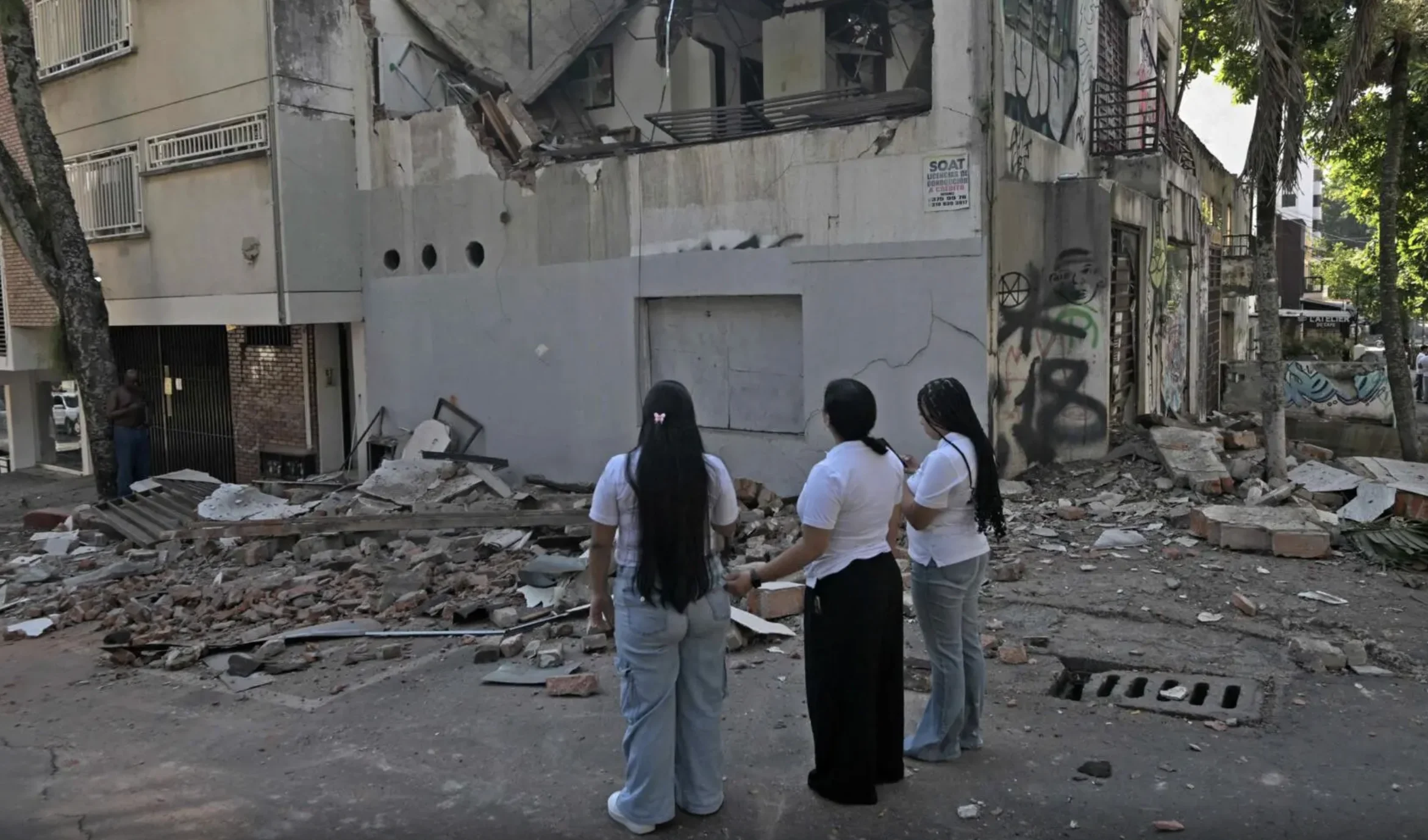
The aftermath of a 7.4-magnitude earthquake in Colombia has drawn sharp comparisons to the seismic disaster that struck neighboring Venezuela two months prior, illustrating how institutional strength and governance models directly shape emergency recovery efforts.
Following the tremor that hit Colombia’s western regions, newly inaugurated President Abelardo de la Espriella established a centralized emergency response post within an hour of the event, dispatching heavy machinery, thermal-camera drones, and specialized search teams from Bogotá.
Despite a contentious political transition with the outgoing administration that disrupted formal agency handoffs, Colombia’s democratic institutions and local disaster management systems mobilized rapidly across affected provinces.
Read more about this topic: Colombia and Venezuela: Two similar earthquakes, two very different outcomes
The immediate deployment in Colombia stands in contrast to the response in Venezuela following dual earthquakes in late June. There, acting President Delcy Rodríguez faced criticism for delays in addressing the nation and a slower mobilization of specialized rescue equipment.
The Venezuelan government relied heavily on international rescue teams to offset domestic resource constraints resulting from years of economic difficulty, while opposition sources questioned official casualty reporting due to communication restrictions.
While both nations face significant logistical hurdles—with thousands still reported missing across difficult terrain in Colombia—the contrasting management approaches underscore the critical role that state capacity, infrastructure, and institutional readiness play during major natural disasters.
