

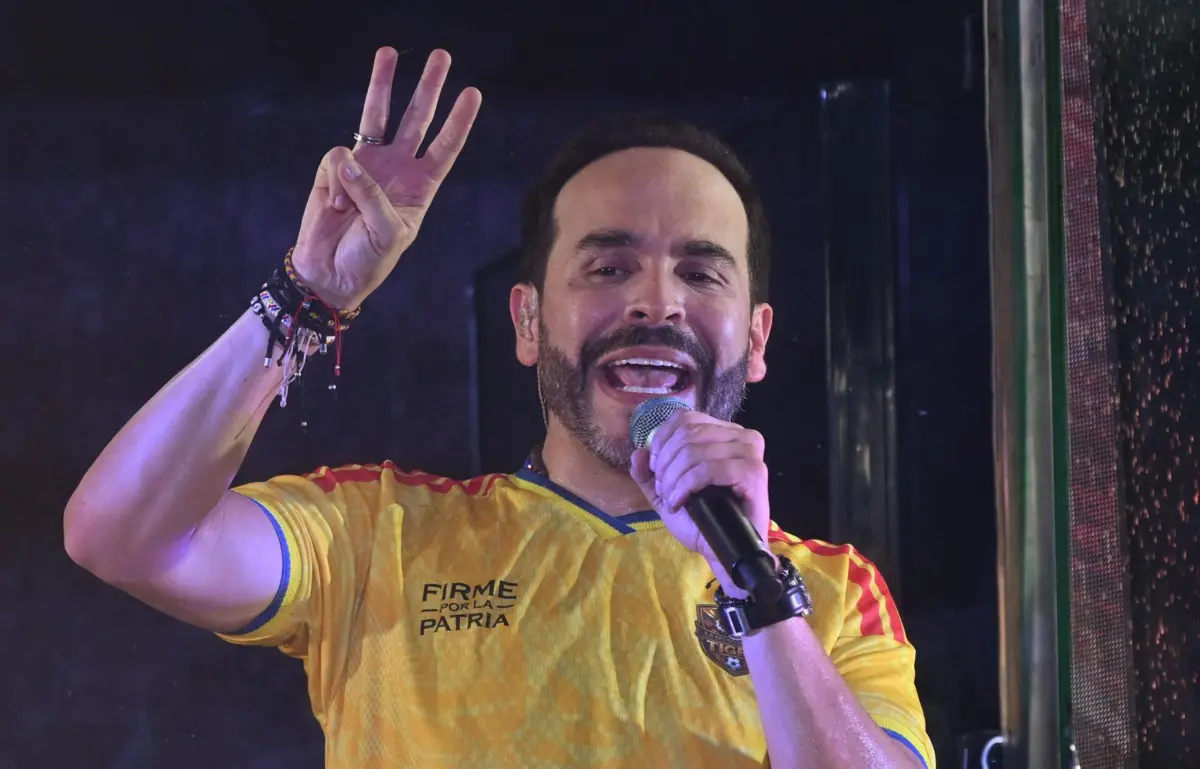
Colombia’s president-elect, Abelardo de la Espriella, announced that, after taking office on August 7, he will close at least 14 embassies, including those of Cuba, Haiti and Nicaragua, as part of a reorganization of the diplomatic network.
“In a first phase, I will close the embassies in Algeria, Azerbaijan, Barbados, Cuba, the Czech Republic, Ethiopia, Ghana, Haiti, Hungary, Malaysia, Nicaragua, Romania, Senegal and South Africa,” De la Espriella stated on Sunday, in a speech published on social media.
The official also announced the suspension of the opening of the mission in Palestine, as well as the closure of about fifteen consulates.
De la Espriella assured that the measures “do not mean breaking diplomatic relations” with the affected countries, except with Cuba and Nicaragua, with which he stated that, in the government he will lead, “there will be no link whatsoever with tyrannies.”
Read more about this topic: Right-wing shift in Colombia could eliminate one of Brazil’s last allies in South America
The future president explained that Colombian citizens in the countries where the embassies will be closed will continue to receive assistance through joint representation by other diplomatic missions in the region.
The president-elect also stated that the reorganization aims to make the foreign service “more efficient.”
As part of this strategy, De la Espriella also announced the reopening of the Colombian Embassy in Israel, which will operate in Jerusalem — a promise he made during the presidential campaign — and the opening of a diplomatic mission in Nigeria, with the aim of reorganizing the country’s presence in Africa.
In addition, he stated that he will unify some diplomatic representations that, in his view, “duplicate functions,” such as Colombia’s embassies in France and to UNESCO, in Paris, as well as those in Italy and to the Food and Agriculture Organization of the United Nations (FAO), in Rome, so that a single ambassador takes on both representations.
Read more: Colombia: death toll rises to 19 in bombing ahead of elections (with video)
The president-elect added that, during the first 100 days of government, he will request a technical audit of the remaining diplomatic representations, to assess their continuity, and stated that the resources saved through these measures are intended to strengthen sectors such as security, health, education and infrastructure.
“Every peso we save on bureaucracy will be a peso we can invest in security, health, education, infrastructure and, above all, in opportunities for the poorest,” De la Espriella stated, maintaining that diplomacy will be oriented toward attracting investment, opening markets and defending Colombia’s interests abroad.
