

Macau’s Consumer Confidence Index rose by 1.25% in the second quarter of 2026, reaching 97.99 points, according to the latest survey by the Macau University of Science and Technology (MUST). The improvement covered all six sub-indices analyzed – Local Economy, Employment Situation, Price Level, Living Standards, Housing Purchase, and Stock Investment – but the overall result remains below the 100-point threshold that separates confidence from lack of confidence.
The most significant improvements were recorded in assessments related to prices, employment, and living standards. However, all three indicators remained in negative territory: the price level stood at 89.49 points, employment conditions at 91.87 points, and living standards at 97.99 points.
Confidence in housing purchases and stock investment, by contrast, remained above the neutral level, at 106.27 and 110.68 points respectively. Henry Lei links these results to the stamp duty exemption on property purchases, which generated “a positive market response”, with a significant increase in transactions during the first quarter, as well as the “relatively positive performance of the Hong Kong Stock Exchange” during the same period.
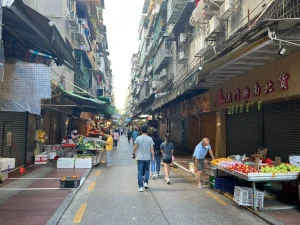
However, these signs have not been reflected evenly across the economy. “Macau’s economic recovery continues, in general terms, to be uneven, while the business environment remains challenging for small and medium-sized enterprises in sectors unrelated to tourism,” Lei told PLATFORM. The economist added that “many residents are also still earning incomes below pre-pandemic levels”, helping to explain the continued lack of confidence in the local economy.
Recovery remains uncertain
Lei noted that the rise in confidence coincided with a year-on-year increase of 23% in total retail consumption value during the first quarter. For the economist, the result “represents a significant improvement compared with 2025” and “can be interpreted as a recovery from the weak performance of the previous year.”
The role of the Government should be to improve entrepreneurs’ capabilities, providing them with the necessary skills to apply new management and marketing methods to their operations and explore new directions for their businesses – Henry Lei, economist
Nevertheless, he warned that “it may still be too early to confirm that a stable recovery trend has been established”, given the profound changes in the global macroeconomic environment since April.
Among the main risk factors, he highlighted higher inflation, the continued maintenance of high interest rates over an extended period, and other uncertainties affecting consumption and investment.
The MUST survey classified the current trend as a “weak recovery”, marked by fragile medium- and long-term expectations. Based on responses from 832 residents, the study recommends that the Government continue to “monitor the growth dynamics of the local economy, liquidity conditions in the property and stock markets, and long-term employment and income stability.”
The institution also warned of the “multiple challenges” facing mainland China’s economy, including “strong supply accompanied by weak demand, a slow recovery in domestic demand, imported cost pressures, and fluctuations in external demand.”
Supporting SMEs and employment
Henry Lei believes that maintaining price stability and protecting local employment “should be viewed as permanent responsibilities of the Government”. Such measures, he argues, could create more employment opportunities for residents, improve purchasing power, and strengthen household confidence through more stable incomes.
The economist also suggests that the Government could relaunch its consumption subsidy program during the low season. The measure, which ended in June, was, in his view, “an effective short-term or temporary measure”, stimulating private consumption and directing demand toward local SMEs.
More stable prices could also “encourage residents to remain in Macau for their purchases”, reducing the outflow of consumption to neighboring cities. However, Lei believes temporary support measures must be accompanied by structural reforms capable of strengthening the competitiveness of the business sector.
Macau’s economic recovery continues, in general terms, to be uneven, while the business environment remains challenging for small and medium-sized enterprises in sectors unrelated to tourism – Henry Lei, economist
“The role of the Government should be to improve entrepreneurs’ capabilities, providing them with the necessary skills to apply new management and marketing methods to their operations and explore new directions for their businesses,” he said.
Among the priorities, he highlighted the “use of technology”, the “adoption of new business models”, and the “launch of new products and services”. He also called for “training programs” and longer-term reform initiatives aimed at supporting the “transformation and modernization of local SMEs”.
At the same time, Lei believes investment promotion policies should continue in order to attract foreign direct investment and encourage the “establishment of new business activities in Macau”, which, he said, “could have positive effects on the city’s economic and business environment.”
