

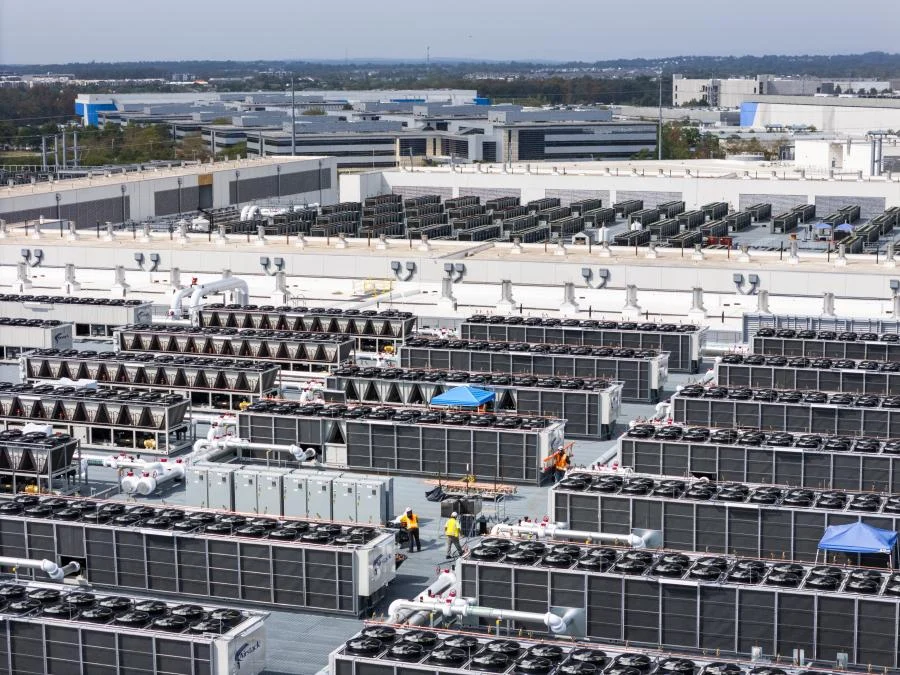
The advancement of Artificial Intelligence (AI) will multiply data center electricity consumption sevenfold by 2050, at which point it will represent 8% of global demand, constituting one of the main challenges for power grids.
This is the forecast of the Organization of the Petroleum Exporting Countries (OPEC) in its “World Oil Outlook 2050” report, released today in the Austrian capital of Vienna.
In absolute terms, the document detailed that the demand for electricity driven by data centers and AI will register an increase of 3,606 terawatt-hours (TWh) by the year 2050.
The figures reveal that consumption will multiply sevenfold, rising from the 602 TWh recorded in 2025 to approximately 4,208 TWh by the middle of the century.
Read more: Macau: AI generating “;profound transformation” in Lusophone universities
Consequently, electricity consumption from these sectors will rise from around 2% of the global total in 2025 to 8% in 2050.
AI, with its massive energy consumption, thus becomes one of the main drivers of growth in global electricity demand, which, as a whole, will increase by more than 85%, surpassing 50,500 TWh by 2050.
Global electricity production will increase by more than 85% between 2025 and 2050, rising from around 32,000 to 59,500 TWh, driven by growth in developing nations, particularly in Asia.
The massive demand for AI, according to the report, is exerting significant pressure on power grids within the world’s most advanced economies.
Read more: Universities in Macau and Coimbra establish center for Law and Artificial Intelligence
In the US, for example, demand from data centers and AI is growing faster than the grid’s capacity to satisfy it, leading some tech companies to plan the construction of off-grid power sources.
The great challenge for data centers and AI is that they require an uninterrupted, continuous, and highly reliable electricity supply, something that renewable energies, due to their intermittent nature, cannot always guarantee.
Faced with this situation, the OPEC report highlighted the trend of companies within the energy sector to bet on nuclear energy as a stable source of power.
Major corporations like Amazon, Google, Microsoft, and Meta have announced potential electricity supply agreements linked to nuclear energy, in many cases related to the development of small modular reactors (SMRs), the organization noted.
