

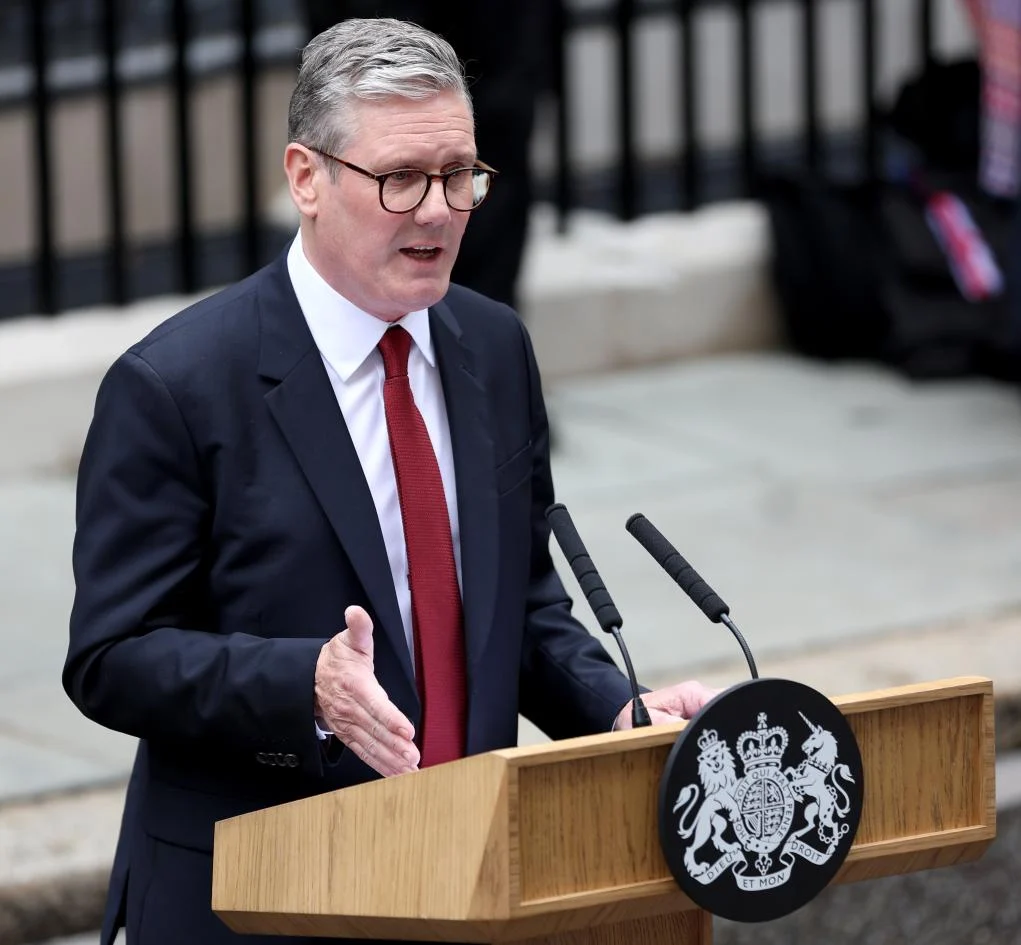
Keir Starmer came to power on July 4, 2024 with one of the largest parliamentary majorities in British political history — 411 seats out of 650 — ending 14 years of Conservative rule. Less than two years later, he announced he was stepping down as leader of the Labour Party, undone by a combination of missteps, party infighting, and a single appointment that proved impossible to survive.
Starmer’s pitch to the British public had been simple and deliberate: no more soap opera politics. After the chaos of Boris Johnson’s Partygate scandal, Liz Truss’s catastrophic mini-budget, and a constant churn of Conservative prime ministerial drama, Starmer promised competence, stability, and a government of public service.
“It’s very hard to survive that,” Rob Ford, a political science professor at the University of Manchester, told the Associated Press, noting that Starmer’s government became “the antithesis of what he said he was going to be about.”
The problems began early. A furor over accepted gifts — designer spectacles, Taylor Swift concert tickets — damaged his carefully managed image. A series of policy U-turns followed, most damagingly over welfare cuts that provoked anger within Labour’s own parliamentary ranks.
Read more about this topic: UK: Keir Starmer announces tearful resignation (with videos)
His majority, though vast in seat count, rested on only 34% of the popular vote, with many Labour voters motivated more by hostility to the Conservatives than enthusiasm for Starmer — a dynamic commentators quickly labeled the “loveless landslide.”
What ultimately proved fatal was his decision to appoint Peter Mandelson — the veteran Labour grandee known as the “Prince of Darkness” — as Britain’s ambassador to the United States. The logic seemed sound: Mandelson’s trade expertise and ease among the ultra-wealthy made him a credible interlocutor for Donald Trump’s second administration.
The appointment backfired catastrophically when documents surfaced in September 2025 revealing the extent of Mandelson’s ties to Jeffrey Epstein, whom he had once called his “best pal.” Starmer fired Mandelson, but further revelations continued to destabilize his leadership across the following months. Crucially, Starmer himself had no connection to Epstein — but the damage to his judgment, and to his government’s image, proved irreversible.
His resignation was confirmed on a Monday in June 2026, triggered by a drubbing at local and regional elections in May that set off a wave of ministerial resignations. In his statement, Starmer acknowledged the parliamentary party had answered the question of whether he remained the right person to lead Labour into the next general election — and said he accepted that answer “with good grace.” He will remain caretaker prime minister until a successor is chosen.
Read more about this topic: UK cabinet ministers demand Prime Minister resignation
Andy Burnham, the former Greater Manchester Mayor, is widely expected to take over. A Labour MP in Greater Manchester stepped down specifically to allow Burnham to contest a parliamentary seat; he won decisively and called the moment a “turning point” for British politics.
Starmer’s supporters point to a genuine record of domestic achievement — shorter NHS waiting lists, expanded rights for workers and renters, signs of economic recovery in the months before the Iran war disrupted it — and he said in his resignation statement that his successor “will inherit a Britain that is far stronger and fairer than the one I inherited two years ago.”
The difficulty was that he was never able to make that story stick with the public. Support for Labour simply refused to move, no matter what the government delivered.
Ford’s verdict, offered to the AP, was blunt: Starmer entered politics late, after a successful career as a barrister and Director of Public Prosecutions — roles that rewarded precision and process over instinct and flexibility. Those same qualities, formidable in opposition, left him without the political radar the top job demands.
