

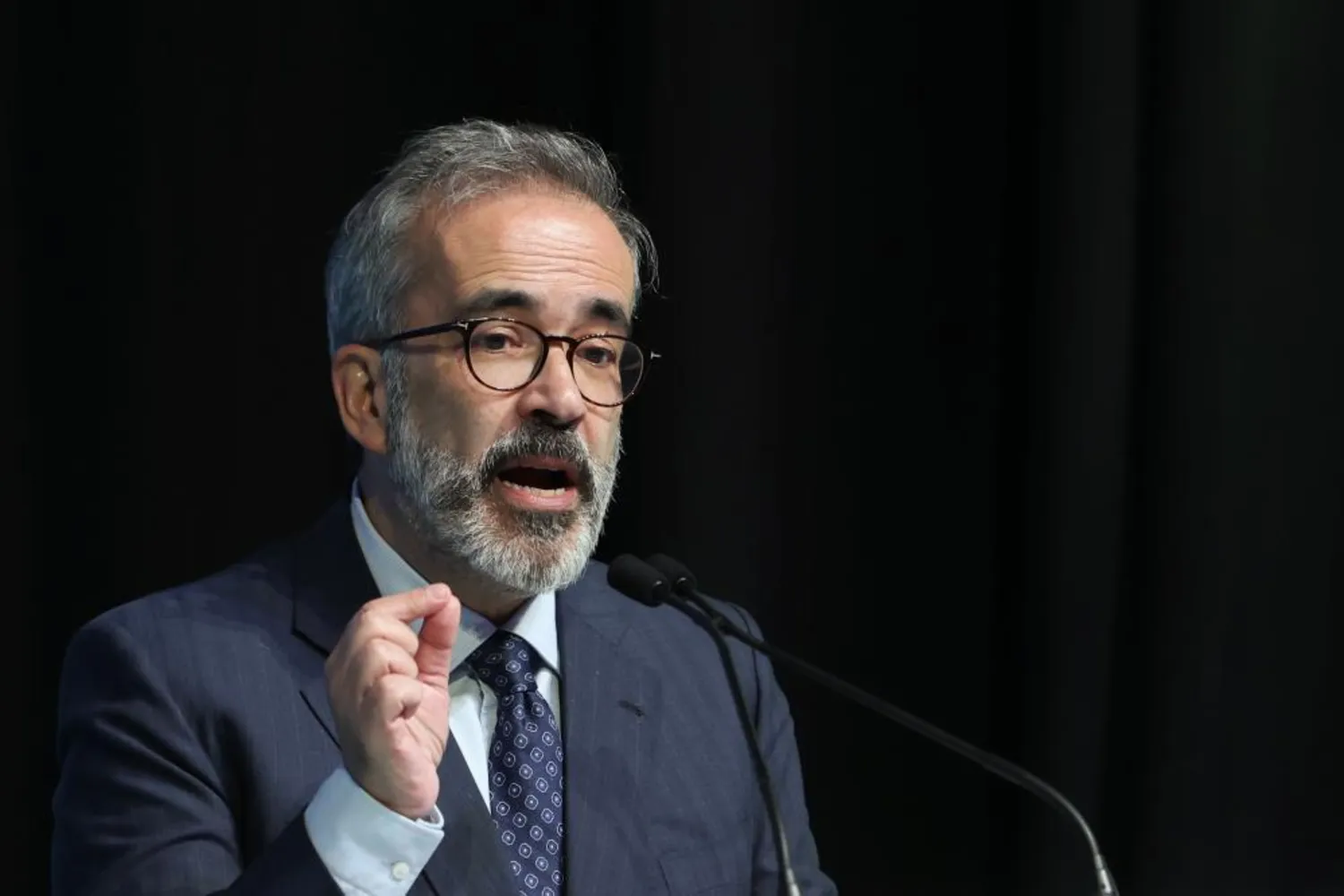
Guinea-Bissau’s ruling military authorities have issued a sharp “diplomatic warning” to the Portuguese government, threatening severe consequences for bilateral relations over what they term as interference in their national sovereignty. The rebuff was issued by the National Transition Council (CNT) in response to recent public comments made by Portuguese Minister of Foreign Affairs Paulo Rangel.
In a recent interview with Portuguese radio station Antena 1, Rangel discussed the potential lifting of Guinea-Bissau’s suspension from the Community of Portuguese Language Countries (CPLP). He further reiterated international demands for a swift return to constitutional order and the immediate release of detained opposition figure Domingos Simões Pereira.
The official statement released by the junta serves as a final warning against what it terms the persistent meddling and neocolonial paternalism adopted by Lisbon’s diplomats toward the sovereign nation.
“The National Transition Council of the Republic of Guinea-Bissau issues this statement as a direct, forceful, and definitive reaction to the unacceptable statements made by Portuguese Foreign Minister Paulo Rangel,” the communique stated. The military leadership underscored that any future attempts to intrude upon their internal sovereign affairs will be met with a response of equal or greater force, carrying severe diplomatic fallout.
Read more about this topic: Military rulers in Guinea-Bissau reject Portugal’s “hostile corridor diplomacy”
Guinea-Bissau was suspended from the CPLP and several other international bodies following a military coup on November 26, 2025. The coup disrupted general elections that had taken place just three days prior, overthrew President Umaro Sissoco Embaló, and resulted in the imprisonment and subsequent house arrest of the main opposition leader and historical PAIGC party head, Domingos Simões Pereira.
In its statement, the National Transition Council claimed that Guinea-Bissau has no interest in returning to an organization that functions merely as a geopolitical tool for Portuguese influence. The military rulers reminded Lisbon that the CPLP has never funded electoral processes in Guinea-Bissau, noting that its upcoming general elections, scheduled for December 6, are almost entirely self-funded.
Regarding the imprisonment of Pereira and his pending trial before a military court for his alleged involvement in a coup attempt prior to the November 2025 elections, the junta pointed to the long-standing “Sócrates Case” in Portugal as an example of what they classified as the incompetence and chronic delays within the Portuguese judicial system.
They asserted that a state exhibiting such inefficiency at the top of its own judiciary holds no moral or political authority to judge or demand the release of citizens facing legal processes in Guinea-Bissau.
