

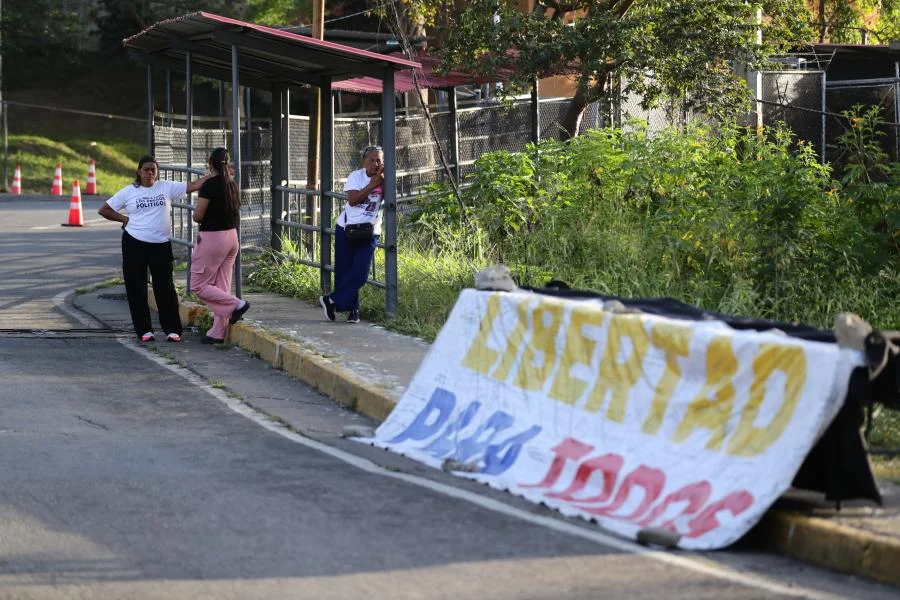
The Inter-American Commission on Human Rights (IACHR) delivered a chilling update to the Permanent Council of the Organization of American States (OAS) this Wednesday, detailing a persistent and deliberate policy of state repression in Venezuela.
Executive Secretary Tânia Reneaum Panszi characterized the arbitrary deprivation of liberty for political reasons as a definitive sign of the “collapse of the rule of law,” asserting that these actions are not isolated incidents but rather a sustained governmental strategy.
The findings presented to the OAS indicate a staggering scale of detention. According to the IACHR, civil society recorded 2,062 political arrests between July and December 2024. While thousands were initially held, the Commission noted that 1,794 remained imprisoned at the end of 2025. As of April 2026, data reveals that 454 political prisoners are still in custody, a group that includes 44 women, a teenager, and 186 military personnel.
The Commission was blunt in its assessment of the conditions within these detention centers, citing overwhelming evidence of forced disappearances, torture, prolonged isolation, and the denial of critical medical care, which has reportedly led to at least 18 deaths in state custody.
Read more about this topic: Venezuela: two Portuguese citizens being held in “inhumane” prison (with video)
The report also scrutinized the “Amnesty Law for Democratic Coexistence,” approved in February 2026. While the Venezuelan state claims that over 8,000 individuals have benefited from this law, the IACHR raised serious concerns regarding its implementation.
Panszi warned that the law’s legal loopholes—specifically an open-ended clause regarding “foreign actors”—allow for continued targeting of political opponents. Furthermore, the Commission argued that the same judicial bodies responsible for the original arbitrary arrests are now tasked with applying the amnesty, creating a paradox where instruments of repression are expected to provide reparation.
Of the individuals released under the new law, civil society records suggest only 186 have achieved total freedom. The remaining 554 are subjected to restrictive measures, including travel bans, mandatory court appearances, and prohibitions on speaking to the press or participating in protests.
Panszi dismissed this status as “supervised freedom” rather than true liberty. The IACHR concluded its update with an urgent demand for the immediate cessation of arbitrary arrests, full public disclosure of prisoner lists, and an unrestricted visit to Venezuelan detention centers, vowing never to normalize what it defines as a systematic policy of repression.
