

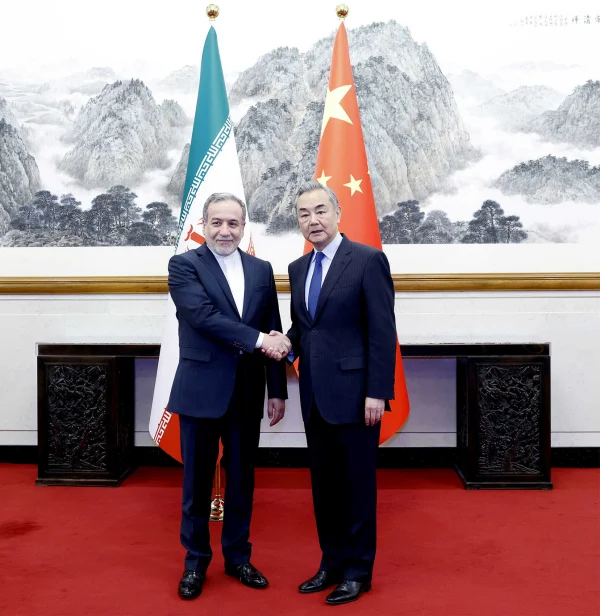
Wang and Araghchi will discuss bilateral relations in Beijing, “as well as current regional and international issues,” said Iran’s Ministry of Foreign Affairs in a brief statement cited by the Spanish news agency EFE and the French news agency AFP.
The visit coincides with rising tensions in the strategic Strait of Hormuz, through which 20% of the world’s oil passes and which is currently under blockade by Iran and the United States.
On Monday, the United States called on China and other countries to join Operation “Project Freedom” to facilitate the passage of hundreds of merchant ships stranded in the Strait of Hormuz.
The operation, announced by U.S. President Donald Trump, has mobilized hundreds of aircraft, destroyers, and drones, but does not include a formal military escort for the merchant ships.
Read more: Iran War: China blocks US sanctions against Chinese companies
The start of the operation has heightened tensions in the region, with Iran firing warning shots on Monday at U.S. warships and attacking an oil field in the eastern United Arab Emirates.
China is Iran’s main trading partner, the destination for 90% of Iranian crude oil, and one of Tehran’s most influential allies. Beijing condemned the war launched on February 28 by the United States and Israel against Iran, to which Tehran responded with attacks on countries in the region and the blockade of the Strait of Hormuz.
The war has already caused thousands of deaths, mostly in Iran and Iraq, and sent oil prices soaring, with global consequences. Washington and Tehran have been observing a ceasefire since April 8 in an effort to negotiate an end to the conflict, but talks held in Islamabad were unsuccessful, and no second round has taken place so far.
Following the failure of the negotiations in the Pakistani capital, which concluded on April 12, Trump imposed a blockade on Iranian ports and ships the following day.
