

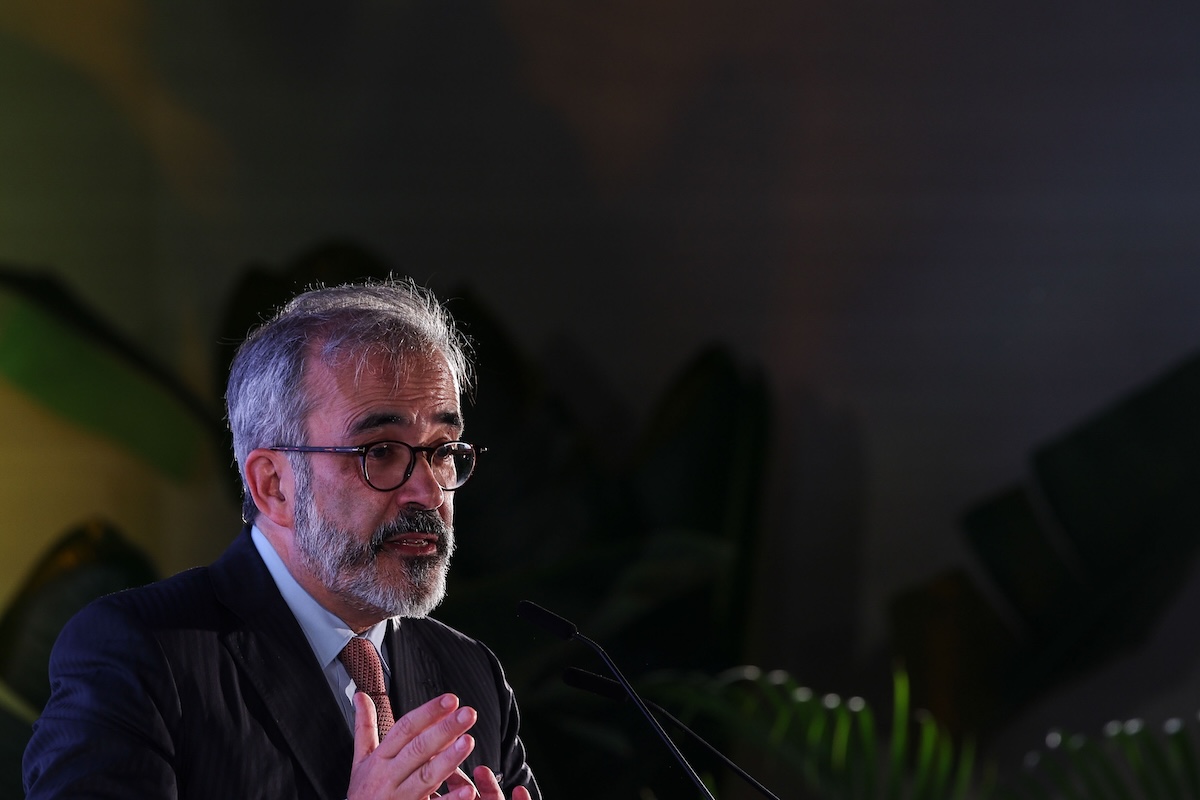
Portuguese Foreign Minister Paulo Rangel argued during the “Foro La Toja — Vínculo Atlântico” summit in Lisbon that the recent friction between the European Union and the United States has inadvertently strengthened Europe’s position by fostering deeper diplomatic ties with the United Kingdom and Canada.
According to Rangel, the cooling of transatlantic relations since the current Trump administration took office in 2025 has served as a vital wake-up call. He suggested that this shift has compelled European nations to finally accept their own strategic responsibilities, responding to a demand that American officials have voiced for decades but which has now become an urgent necessity.
While maintaining that the relationship with the United States remains the cornerstone of European foreign policy, Rangel asserted that Europe now possesses the resources to manage its own defense. He suggested that such sovereignty should ideally be pursued in coordination with traditional allies, but with a renewed sense of independence.
The Minister noted that history has proven even the closest alliances, such as those with the UK, have faced complex challenges—citing the 1890 British Ultimatum as a historical example—without permanently damaging the underlying connection between nations.
Read more about this topic: Iran War: Portugal responds to Trump and rules out military participation in the Strait of Hormuz
The geopolitical divergence between Portugal and Spain regarding Washington also took center stage during the discussion. Rangel explained that while Portugal remains a strictly Atlantic-focused power, Spain balances its Atlantic projections with significant Mediterranean and continental interests.
This difference has manifested in the current diplomatic crisis surrounding Iran; while the Spanish government has refused to allow US aircraft to use its bases or airspace for strikes, Portugal has pursued a policy of loyal collaboration.
Lisbon has provided conditional authorization for US access to the Lajes Air Base in the Azores, provided that operations avoid civilian infrastructure in Iran, helping to shield Portugal from the kind of trade threats and potential NATO exclusion that Madrid is currently facing.
Looking toward the future, Rangel urged European leaders to expand their definition of the Atlantic. He cautioned against focusing solely on northern latitudes and advocated for a strategy that encompasses the entire ocean, from the Arctic to the Antarctic.
He highlighted the Mercosur bloc—comprising Brazil, Argentina, Paraguay, and Uruguay—as a market of 700 million people that could serve as a crucial hedge against rising protectionism. Ultimately, the Minister called for a broader commitment to South America and Africa, arguing that these regions are essential to Europe’s long-term economic and strategic resilience.
