

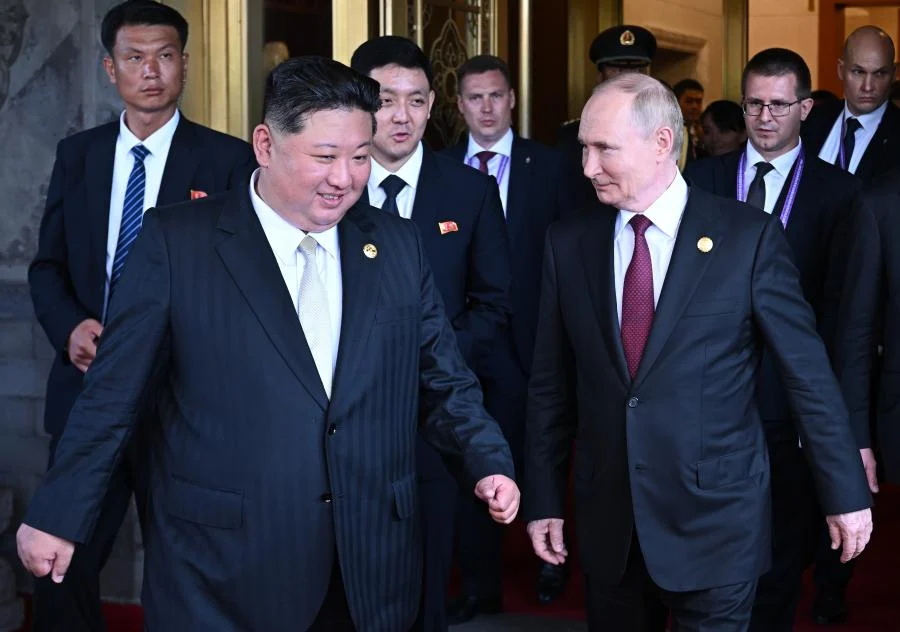
Russia and North Korea have marked a significant milestone in their deepening alliance, successfully completing the structural connection of the first road bridge linking the two nations. The ceremony, held this past Tuesday, April 21, 2026, celebrated the joining of the spans over the Tumen River, a development described by Moscow as a “landmark stage” in the strengthening of their bilateral ties.
According to North Korean state media, KCNA, the project is considered an “important business” designed to facilitate closer cooperation in trade, tourism, and the movement of people across the shared border.
Construction on the 850-meter-long bridge began in early 2025 following agreements reached during President Vladimir Putin’s 2024 visit to North Korea. While the primary structural work is now complete, the Russian embassy in Pyongyang and regional officials have indicated that the crossing is scheduled for full operational completion by June 19, 2026.
The new infrastructure is expected to dramatically streamline regional logistics, with officials estimating it will accommodate up to 300 vehicles daily and significantly reduce travel distances between Russian hubs, such as Vladivostok, and North Korean border cities like Rason.
Read more: Seoul says North Korea has deployed more troops to Russia
This bridge serves as a critical strategic addition to the existing Friendship Bridge, a railway crossing commissioned in 1959 that has remained the sole direct land link between the two countries for decades. The push to finalize the road connection comes amid a period of rapidly expanding alignment between Moscow and Pyongyang.
As both nations continue to navigate significant international isolation, they have moved to fortify their economic and military partnership. This infrastructural pivot is complemented by ongoing diplomatic efforts, including recent high-level meetings between security officials aimed at bolstering police and intelligence cooperation.
The project is viewed by international observers as a tangible commitment to the long-term sustainability of the Moscow-Pyongyang axis. By establishing this new artery, both governments are positioning themselves to increase trade volumes and secure a more resilient logistical network that bypasses traditional maritime dependencies.
As the June opening date approaches, both capitals have signaled their intent to use the new route as a primary vehicle for regional integration, further signaling the durability of their collaborative efforts in the face of ongoing geopolitical pressures.
