

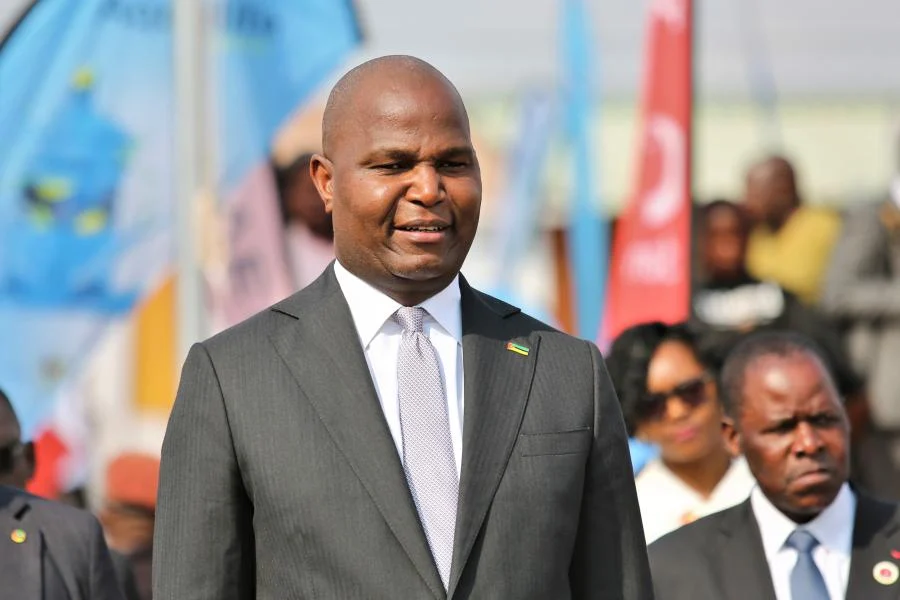
Speaking as leader of FRELIMO (the ruling party) at the opening of the second ordinary session of the Mozambican Youth Organization (OJM), Chapo highlighted the government’s priority of providing vehicles for public transport across the country.
“When we deploy vehicles in the 15 municipalities of the central and northern regions, and next month in May in the southern region, it is precisely to anticipate the fuel crisis that could come at any time due to the war, as you well know, between Iran, the United States and Israel. And with public transport we can minimize the impact of this crisis,” he said.
Mozambican authorities announced on Thursday that they are preparing measures to mitigate potential impacts from rising fuel prices, given the unpredictability of global markets due to the Middle East conflict.
“There is a lot of unpredictability regarding fuel prices in the international market. At this point, it is very difficult to make any forecasts, considering the geopolitical context,” said Felisbela Cunhete, Director of the National Directorate of Hydrocarbons and Fuels (DNHC), in Maputo.
Read more about this topic: Mozambique’s electricity exports drop 41%
She noted that between January and February, fuel prices were relatively stable, but that situation changed this month, with higher import costs and product prices due to the Middle East conflict, as most of Mozambique’s fuel supply comes from that region.
The closure of the Strait of Hormuz, a key route for around 20% of global oil and a significant share of liquefied natural gas transported by sea, caused rapid market reactions and a sharp increase in fuel prices, she said.
According to Cunhete, recent announcements of a truce between the United States and Iran have brought some positive reaction to markets, but damage to energy infrastructure in the region remains a concern.
“Both production infrastructure, refineries, and logistics and transport infrastructure have been affected. The repair of all this damage may take some time,” she explained.
Read more about this topic: Mozambique: President to subsidize fuel if prices rise due to Iran War
In this context, she added, if countries continue importing fuel at higher costs, this will likely be reflected in the domestic market, with the government preparing mitigation measures.
“At some point, we will have to absorb this price, and the government is aware of that,” she acknowledged, adding that the executive is preparing measures to reduce the impact on retail prices, given that fuel costs have a multiplier effect across the entire economy.
