

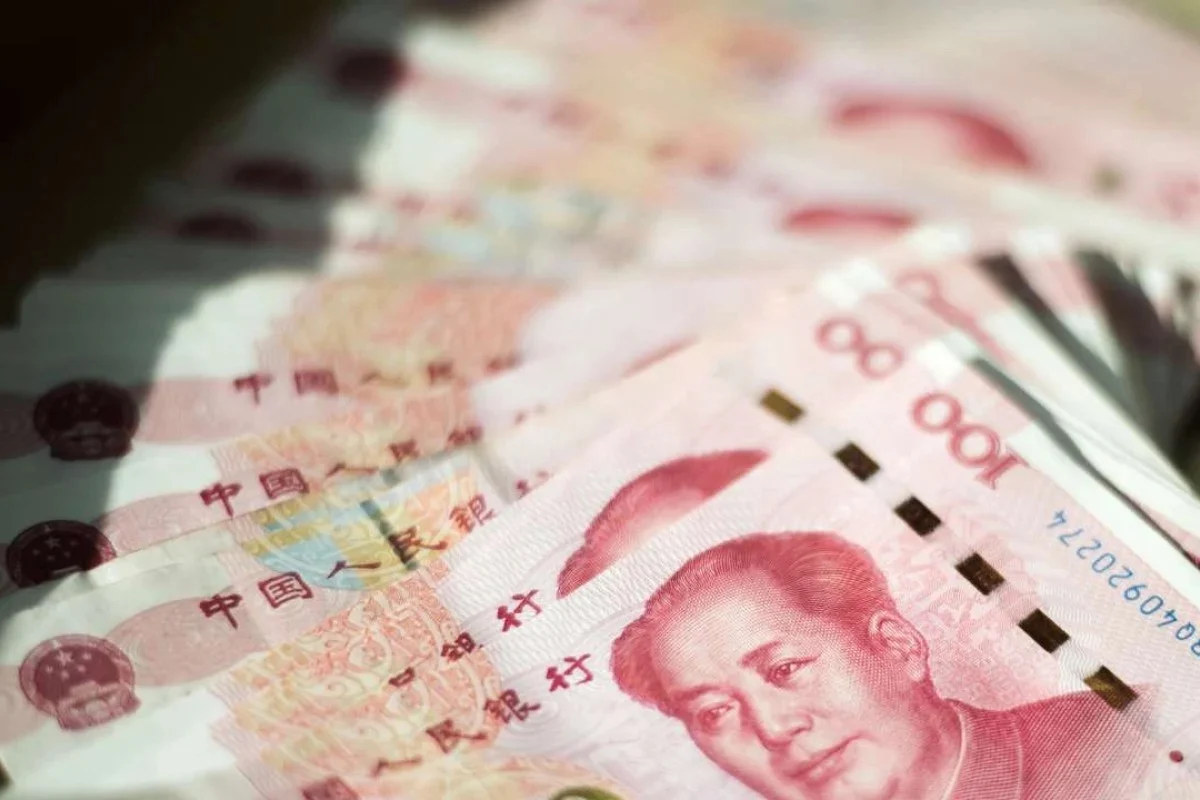
At this moment of war and extreme uncertainty in the financial markets, particularly with regard to the behavior of the US dollar – and the so-called petrodollar – China continues to deepen its policy of opening to the outside world, within which the internationalization of the renminbi stands out as one of its most consistent strategic priorities.
More than a financial objective, it is a central instrument of China’s external economic policy, with a direct impact on how the country structures its relations with different regions of the world.
As the People’s Bank of China emphasizes, “promoting the cross-border use of the renminbi constitutes an essential pillar of high-level financial opening-up.” This strategic orientation forms part of a broader plan to strengthen the international presence of the Chinese currency, with particular emphasis on countries and regions where Beijing seeks to deepen structural economic ties.
It is in this context that Macau’s role has been reassessed, with modern finance having been included among the central pillars of the economic diversification of the Macao Special Administrative Region. Traditionally identified as a cultural and commercial bridge with the Portuguese-speaking countries, the future of the MSAR now also depends on establishing itself as a functional platform for the use of the renminbi in the Lusophone world.
Read more: Macau Chief Executive hopes to make official visit to Portugal in “April or May” 2026
This evolution accompanies the sustained growth of economic relations between China and the Portuguese-speaking countries. As trade and investment intensify, the need for more efficient financial instruments becomes evident – ones capable of reducing transaction costs and increasing the predictability of operations. In this context, the growing importance of the renminbi emerges as a pragmatic response to these increasing needs.
According to the Monetary Authority of Macau, “the development of the offshore renminbi market in Macau is a strategic priority, with a view to strengthening the Region’s role as a financial platform between China and the Portuguese-speaking countries.” This ambition has been taking shape in concrete, albeit gradual, measures.
In recent years, there have been advances in the issuance of renminbi-denominated bonds, as well as in the creation of settlement and clearing mechanisms tailored to cross-border operations. The establishment of dedicated financial infrastructure, including clearing systems and links to mainland platforms, has gradually increased the use of the Chinese currency in operations with Lusophone countries.
Although still at an early stage, these instruments point to a path of growing sophistication in the local financial system, aligned with the guidelines set at the national level.
Read more: Sonangol: China was the main destination for Angolan crude, absorbing 69% of exports
At the same time, coordination with the Guangdong-Macau In-Depth Cooperation Zone in Hengqin introduces a new dimension to this process. The complementarity between Macau and Hengqin makes it possible to combine international vocation and institutional experience with scale capacity, technological innovation, and greater regulatory flexibility.
This integrated model creates conditions for the development of financial solutions tailored to the needs of Sino-Lusophone cooperation, including pilot projects for the use of the renminbi in specific sectoral contexts.
This approach is in line with the vision expressed by the central authorities. China’s State Council has recently issued several guidelines calling for Macau to “develop as a financial services platform for cooperation between China and the Portuguese-speaking countries,” with particular emphasis on the use of the renminbi as a connecting instrument.
From the perspective of Portuguese-speaking countries, this strategy also represents a concrete opportunity. The use of the Chinese currency may facilitate access to financing, diversify sources of capital, and reduce exposure to exchange-rate fluctuations associated with traditional currencies. In sectors such as energy, infrastructure, or the trade in raw materials, the possibility of operating in renminbi may bring greater predictability and efficiency to transactions.
In addition, some Chinese financial institutions have been strengthening their presence and operational capacity along this axis, creating conditions for financing projects with a Lusophone component directly in Chinese currency. This movement, though still gradual, helps consolidate a financial ecosystem more closely aligned with the objectives of renminbi internationalization.
Even so, it is important to recognize that this is a gradual process. The consolidation of the renminbi as a reference currency in Sino-Lusophone relations will depend on market confidence, the liquidity of the available instruments, and the capacity to adapt to the specific features of each economy. This is not an immediate replacement, but rather a sustained evolution, anchored in concrete results.

It is precisely in this transitional space that Macau can play a decisive role. Under the principle of “One Country, Two Systems,” the MSAR has unique conditions to function as an interface between different legal, financial, and cultural systems, fostering trust and facilitating the implementation of new instruments.
More than an intermediary, Macau has the potential to establish itself as an active element in the construction of new economic links. Its ability to articulate interests, promote mutual understanding, and create favorable institutional conditions will be decisive for the success of renminbi internationalization in the Lusophone sphere.
The path is still being built, but the direction is clear. By positioning itself at the center of this process, Macau reinforces its role within China’s national strategy and consolidates its relevance as a platform linking China and the Portuguese-speaking countries.
