

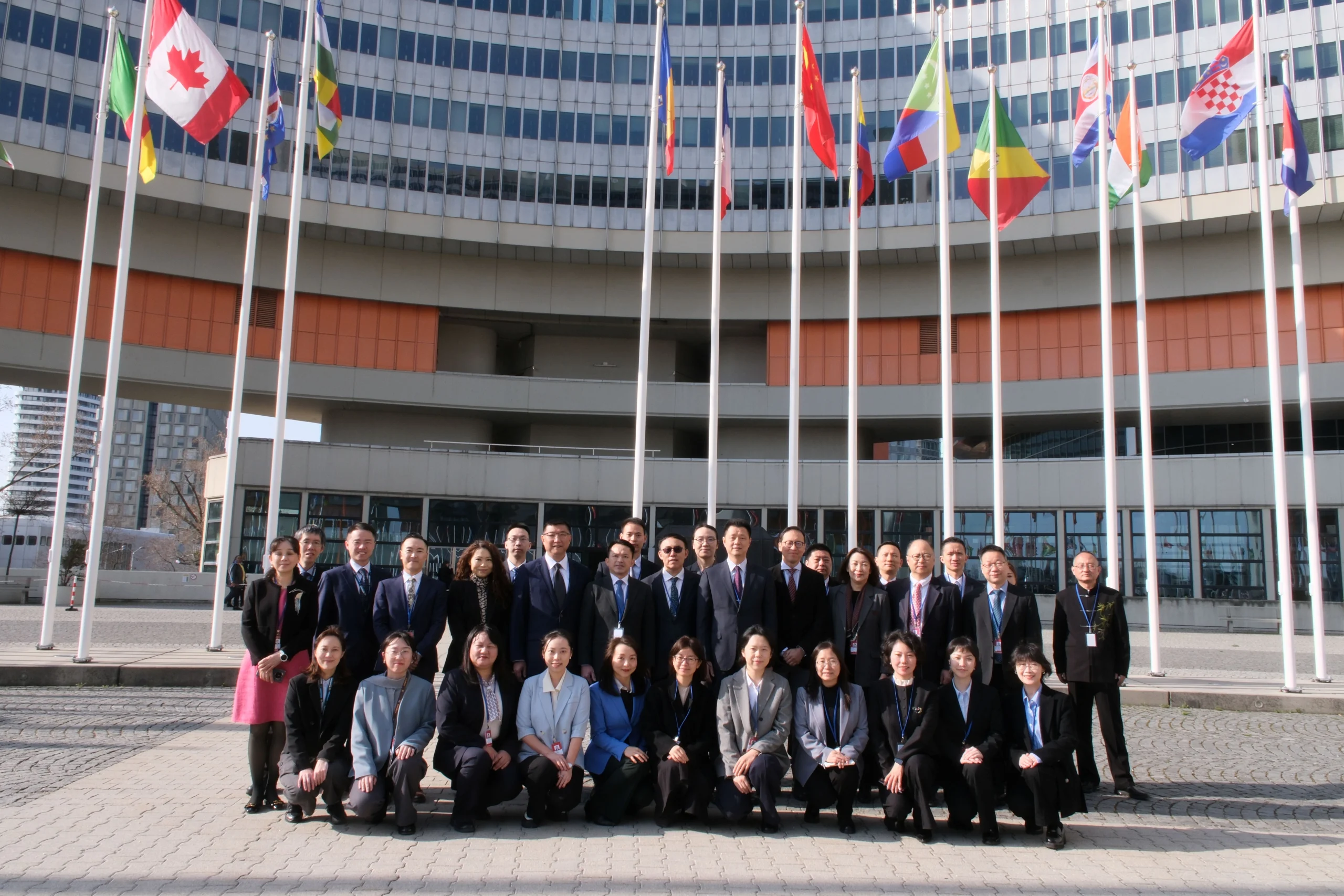
The Macau SAR joined the Chinese delegation at the 69th session of the UN Commission on Narcotic Drugs in Vienna, where discussions covered international drug control, new substances subject to oversight and multilateral cooperation in combating the global drug problem.
The Chinese delegation was led by Gao Wei, deputy secretary-general of the National Narcotics Control Commission, and included representatives from mainland China, Macau, Hong Kong and China’s permanent mission to the United Nations in Vienna.
Macau was represented by the vice-president of the Social Welfare Bureau, Hoi Va Pou, department head Cheang Io Tat, Judiciary Police deputy director Sou Sio Keong and functional chief Lei Hon Nei.
Read more: Macau resident caught with drugs hidden inside body
The session brought together more than 2,000 representatives from over 110 member countries, international organizations and NGOs, addressing topics including the implementation of international drug control conventions, the inclusion of new substances on control lists and the alignment of anti-drug policies with the 2030 Agenda for Sustainable Development.
During the general debate, the Chinese side reiterated its support for a balanced strategy of demand and supply reduction, reaffirmed its opposition to drug legalisation and highlighted results achieved in 2025. The delegation also called for stronger international cooperation and the defence of the three drug control conventions.
Read more: Macau government considers ban on smoking while walking on pavements impractical
More than 160 side meetings and exhibitions were held throughout the session. China promoted a side meeting focused on the risks of young people consuming not-yet-controlled addictive substances and prescription drug abuse, as well as a thematic exhibition titled “from prevention to new creation.”
Macau’s representatives spoke at the plenary as members of the Chinese delegation and participated in several side meetings, joined by 14 representatives from Macau NGOs, youth associations and higher education institutions.
