

The story of an unavoidable party – in just half a dozen years – is made up of the web of frustrations of old – and modern – Portugal; clashing ideologies shaking the whole world – and their connections; political marketing that tears apart the classical narrative; the collapse of credibility and the meteoric rise of radical populism.
Por Dentro do Chega (Inside Chega) is a clear-eyed work; whether you like Chega, want to fight it, do not know what you want, or want to see what lies ahead… Miguel spent five and a half years on the road – as one must – getting to know direct sources. Real people, flesh-and-blood lives: dreams and resentments, blunders and contradictions. The soul of the reporter gives itself over to the lives of those who live in the shadow of the political persona.
Interest, respect, awareness… the ethics of quality give him access to the broad coalition of resentments that holds up the Chega edifice. Pillars from above, from capital; but also from below, from poverty; from fascist nostalgia, white supremacy, racism and xenophobia; but also from abandonment, despair and disbelief; from attacked teachers to the forces of (in)security; and there too are the ideological and/or financial lobbies – national and international – that build the opportunity.
Chega’s own members know that André Ventura has a personal project. He uses resentments; and is used by them. In truth, there is neither ideological glue nor political coherence enough to hold together such a vast set of contradictions.
One source quoted in the book explains it like this: it is a restaurant menu; I do not like the chef nor many of the dishes; I hate this group and that one; but André is the only one serving what suits me: “André is dangerous, I hope he never governs”; “I was a communist, I want nothing to do with fascists”; “I have mixed-race children, don’t tell me I’m racist”; “I have nothing against Roma people”; “I want nothing to do with those people now in Chega”; “I would never associate with neo-Nazis”; “If André moderates his speech…”; “Salazar and Hitler will not come back, I only want the part they did well.” These are not Chega’s detractors, but members and voters who wear the perfume they like while turning their face away from the rest that smells bad.
Read also: 15th Macau Literary Festival Brings Worlds and People Together
All of this is served up with gourmet journalism. Miguel avoids the trap: he does not belittle, he never preaches; he knows the gulf created by the arrogance of finding everything disgusting, impossible, inexplicable. What people think – and are – comes through in the voices of those who are there; those who make it happen, those who want it to happen. These people did not come from Mars and they do not eat children: among them are our cousin, our uncle, our friend, our colleague…
Within this political storm sails a complex socio-political fabric. Miguel probes the depths of Chega using the radar of direct sources: he listens to people, tries to understand them, shows who they are, where they come from and where they want to go. It is enough to speak to the author to realise how far his own world is from Chega’s – he does not hide it. But neither does he cultivate that distance; quite the opposite – he does not spoil the work with it.
There is a serious discussion to be had about journalism and its circumstances: the technology that enslaves it; the financial means it lacks; the confusion that crushes it, the sad alternative truth… But not in this book; this is the rescue mission that makes the difference.
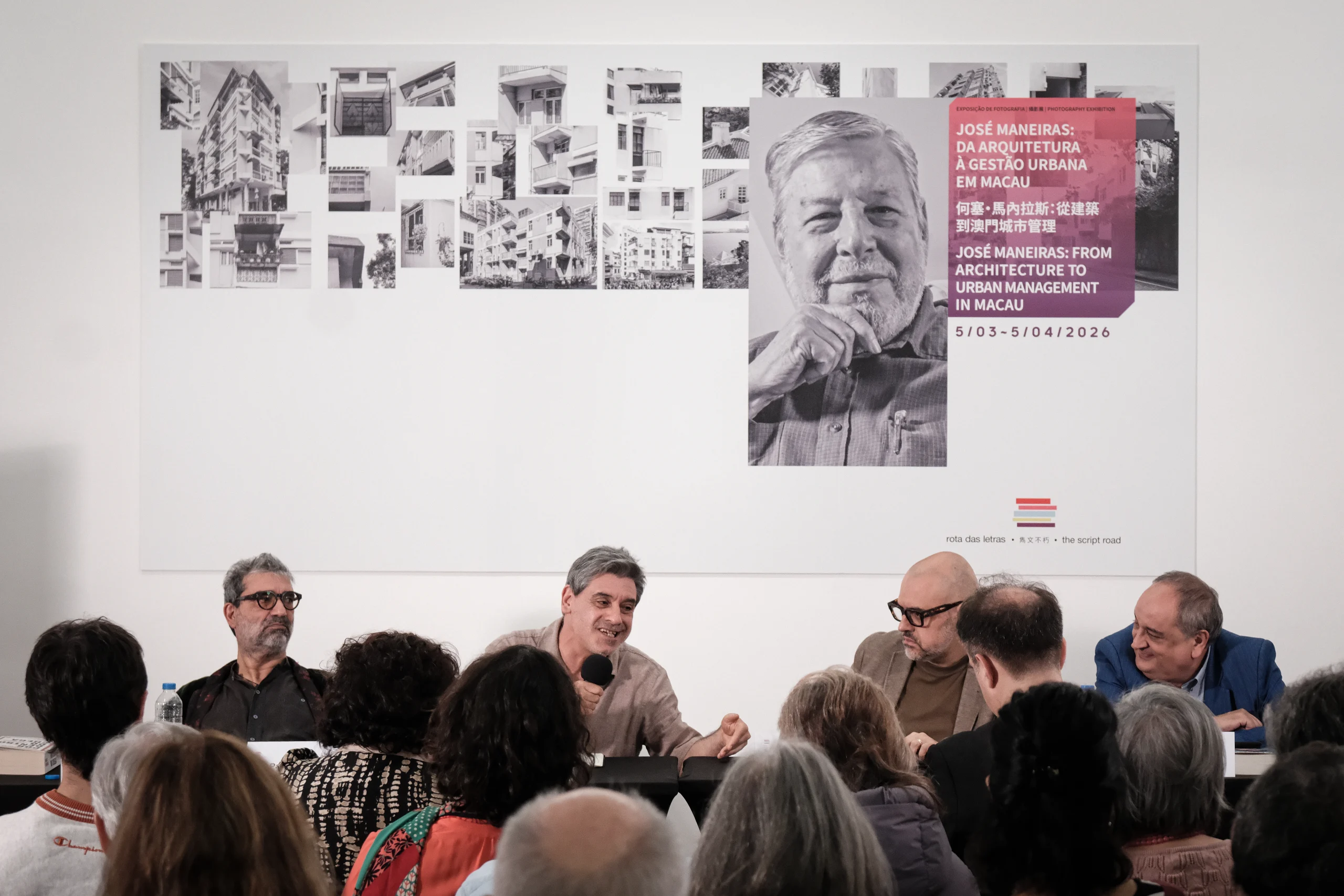
I recommend keeping a notebook nearby, because the flood of dates, names, events and connections comes crashing down in a torrent. I will not go into all that here; the best thing is to read it – at the very least, to watch and listen. For those who do not know… Macau Literary Festival – indeed! Rota das Letras has shared online the session that brought together Miguel Carvalho and João Miguel Tavares. Anyone who was not in the room – bursting at the seams – should click and whet their appetite.
