

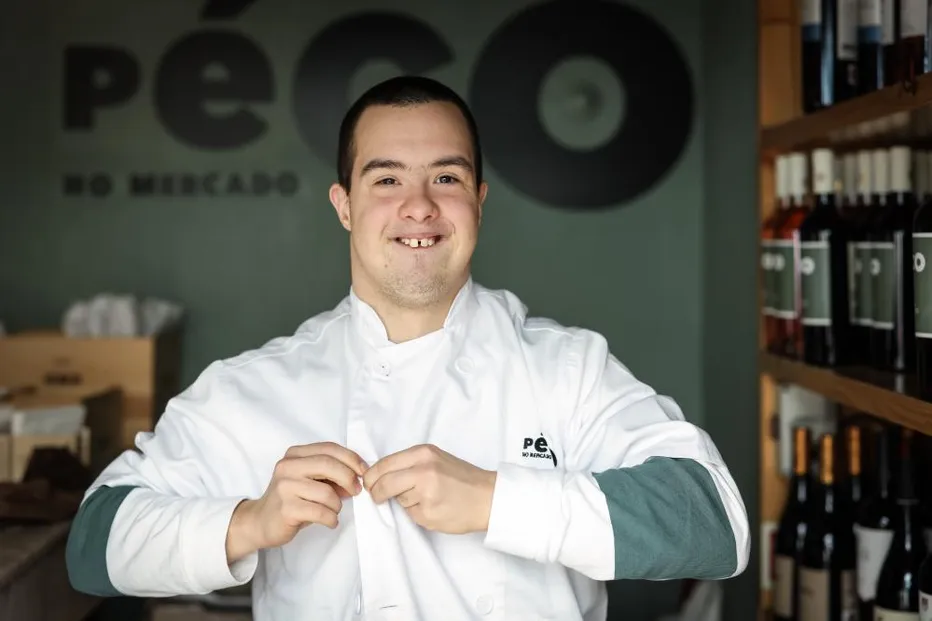
World swimming vice-champion Francisco Montes, 24, who has Down syndrome, works at a pizzeria in Foz do Douro in Porto, where he surprises those around him with his independence and his challenge to stereotypes about disability.
On the eve of World Down Syndrome Day, marked on Saturday, Kiko — as he is known — puts on his apron at 11:00 at Mercado da Foz before starting his shift at restaurant Peco. He begins by organising the wine rack, carefully cleaning each bottle. “I can’t drink wine, but I identify them by smell — my grandfather taught me,” he says.
Between serving coffees, assembling boxes and washing dishes, he works with method and attention, also cutting ingredients and making pizzas when needed. “He is very proactive and learns a lot. He is always improving,” says the pizzeria owner, Idalina Ferreira, who contracted Francisco after an initial placement through a transition plan from the Garcia de Orta school cluster.
“We hired him because we realised they weren’t pushing him enough and he is capable of much more,” she explains, adding that the business accommodates his swimming schedule. “He is a high-performance athlete and we adapt the hours. When he needs to train or compete, he goes. He represents our country,” adds her husband Pedro Terroso.
Read more: “We want him to stay with us”. Macau families living with down syndrome
Francisco’s independence extends beyond work — at the end of his shift he travels alone to the bus stop, and stops on the way at a florist where he is already a regular customer. At home, swimming medals fill his bedroom walls.
His parents say they always demanded the same of him as they would of any child. “Everything was achieved through work, from the first lessons to the autonomy he has today,” says his mother Marta Passos. His father Rui Montes highlights the support network: “The merit is his, but there is a group of people — school, coaches, work — who were part of this journey.”
His special education teacher, Carmo Malheiro, describes him as “a success story,” noting that “Francisco managed to develop autonomy skills and integrate into a work environment, which is rare.”
In the water, Kiko trains four times a week, a routine he has maintained for over a decade with coach Pedro Lima, who has worked with him since he was 11. “Francisco is not an exceptional talent. What distinguishes him is his work, dedication and commitment,” the coach says, while also raising concern: “There is no access to Paralympic programmes for athletes with Down syndrome, which limits opportunities and funding.”
For the future, Francisco has clear goals: “In 2028 I want to leave swimming, work full time and get married.”
