

Dr. Anthony Fauci declined to answer any questions from senators during a Wednesday hearing on the origins of Covid-19 and the government’s pandemic response, invoking his Fifth Amendment right against self-incrimination to guard against the possibility that Republicans might use his testimony to pursue a perjury case against him.
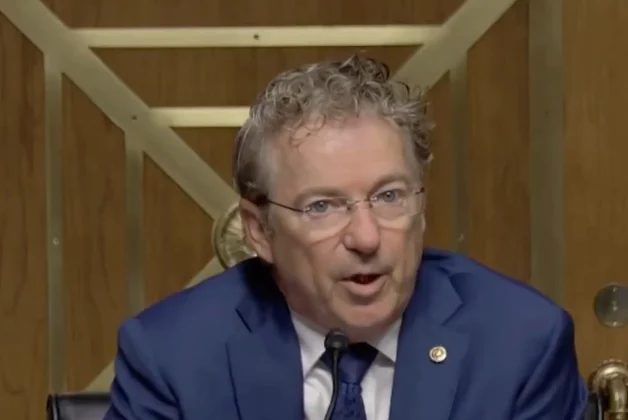
The move caught the hearing off guard, though tensions had already been expected given Fauci’s long-running public disputes with committee chairman Senator Rand Paul, R-Ky. In his opening statement before the Senate Homeland Security and Governmental Affairs Committee, Fauci pointed to what he called Paul’s obvious obsession with pushing for his prosecution, his repeated slanderous remarks, and his decision to publicly release Fauci’s personal journal.
Fauci said the only reasonable conclusion he could draw was that Paul had called him before the committee solely to try to extract a statement that could validate Paul’s repeated public promises that Fauci would end up, in Paul’s own words, behind bars.
He argued that anyone familiar with what he described as Paul’s unhinged fixation on him would reach the same conclusion. Fauci said it pained him to take this step, citing his respect for Congress and his decades of cooperation with lawmakers, but that on the advice of his attorneys, he would exercise his Fifth Amendment right and decline to answer questions.
Read more about this topic: US Senator Moreno drops F-bomb at Fauci during hearing (with video)
Fauci noted that during his nearly 40 years leading the National Institute of Allergy and Infectious Diseases, he had testified before or briefed congressional committees more than 200 times, arguing that record demonstrated his genuine respect for legitimate congressional oversight.
Despite Fauci’s refusal to engage, Paul proceeded to ask him a series of questions during his allotted time. Fauci responded to each with the same statement, saying that on the advice of counsel, he respectfully declined to answer based on his Fifth Amendment rights.
At the conclusion of his questioning, Paul warned Fauci that his refusal would carry consequences, telling him the committee would need to determine what action to take given his failure to testify after being directed to do so, and stating plainly that obstructing a congressional investigation is against the law.
After Paul finished, Fauci’s attorney attempted to address the committee but was repeatedly cut off by Paul, who said he had not been recognized to speak. Paul then ordered security to remove the attorney from the room.
Read more: US: Americans say Trump isn’t focused on the country’s biggest problems
Former President Joe Biden issued Fauci a preemptive pardon in the final hours of his administration. At the time, Fauci said he had been the target of politically motivated threats of investigation and prosecution, maintaining that he had committed no crime.
