

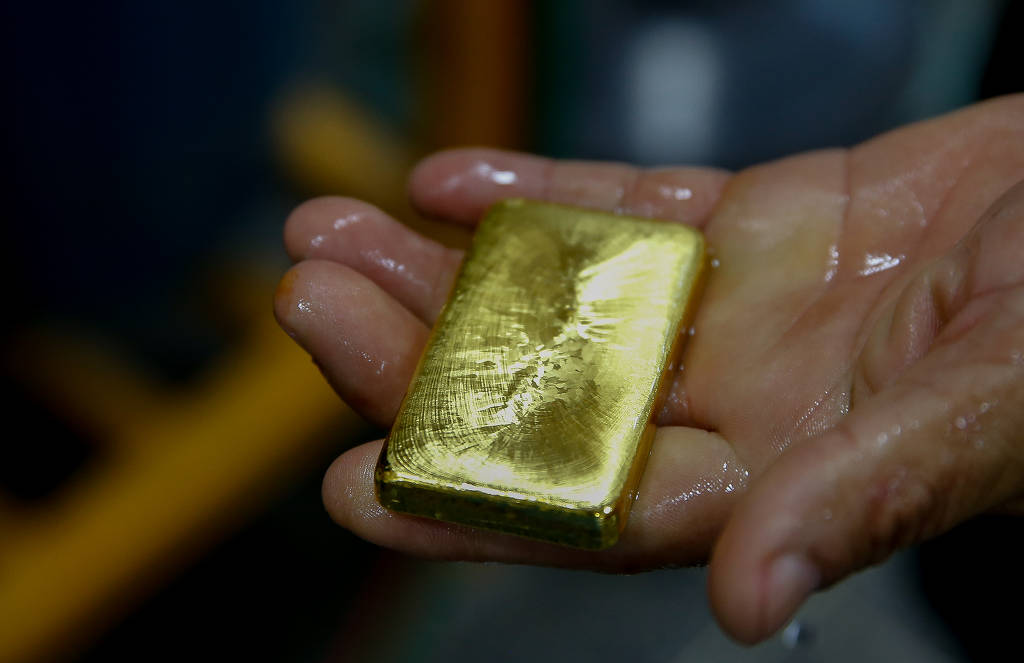
Mozambique’s gold production fell 17% in 2025 to 1.349 tonnes, missing its targets due to the suspension of extraction activities in Manica province over environmental concerns, according to official data accessed today by Lusa.
According to a government document on the 2025 budget execution, this represents only 82% of last year’s target, ending a run of annual growth that had peaked at a record 1.641 tonnes in 2024. Production fell back to 2022 levels, when 1.263 tonnes were recorded. “This reduction results from the suspension of gold extraction activities in Manica, one of the highest-producing provinces for large artisanal and small-scale mining companies,” the document states.
Read more: Lusophony: Mozambique seeks Brazil’s support for development bank and debt restructuring
For 2026, Mozambique had projected production of more than 1.723 tonnes — which would be a new annual record — driven by “good performance from the two main companies in the sector and investment in expanding productive capacity.”
The Mozambican government suspended all mining licences in Manica province on September 30, creating an interministerial commission to review the licensing framework, strengthen oversight and advance environmental recovery measures. President Daniel Chapo had stated on September 17 that mining was causing an “environmental disaster” in the province, following a report by a security forces operational command that investigated the situation in July.
Read more: Mozambique: aircraft tyres help halt erosion and protect communities
The commission found “uncontrolled mining” by licensed operators, with companies operating without environmental recovery plans or waste containment systems, as well as workers’ rights violations.
It also identified national security risks, with groups of foreigners involved in illegal mining entering through informal routes and feeding parallel gold trading networks, extortion and public insecurity.
The government described the environmental situation in Manica as critical, pointing to “serious pollution” of rivers showing “reddish, turbid and opaque water” from direct ore washing and untreated waste disposal. An interministerial commission has been created spanning the ministries of defence, mineral resources and energy, interior, foreign affairs, finance, economy, agriculture, environment and fisheries, health, justice, and labour and social action.
