

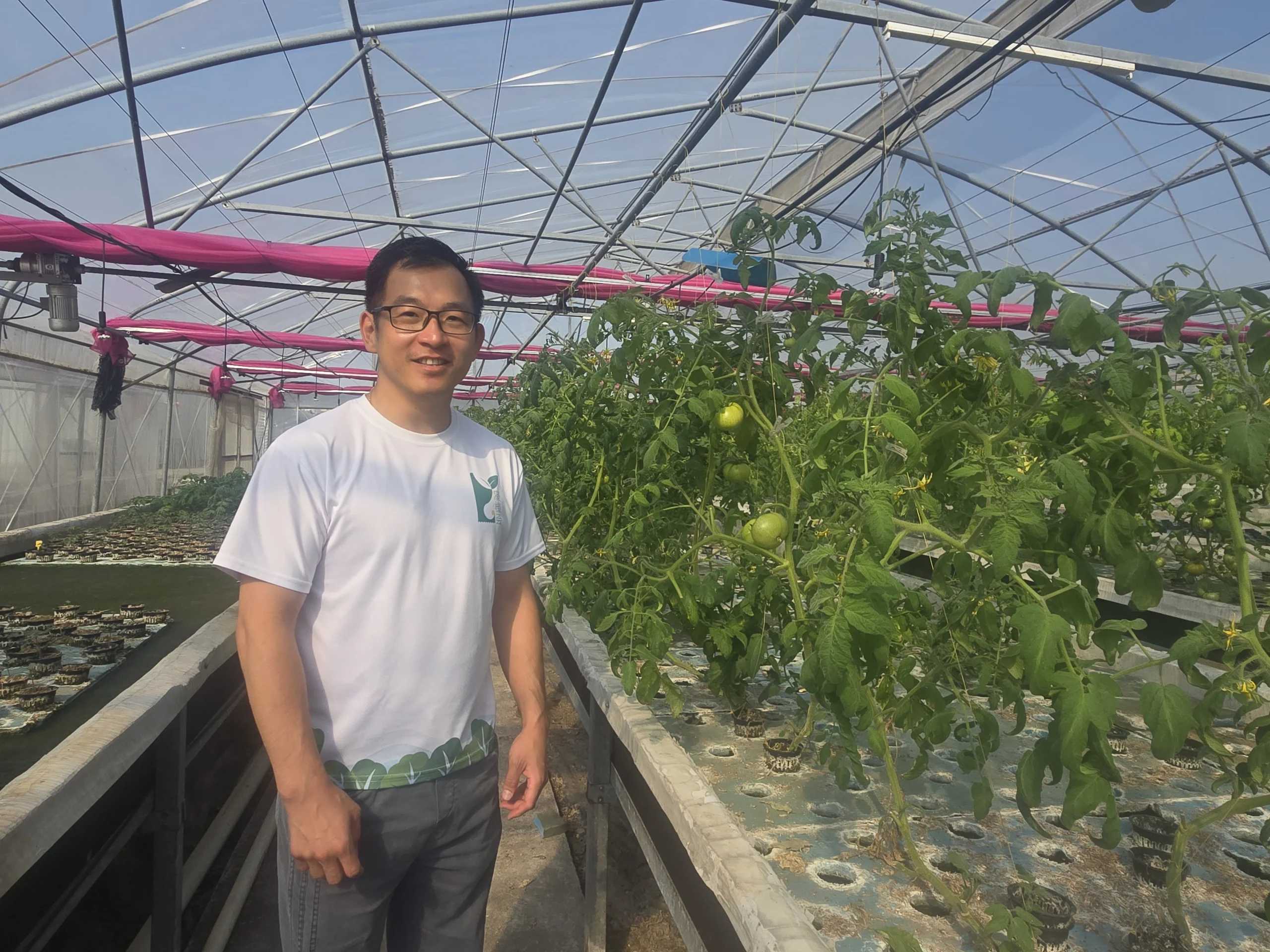
The company’s story began in 2011 and, from the outset, highlights Macau’s role in linking China and the Portuguese-speaking countries. “At that time, it really had a lot to do with the Sino-Portuguese platform,” he told PLATAFORMA. At that stage, the group already had business operations in Heilongjiang, in northeastern China, and took advantage of the framework built around Macau to develop contacts in the agricultural sector in Africa.
According to Suen, “China, Portugal and Africa wanted to use Macau as a platform and hoped to invite state-owned enterprises from Heilongjiang to help them develop agriculture through our channels.”
That experience, which included collaboration with the Beidahuang Group on projects in Angola and Mozambique, helped him identify an opportunity in the Chinese market. “During this process, I discovered that our country’s agricultural market is actually quite large” and “I learned a great deal about the different details of the agricultural market.”
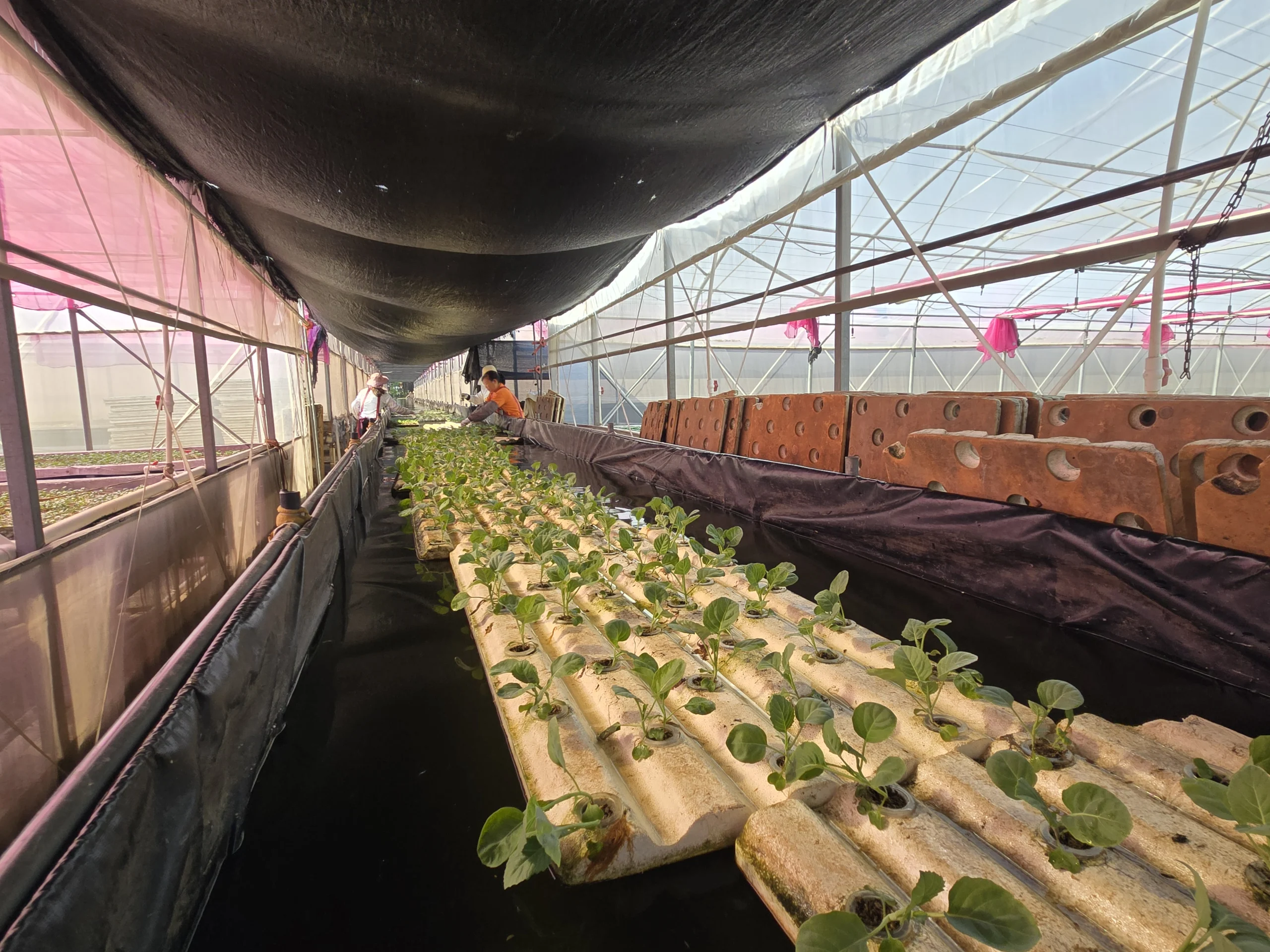
The conclusion was clear: “With the economic growth of our country, there is demand for some high-end and upper-mid-range vegetables.” That is how the ambition to invest in organic vegetables was born: “In fact, I can study the upper-mid-range vegetable market, and our positioning is to produce organic vegetables.”
The Greater Bay Area changed everything
The project began in Hong Kong, passed through Taiwan and trials in mainland China, but the decisive moment came in 2017, with the announcement of the Greater Bay Area concept. Until then, expansion had been planned for cities such as Beijing or Shanghai. “At that time, we did not even consider the Hong Kong and Macau market.”
The new regional geography changed those plans. “Because my partner is from Hong Kong and I am from Macau, we did not necessarily have to go that far; the Greater Bay Area seemed like a good option.” From that point on, Macau ceased to be merely the point of origin and became a strategic hub.
Read more: Macau: “The Greater Bay Area is advancing with clearly visible results”
“After discussing it with my partner, we finally decided to make use of Macau as a platform, because Macau has always been an international tourism and leisure centre.” The immediate target was the major integrated resorts. “At that time, we contacted six major resorts to see whether they had any needs in this area.” The response validated the project: “They told us the demand was very large.”
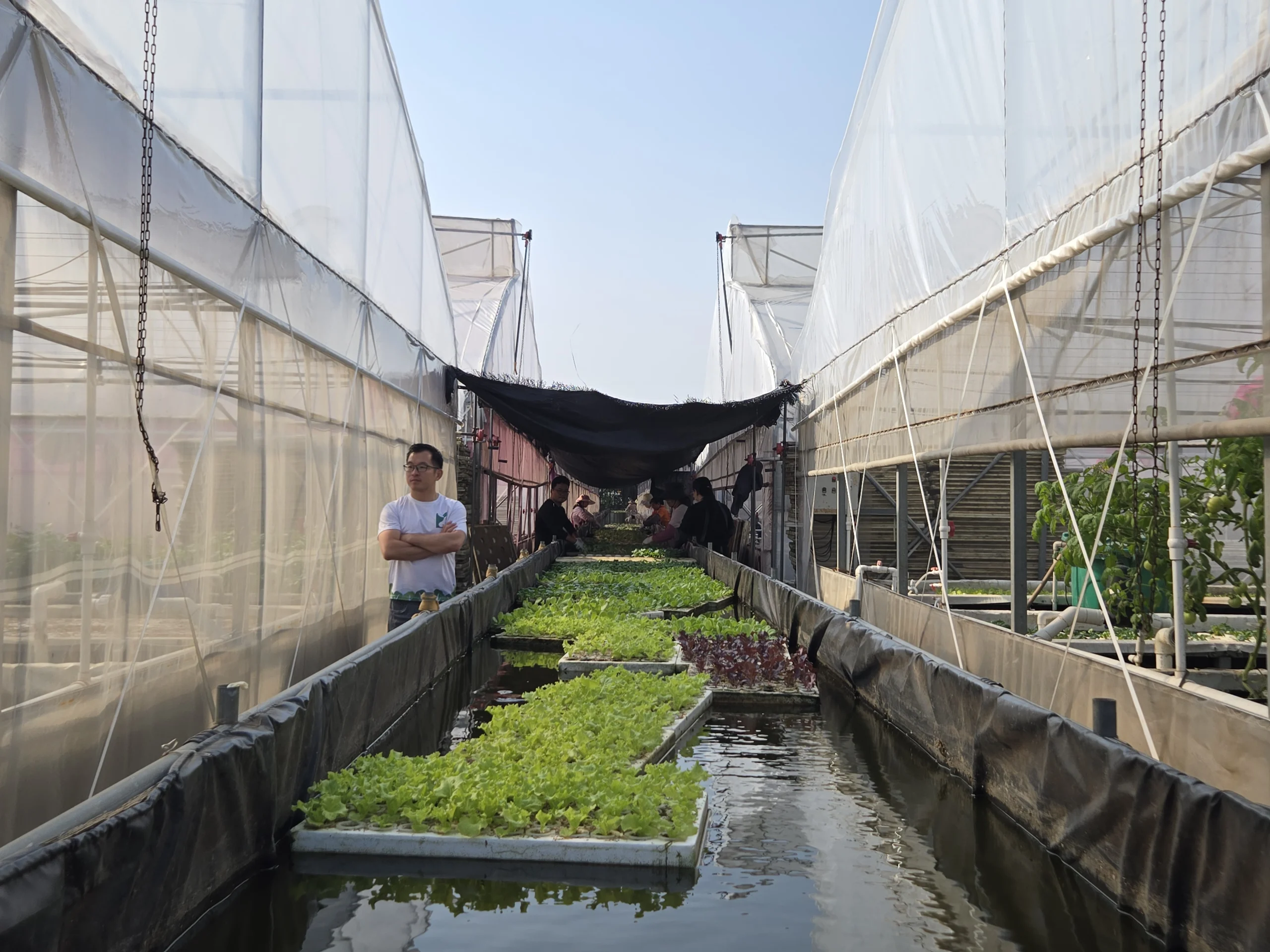
That logic led to the current solution. “We then chose Macau as the base to establish our brand. Since the base is in Macau and we cannot grow there, and since Macau is closer to Zhuhai than any other city in the Greater Bay Area, we chose Zhuhai as the location for our first farm,” he told PLATAFORMA.
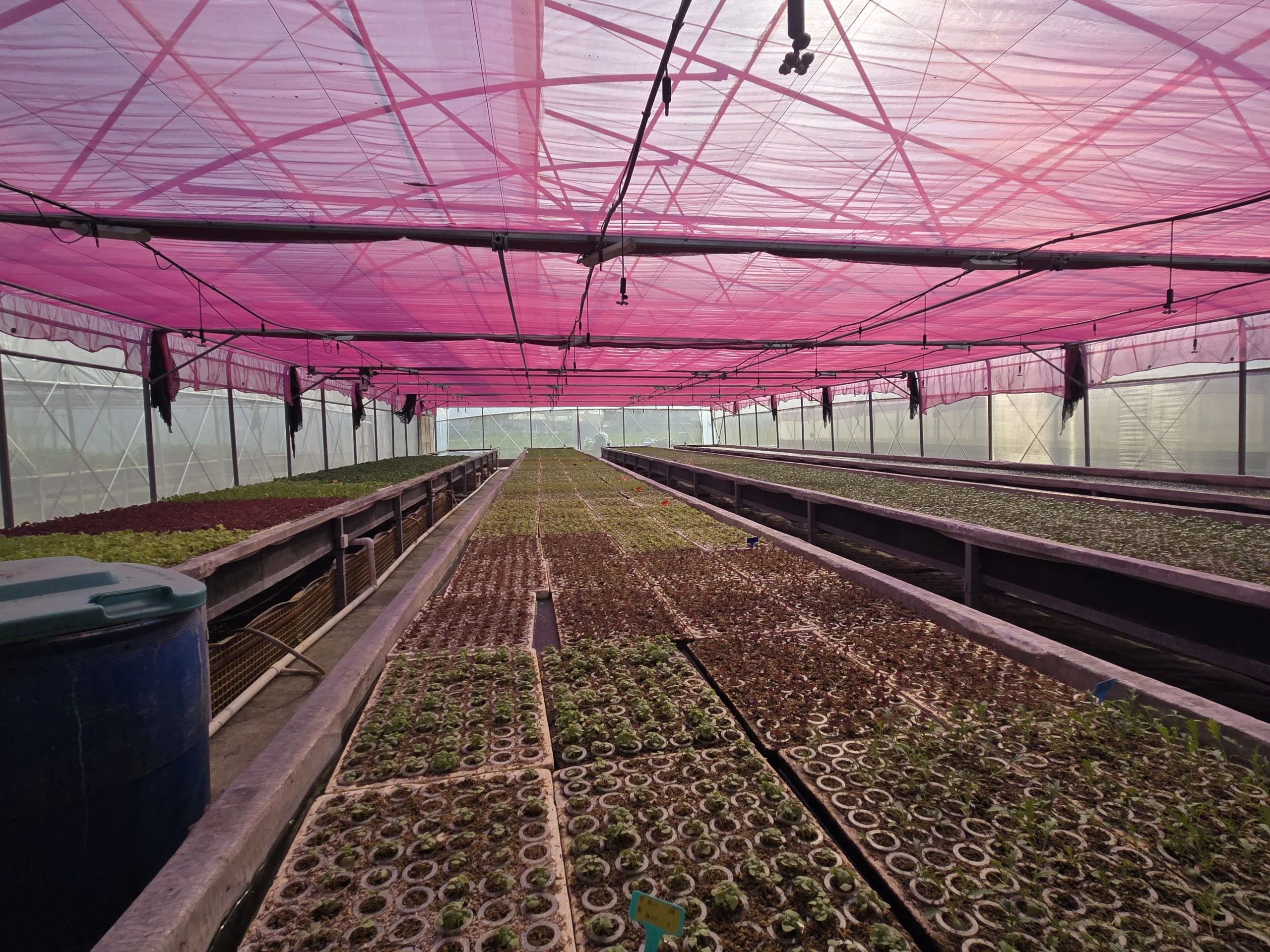
The company eventually settled in Jinwan, Zhuhai, in 2019, after almost a year searching for land compatible with regulatory requirements. “In fact, for modern farms like ours, Chinese regulations are very strict and we do not have many places to choose from.”
Today, Hao Ji Hui supplies five of Macau’s six major integrated resorts. But Suen believes the local market is still far from mature. “Macau residents’ understanding of the concept of ‘organic’ is not comprehensive.” And when it comes to consumers, price still carries more weight: “If we place two vegetables side by side, consumers will mainly look at the price.”
Hong Kong and Macau first, China later
The initial choice of Hong Kong and Macau was not only commercial, but also regulatory. “We were the first in Asia to obtain USDA 100% organic certification.” Even so, that certification did not allow the products to be marketed as organic in mainland China, which follows its own standards.
“We cannot use the term ‘organic’ to sell our products in the domestic market, because the country follows Chinese standards, not American ones,” Suen explained.
That is what led the company to focus first on markets such as Macau and Hong Kong, which recognise US certification. “So I had to begin with the ‘external markets’ first. But the market with the greatest potential will always be our own country.” In the meantime, the company also obtained Chinese certification and began exploring the domestic market.
Read more: Macau CPPCC member urges Greater Bay Area talent integration
If Macau appears as the brand and Zhuhai as the production base, Hengqin emerges as the option that never moved forward. “My first choice was Hengqin, but Hengqin has no agricultural land, so I could not do it there,” Benjamin Suen said.
That sentence sums up an important part of the regional equation: Macau offers reputation, market and visibility; Zhuhai provides space for production; Hengqin, despite its proximity and political centrality in the discourse of integration, did not meet the practical needs of an agricultural project.
According to Suen, “China, Portugal and Africa wanted to use Macau as a platform and hoped to invite state-owned enterprises from Heilongjiang to help them develop agriculture through our channels.”
The experience, which included collaboration with the Beidahuang Group on projects in Angola and Mozambique, helped him identify an opportunity in the Chinese market. “During this process, I discovered that our country’s agricultural market is actually quite large” and “I learned a great deal about the different details of the agricultural market.”
Macau remains central to the company’s future vision, including for processed products. “Another example is our high-quality basil; we would like to find a renowned chef to help us create a Macau-branded basil pesto.” The obstacle, he acknowledges, is the lack of local industrial capacity: “Macau has a market, but it does not have a food processing industry.”
In the end, it is the trust associated with Macau that continues to justify the bet. “Macau is a world-class international tourism centre, and people all over the world have particular confidence in Macau food brands. Just look at how successful Macau’s food products have been over so many years. We chose Macau for our food business precisely because of that confidence,” Suen concluded.
