

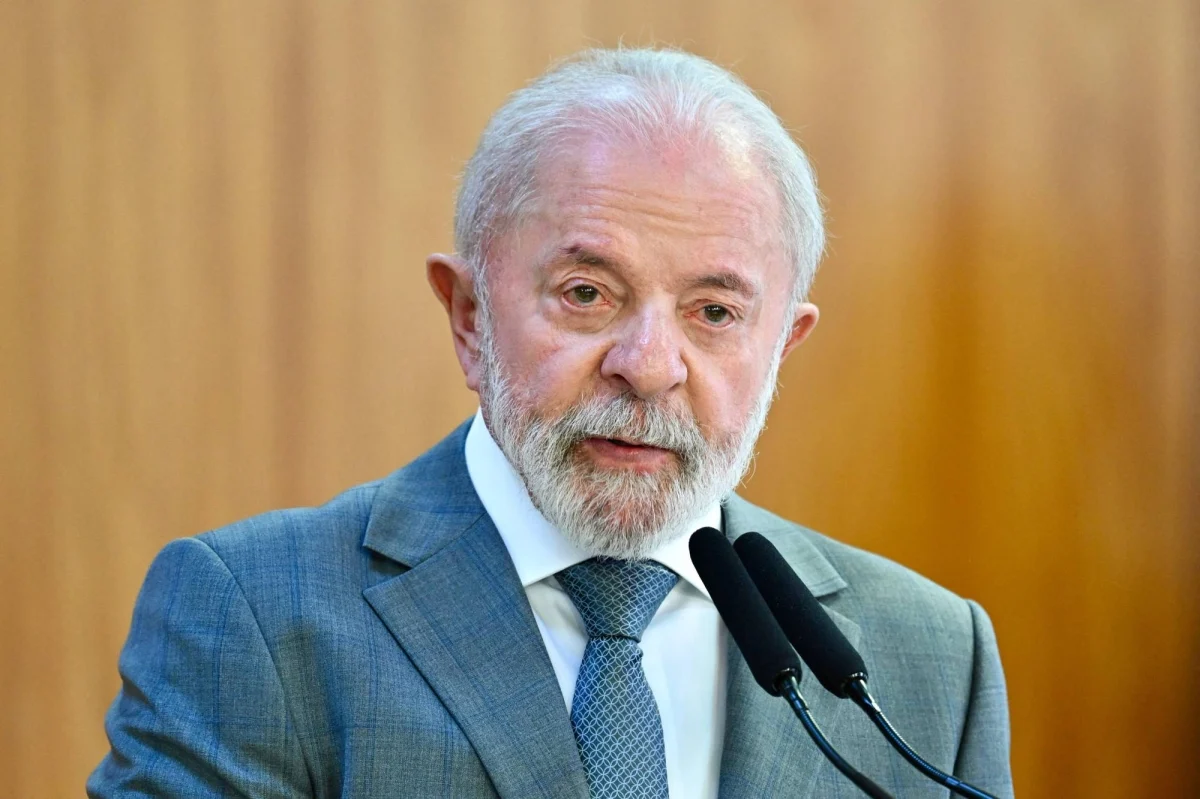
During a press conference in Brasilia, alongside the President of South Africa, Cyril Ramaphosa, Lula da Silva, without specifying, said: “We think about defense as deterrence, but I don’t know if comrade Ramaphosa realizes that, if we don’t prepare ourselves in matters of defense, one day someone will invade us.”
The Brazilian head of state, however, noted that the South American continent is “a region of peace.” “Here no one has a nuclear bomb, here no one has an atomic bomb, here our drones are for agriculture, for technological purposes and not for war,” he said.
On the other hand, the South African President emphasized that it is necessary, “at a time of growing conflicts,” to work towards a peaceful resolution of conflicts, which are a “violation of the United Nations Charter.”
The Brazilian President received yesterday his counterpart from South Africa, at the beginning of an official visit to Brazil, and both discussed the expansion of trade between the two BRICS members.
Ramaphosa was received with full state honors at the Planalto Palace, and, following a closed-door meeting, both leaders signed memorandums to strengthen trade and tourism between the two countries.
The two leaders will also participate in a working lunch at the headquarters of the Brazilian Ministry of Foreign Affairs and in a business forum. Ramaphosa will also visit the Brazilian Congress and the Supreme Federal Court.
Read more: Brazil eliminates possibility of mitigating factors for child abuse up to age 14
Trade between the two countries, the main reason for the visit, totaled approximately $2.3 billion (€1.9 billion) last year, with a surplus for Brazil, which mainly exports meats, sugar, and vehicles, while importing silver, platinum, and other minerals.
“The annual exchange between Brazil and South Africa has been stagnant for nearly 20 years,” said Luiz Inácio Lula da Silva, emphasizing that there is no “political explanation” for such limited trade between two founding members of the group of emerging economies. BRICS (founded by Brazil, Russia, India, China, and South Africa). In the same vein, Ramaphosa stressed that “trade between the two countries needs to be much greater than it is today.”
