

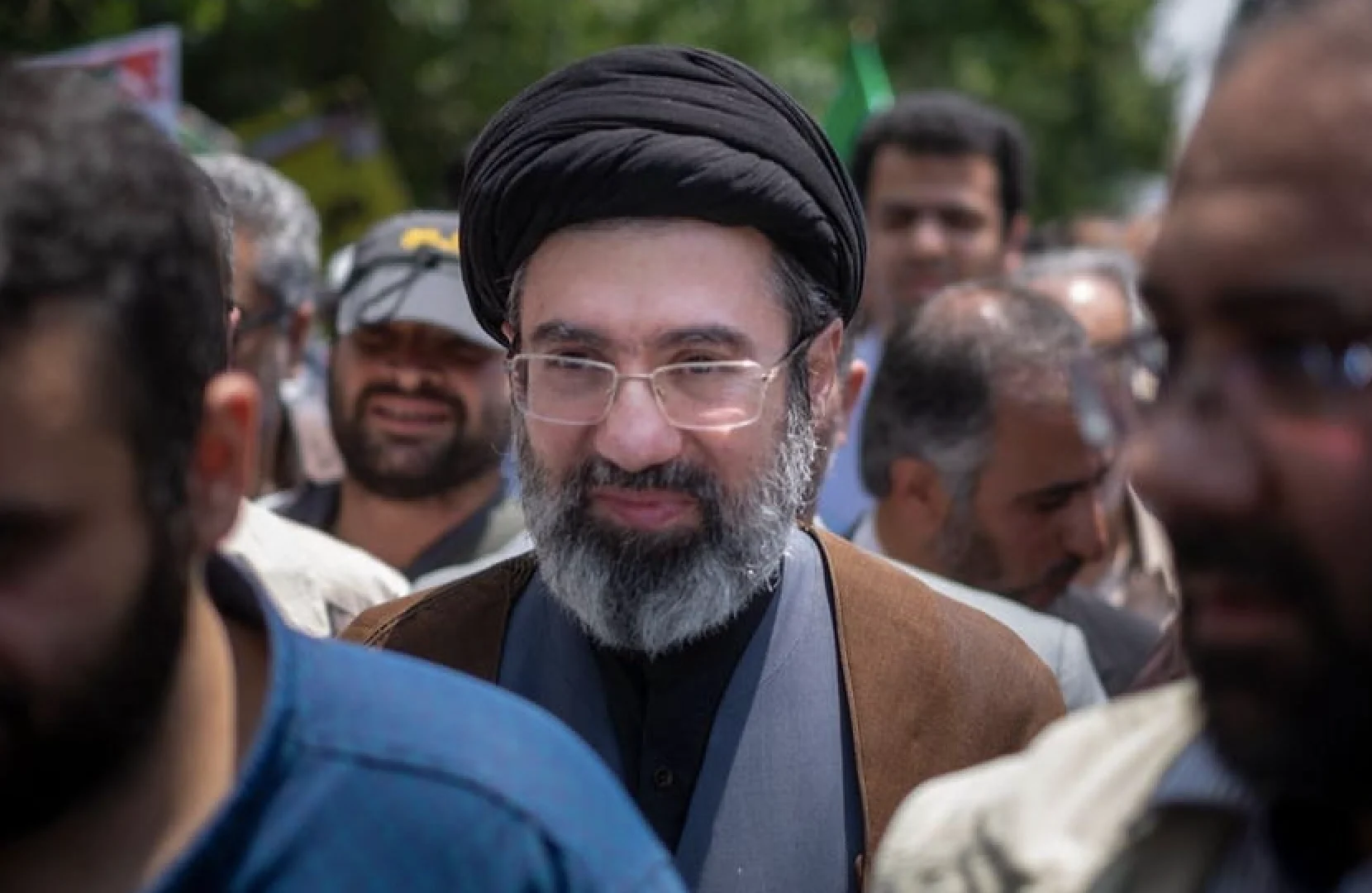
Mojtaba Khamenei was chosen in March 2026 as the new Supreme Leader of the Islamic Republic of Iran, succeeding his father, Ali Khamenei, who led the country for more than three decades. The decision, made by the Assembly of Experts, the clerical body responsible for appointing the highest leader of the regime, marked an unprecedented moment since the 1979 Islamic Revolution, as it consecrated for the first time a direct succession from father to son at the top of the Iranian political system.
Born in 1969, he is now 56 years old, in the city of Mashhad, one of the main Shiite religious centers. Mojtaba Khamenei grew up within the Iranian revolutionary elite. He studied theology in Qom, the country’s main religious city, and pursued a discreet clerical career, never holding elected political offices or formal government positions. Despite this, over the years, he has built significant influence behind the scenes, particularly through his role in the office of the Supreme Leader and his closeness to key sectors of the regime.
Read more: Iran announces consensus on new supreme leader after death of Ali Khamenei
Described by analysts as a reserved and effective political operator, Mojtaba has become a central figure in controlling access to his father and in mediating between the conservative clergy and the state security apparatus. His close relationship with the Islamic Revolutionary Guard Corps as a key military and economic pillar of the Islamic Republic, it has been decisive in consolidating its internal position. International observers attribute influence to it in sensitive decisions, including the repression of internal protests and the strengthening of security forces’ power over the last two decades.
His rise was not free of controversy. In 2019, Mojtaba Khamenei became the target of U.S. sanctions, accused of playing a significant role in sustaining the regime’s repressive policies and in Iran’s regional projection. Internally, his selection as Supreme Leader has drawn criticism from reformist and opposition sectors, which accuse the regime of moving away from the republican principles of the revolution and toward a dynastic logic, despite the absence of a formal monarchy.
Read more: Iran’s Khamenei says recent anti-government protests akin to ‘coup’
From an ideological and political standpoint, the appointment of Mojtaba Khamenei is widely interpreted as a sign of continuity. His vision for Iran aligns with the most conservative wing of the regime, advocating resistance against Western pressures, maintaining an assertive foreign policy toward the United States and Israel, and reinforcing the role of the Revolutionary Guard in defending national sovereignty. He is not known for frequent public positions, but his track record suggests little openness to internal political reforms or significant diplomatic concessions.
The succession takes place in a context of high regional and international tension, with Iran involved in indirect confrontations in the Middle East and under strong external scrutiny. For its supporters, Mojtaba Khamenei represents stability and continuity at a time of crisis. For critics, his rise symbolizes the hardening of the regime and the closing of the Iranian political system to any perspective of structural change.
