

In 2023, he stated that Macau needed more qualified local labor and better working conditions to attract international companies. Do these factors continue to limit the city’s attractiveness?
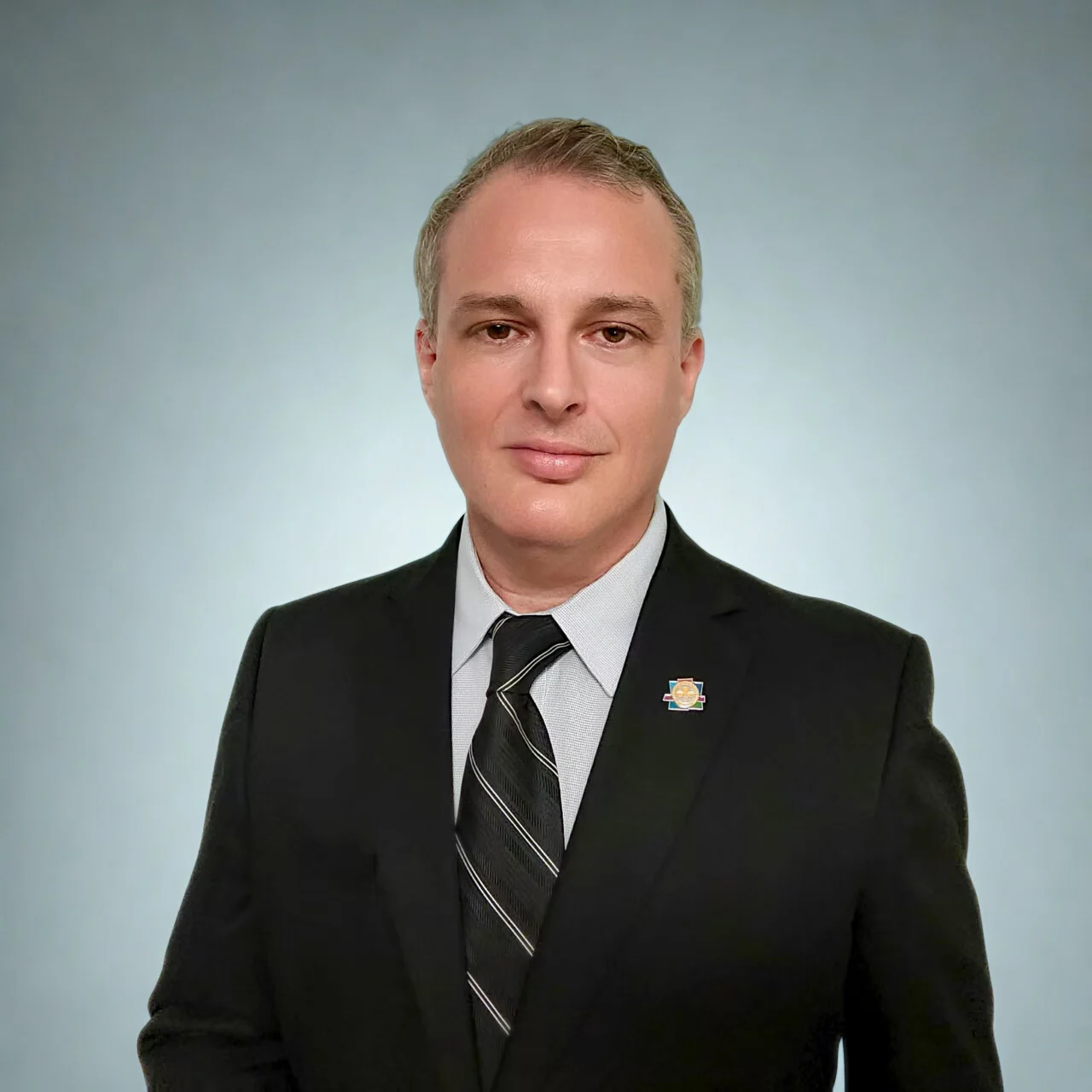
Alexandre LamporteWithout any context or specific text provided for translation from Portuguese to English, there is no content to translate. Please provide the text you would like translated.I first came to Macau in 2007. Since then, I have seen the city change in many ways. The atmosphere is different, especially in the Cotai area, but what has been even more noticeable is how the city’s goals have evolved over the years.
In 2023, the focus was on recovery. Today, we see a city advancing towards the “1+4” diversification strategy in key sectors such as integrated tourism, modern financial services, high technology, and ‘Big Health’. Thus, the main challenge has matured to the point where it is no longer about diversification, but about executing it at a world-class level.
Perhaps the most pressing challenge is whether we have the human capital necessary to make these sectors competitive and sustainable in the long term. Building the physical infrastructure to house renowned financial institutions is one thing, but building a globally recognized team in innovation is another.fintechIt is another. This leads us to the question of attractiveness for international companies.
And in what way can Macau become attractive to international companies?
A.L.– You can take advantage of your unique status as a RAE[Região Administrativa Especial]Its rich cultural diversity and integration into the Greater Bay Area create a compelling value proposition. However, for an international company outside of this ecosystem, the decision to invest here or elsewhere ultimately comes down to the people and professional ecosystem in which it operates.
Supportive policies are essential, but they are not enough. World-class companies require immediate access to a pool of technical, legal, and commercial talent. An integrated professional environment is a competitive advantage for business, and its continuous development remains a fundamental focus for Macau’s attractiveness.
Local education also plays a significant role. I believe it is necessary to develop programs where universities and target industries jointly design courses to align skills development with market needs. It is important to support continuous learning opportunities in different areas so that Macau is not just a place to work, but also a place where professionals can stay, grow, and build long-term careers.
The success of Macau lies in how it leverages its unique status as a SAR to provide world-class services. (…) Whether we can build and retain the talent needed to make Macau a critical innovation hub in the Greater Bay Area ecosystem. This is the fight for the next two decades.
What are the main constraints that hinder local development and diversification?
A.L. –The economy of Macau is optimized for luxury tourists. I think true diversification means building a city that, first and foremost, improves the quality of life for those who live here. For example, the prices of commercial properties are calibrated for gambling. This makes young entrepreneurs think twice before opening a coffee shop. Additionally, the trend of residents going to Zhuhai for shopping and entertainment is growing. It’s not just about lower prices, but also about many choices and vitality. Beyond creating new industries, a diversification policy should also address the lack of “daily economy,” which supports the normal life of a city and its residents. There are promising initiatives supported by the Government in this regard, such as markets.popupThis involves local areas and the revitalization of certain districts. However, these should not be temporary solutions, but rather evolve into more permanent characteristics of the local economy and, possibly, as tourist attractions.
– And does Hengqin have the capacity to help with this diversification?
A.L.Yes, I think that Hengqin offers the scale and opportunities that are missing in Macau. For this potential to be fully realized, “soft connectivity” is just as important as physical infrastructure. For example, one factor of success is daily cross-border traffic. Allowing residents to drive vehicles registered in Macau freely within and outside of Hengqin would benefit its development as a true extension of Macau. I believe that this ease of movement is what would make Hengqin a good place to live, work, and develop.
– Do you believe that the Game will continuetoto play the main role in the local economy atis2049?
A.L. –It is highly likely that Gaming and Tourism will continue to be a very significant pillar of the economy in the foreseeable future, given their presence and economic contribution. The goal until 2049 is not necessarily to reduce the absolute size of Gaming, but to ensure that other sectors grow substantially.
The economy of Macau is optimized for luxury tourists. I think that true diversification means building a city that, first and foremost, improves the quality of life for those who live here.
– The integration economica between Macau and the Great BayPlease output translation without any explanations.
í
Translation:
Please output translation without any explanations.
íto betothe priorityWithout any context or specific text provided for translation from Portuguese to English, there is no content to translate. Please provide the text you would like translated.
A.L.I see integration as the platform where our true challenge of remaining competitive in industries unrelated to Gaming will be tested. The success of Macau lies in how it leverages its unique status as a SAR to provide world-class services. The question is whether we can build and retain the talent necessary to make Macau a critical innovation hub in the Greater Bay Area ecosystem. This is the fight for the next two decades.
Macau has progressed in building its brand as a Portuguese-speaking business center and Greater Bay Area platform. Now, to transition into a true commercial center, the focus must shift to operational marketing and creating value for the customer. I see products from Portuguese-speaking countries (PLPs) at exhibitions here in Macau, and that’s great. But afterward, it may be difficult for them to access large distribution networks and reach local consumers. Some effort should be dedicated to researching PLPs and the Greater Bay Area to better understand what the market really wants.
– How can AI help in developing the local economy? Do you believe that its adoption has progressed at an adequate pace, or is it still too early?a at rearIs it about mainland China?
A.L. –Just as we cannot live without electricity today, we will not be able to live without AI tools in the near future. The potential of AI lies in solving everyday problems and preparing us for a world that is already changing.
Comparing Macau with mainland China is not entirely fair. The mainland has a vast digital ecosystem and a large market scale, which naturally accelerates the adoption of technology.
Macau’s journey is different; our strengths lie in focus and quality rather than speed or size. For example, integrating AI into the management of heritage sites, balancing tourism growth with cultural preservation, reflects our identity as the World Centre of Tourism and Leisure. Regarding education, I believe we should not “teach AI,” but rather “teach with AI.” Students should develop a new type of literacy that goes beyond just the ability to ask better questions of AI, that is,prompt engineeringbut rather critical thinking, problem-solving, and ethical judgment applied to technology. This is the set of skills that makes them unique, whether they end up working in a family business, an integrated resort, or the public sector.
