

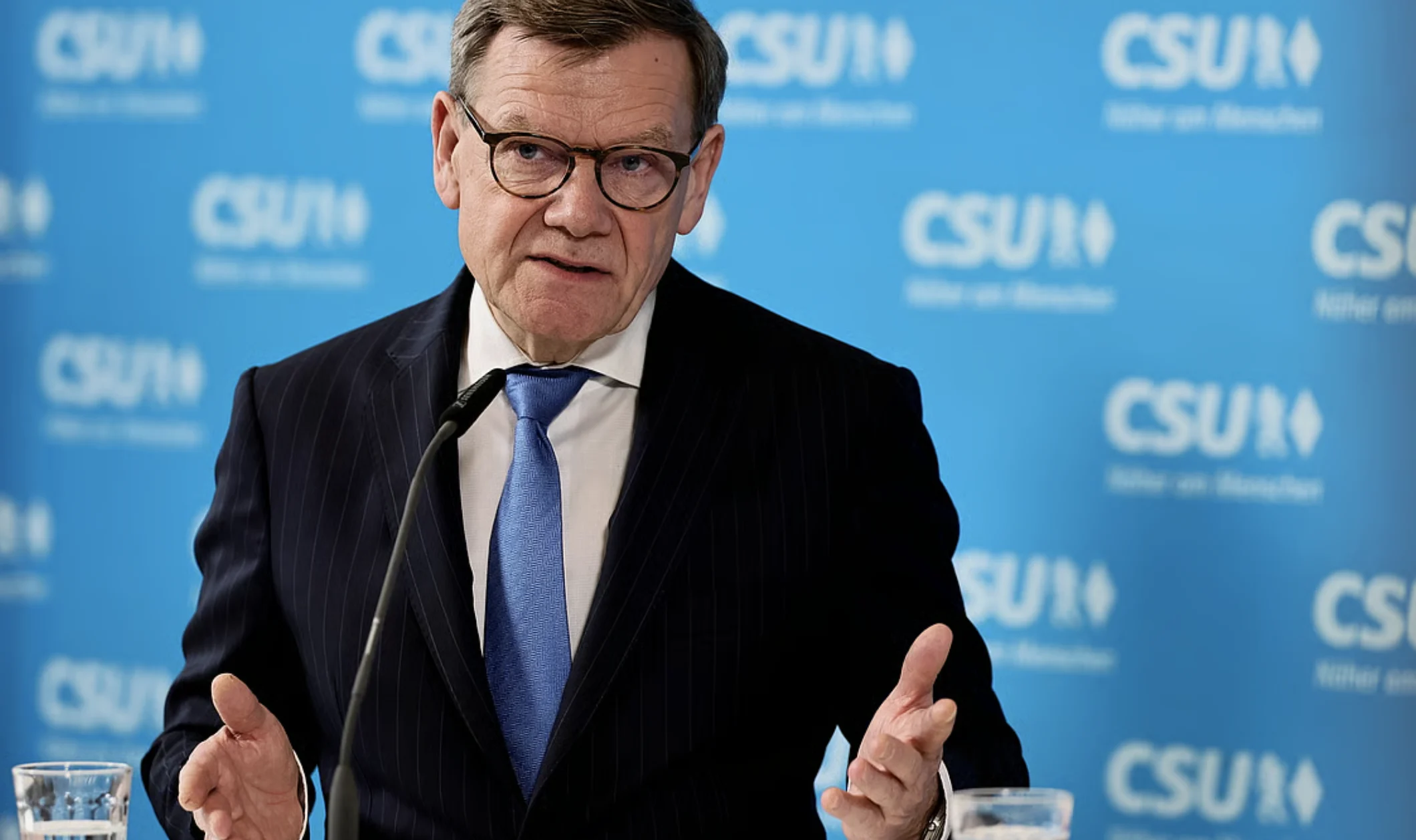
In an interview with Deutschlandfunk, German Foreign Minister Johann Wadephul described strengthening military capabilities as existential and issued a direct warning to European Union partners.
“This appeal is addressed to all European countries. Open and honest discussions will be necessary. Those who speak today of independence from the United States must first do their homework,” Wadephul said, as reported by the Spanish news agency EFE.
The German diplomat rejected the issuance of joint debt to finance higher military spending, noting that the 5% target agreed at the NATO summit in The Hague refers to “national contributions.”
Wadephul specifically addressed French President Emmanuel Macron, who is expected to speak later in February on strategic issues.
“Those who talk about European sovereignty must act in their own country. Unfortunately, in the French Republic, efforts have been insufficient,” he criticized, suggesting that Paris follow Berlin’s example.
The minister argued that it is necessary to confront “difficult debates” and cut social spending and other sectors to ensure Europe’s defense capabilities.
Regarding transatlantic relations, Wadephul praised the intervention of U.S. Secretary of State Marco Rubio at the Munich Security Conference over the weekend.
“Without the U.S. nuclear umbrella, we are unable to defend ourselves. That is the simple reality,” he acknowledged.
A minister in Chancellor Friedrich Merz’s conservative government, Wadephul said there are no viable alternatives to repairing the alliance with Washington, despite differences with the administration of Donald Trump.
At the NATO summit in The Hague in June 2025, the alliance’s 32 members committed to raising defense spending to 5% of GDP by 2035. The meeting was the first NATO leaders’ summit following Trump’s return to the U.S. presidency.
In the Hague declaration, allies justified the decision citing “serious security threats, including the long-term threat posed by Russia and the persistent risk of terrorism.”
The commitment aims to ensure NATO’s capabilities for core tasks, including deterrence and defense, crisis prevention and management, and cooperative security.
The plan calls for at least 3.5% of GDP to be allocated to core defense resources and NATO capability targets, while up to 1.5% of each country’s GDP will cover critical infrastructure protection, cyber defense, civil preparedness, innovation, and strengthening the defense industrial base.
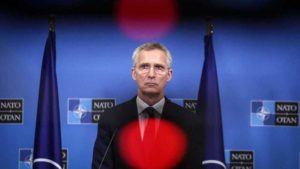
NATO Secretary General Jens Stoltenberg attends a press conference at the NATO headquarters in Brussels, on February 21, 2023. (Photo by Valeria Mongelli / AFP)
“The trajectory and balance of these expenditures will be reviewed in 2029, taking into account the strategic environment at that time,” the statement noted.
Reaffirming support for Ukraine, the declaration stated that “direct contributions to Ukrainian defense and military industry will be counted towards each NATO member’s overall defense spending.”
The North Atlantic Treaty Organization (NATO) was established in 1949 after World War II as a countermeasure to Soviet expansionism.
Portugal is one of the 12 founding members of NATO, which currently has 32 members following several enlargements, including countries from the former Soviet Union. Following Russia’s invasion of Ukraine in 2022, Finland and Sweden joined NATO in 2023 and 2024, respectively.


