

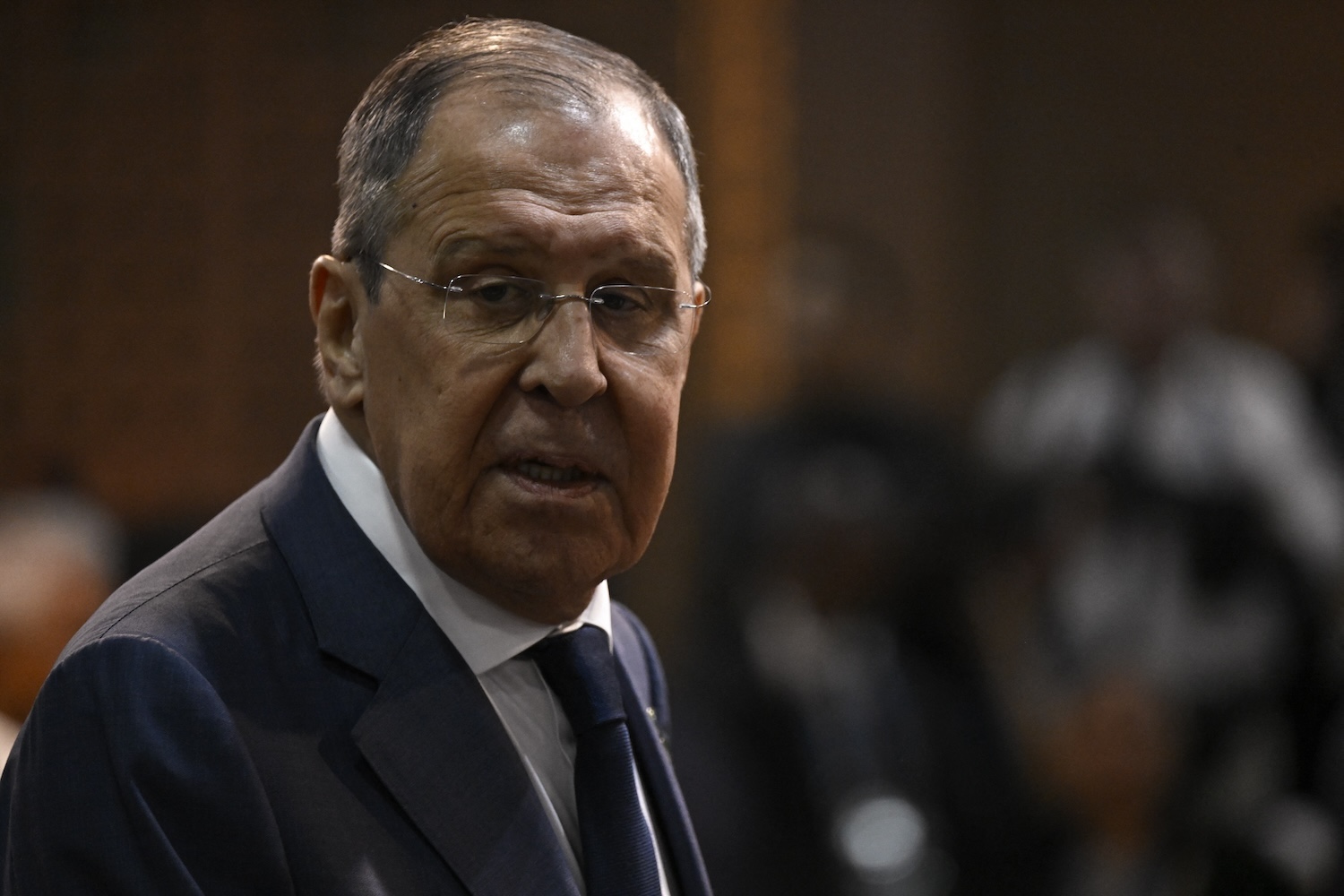
“We have nothing to do with plans to take Greenland,” Lavrov said in Moscow during a press conference to take stock of Russia’s diplomacy in 2025.
“I have no doubt that Washington is well aware that Russia and China have no such plans. This is not our concern,” he added, as cited by the Spanish news agency EFE.
Trump said he wanted to acquire Greenland, by hook or by crook, for US security reasons related to alleged plans by Russia and China to control the Arctic island.
In addition to being strategic, Greenland, currently an autonomous region of Denmark, has large reserves of hydrocarbons and minerals.
Read also: Macron sends message to Trump: “I do not understand what you are doing on Greenland”
Lavrov also denied that Greenland is an “original part” of Denmark and described the Arctic island’s current status as a vestige of the colonial era.
“Greenland was not originally part of Denmark, right? It was not originally part of Norway or Denmark. It is a colonial conquest,” he asserted.
Lavrov said the island was a Norwegian colony from the 13th century and Danish from the 19th century, noting that it was only in the mid-20th century that an agreement was signed for integration into the Danish state.
“Another thing is that the inhabitants have become accustomed to it or now feel comfortable,” said the Russian foreign minister.

Panorama of Nuuk, the capital of Greenland. (AFP-Yonhap)
In a controversial comparison, Lavrov equated the strategic importance of the island to the United States with that of Crimea to Russia.
“Crimea is no less important to Russia’s security than Greenland is to the United States,” he stated, referring to the 2014 referendum in the Ukrainian peninsula annexed by Moscow, which was considered illegal by the international community.
Lavrov’s statements come at a time when Trump is intensifying pressure on the European Union (EU).
Faced with Europe’s refusal to relinquish control of the island, Trump reiterated his threat to impose, as early as February 1, 10% customs duties on products from eight NATO countries, including Germany, France, and the United Kingdom.
The rates could rise to 25% from June if European nations maintain military support for Danish autonomy in the Arctic region.
Lavrov commented that NATO and the EU are going through a “very deep crisis,” fueled, among other factors, by the conflict with the United States over control of Greenland.
“NATO is experiencing a very deep crisis. So is the European Union. And the OSCE [Organization for Security and Cooperation in Europe] is on its last legs,” he said.
“I believe that all these schemes are doomed to failure,” said the Russian minister.
Lavrov even mentioned that the dissolution of the Atlantic Alliance is already being discussed in Europe, given that “one of the NATO countries is preparing to attack another NATO country,” in an allusion to the conflict over Greenland.
For Lavrov, the situation on the Arctic island is the most visible symptom of the rift.
“There are signs of crisis within the Western community. Greenland is the most obvious example that is visible to everyone (…). It was difficult to imagine that this could happen,” he stressed.
Lavrov argued that the “Euro-Atlantic concept of security and cooperation has been discredited,” proposing a Eurasian security model as an alternative.
He also called on Western leaders “with broad vision” to resume dialogue with Moscow to build a new world order.
