

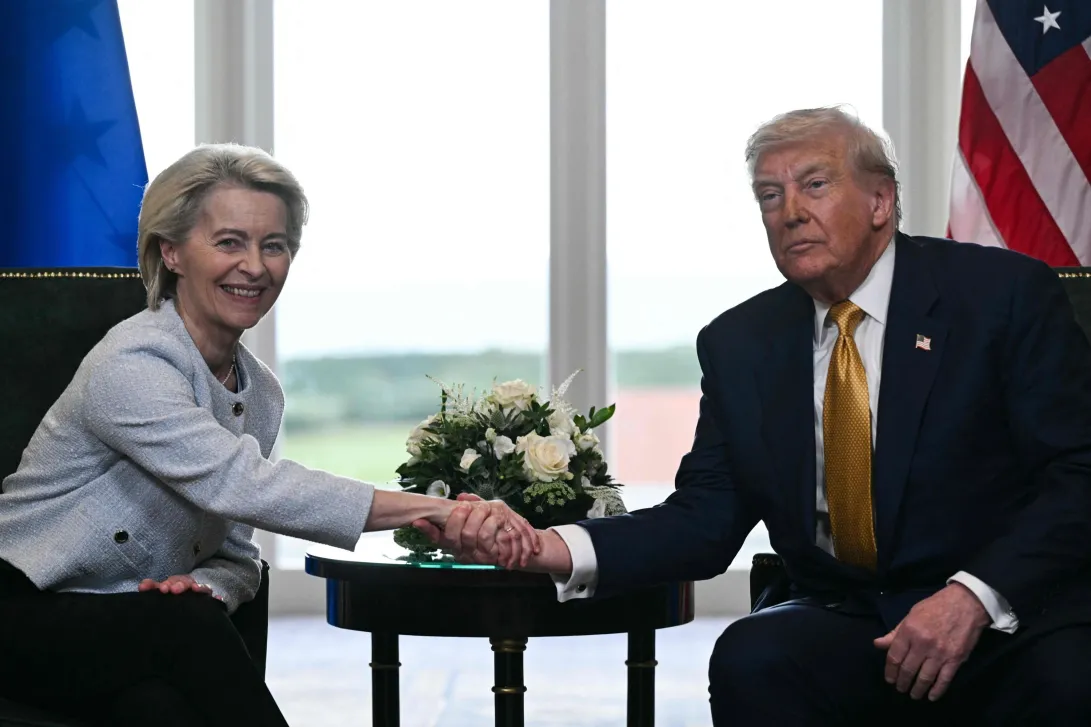
The agreement was struck after European Commission President Ursula von der Leyen met Trump in Scotland, leaving the talks with a compromise that set tariffs at 15% on all EU goods sold to the US, significantly lower than the 30% duties Washington had initially threatened.
At the same time, Brussels prepared a package of retaliatory tariffs that would be triggered if no deal were reached. The measures cover a wide range of US exports, from livestock and aircraft parts to whiskey, amounting to around €93bn (£80bn) worth of goods.
The high-level political agreement led to a temporary suspension of those tariffs while technical details were negotiated, and the European Parliament was due to ratify the EU–US trade deal next week.
However, within hours of Trump’s latest threat, influential German MEP Manfred Weber said approval was “not possible at this stage”, casting doubt on the timetable.
Without the European Union formally signing off on last year’s agreement or extending the suspension, tariffs on billions of euros’ worth of American goods are set to come into force on 7 February. The move risks triggering a political backlash in the United States, as companies that export to Europe could put pressure on the Trump administration.
