

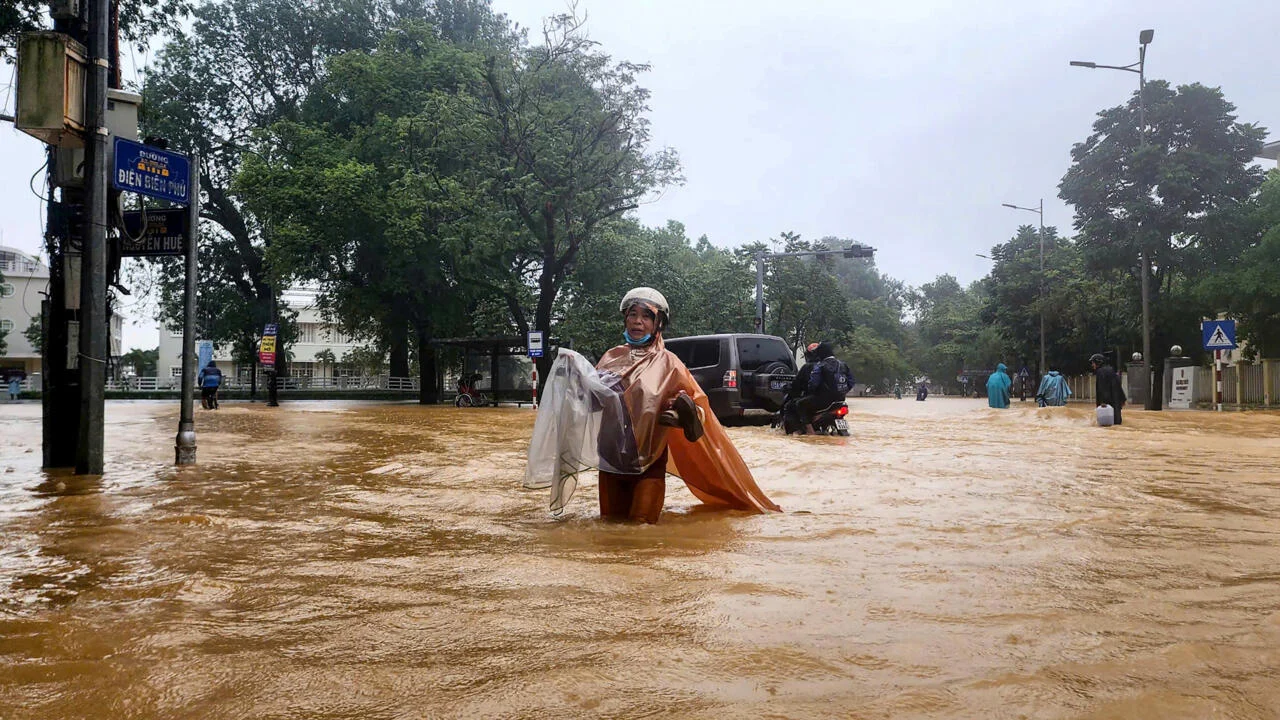
In Indonesia the meteorological agency has warned that the three hardest-hit provinces on Sumatra will experience “moderate to heavy” rain between Thursday and Friday. The downpour began overnight but has not yet reached the intensity that caused destructive flash-flooding and landslides last week.
As of Thursday, the death toll stood at 776, slightly revised down from the previous day as information trickles in from remote areas. Over 560 individuals remain missing, with patchy communications and electricity hindering efforts to confirm their whereabouts.
At a shelter in Pandan, North Sumatra, 54-year-old Sabandi shared her trauma from the floods that inundated her home. “We feel scared,” she said regarding the forecast. After waiting on her roof for two days without food or water, she was finally able to evacuate.
“My house was filled with mud, so high that we couldn’t enter,” she added. Across Asia, while seasonal monsoons provide essential rainfall for farmers, climate change is making these weather patterns increasingly erratic and deadly.
Last week, two separate weather systems dumped massive rain on Sri Lanka, Sumatra, southern Thailand, and northern Malaysia, complicating relief efforts. In Indonesia’s Banda Aceh, an AFP reporter noted a gas station queue stretching four kilometers. Survivors reported food shortages, price gouging, and looting in many areas.
In Sri Lanka forecasters indicated that the northeast monsoon would arrive from Thursday afternoon. Landslide alerts were renewed for severely affected areas, with residents advised against returning home as saturated slopes risk collapse with further rain.
The main highway from Colombo to Kandy was reopened for 15 hours daily as workers cleared debris. On alternative routes, traffic moved slowly as vehicles navigated damaged roads.
At least 479 people have died in Sri Lanka, with many still missing, prompting the president to appeal for international support. Authorities estimate they will need up to $7 billion for reconstruction, which poses a significant challenge for a nation recovering from its worst economic crisis.
Outside Colombo, residents are returning to homes filled with floodwaters. Soma Wanniarachchi, 69, explained her decision to leave when waters reached eight feet. Back in her village of Kotuwila, she was dismayed by the destruction of her catering business, believing her equipment might now be lost at sea.
