

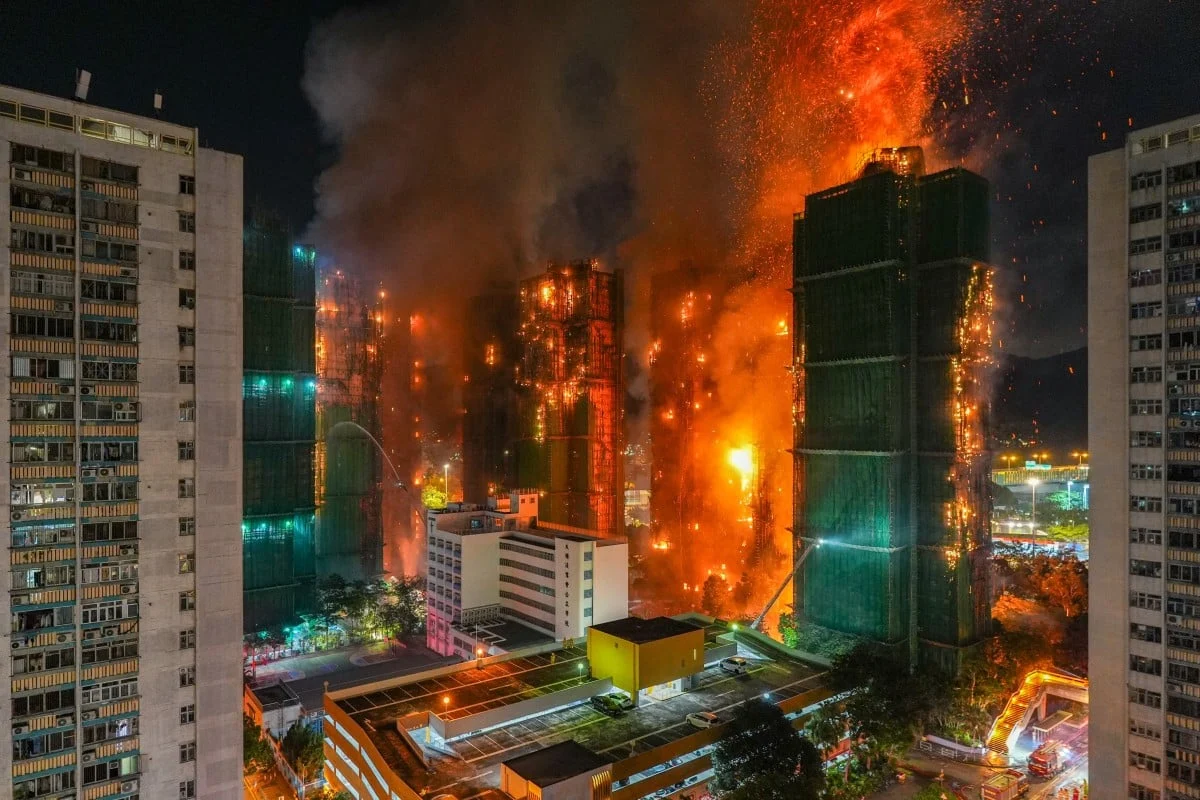
The blaze began on the afternoon of 26 November 2025, spreading rapidly through seven of the estate’s eight towers, which were undergoing renovation and covered in scaffolding and protective sheeting — conditions that experts say contributed significantly to the speed and intensity of the fire. Rescue and firefighting operations, involving thousands of personnel, were officially declared over on 28 November after more than 40 hours of continuous work.
Authorities warn that the number of victims may still rise. A substantial group of residents remains unaccounted for, with officials estimating that between 100 and 150 people are still awaiting confirmation of their whereabouts as searches and identification efforts proceed.
The investigation has already resulted in several arrests of individuals linked to the renovation works, including company directors and subcontractors, on suspicions of gross negligence, the use of non-compliant materials and possible irregularities in contracting and supervision. The government has suspended projects involving the implicated firm pending the outcome of the inquiry.
The social impact is profound: thousands of residents have been displaced, and hundreds are currently staying in temporary shelters where they receive support from NGOs and public services. Emergency assistance measures have been approved, and authorities have pledged a comprehensive review of safety standards for building-renovation projects, with particular scrutiny of scaffolding practices, material certification and regulatory enforcement.
The scale of the disaster has triggered widespread public anger and renewed demands for accountability. Community leaders and relatives of the victims are calling for an independent inquiry and reforms to prevent similar tragedies. Forensic teams and social services continue the lengthy process of identifying victims, determining causes of death and establishing legal responsibility.
