

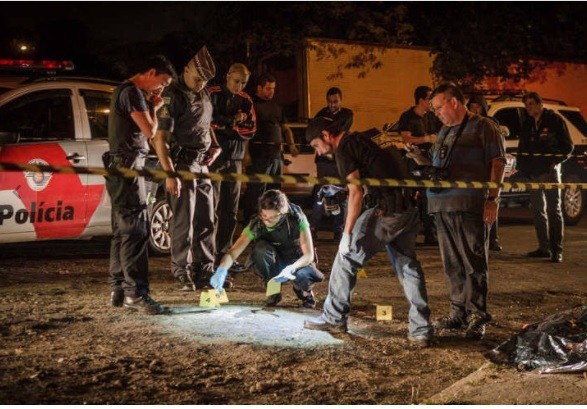
The inquiry, commissioned by the Brazilian Public Security Forum, shows a five-percentage-point increase from 2024, when 14% of those interviewed said they lived in areas controlled by criminal factions.
‘The data seems to reveal a phenomenon of growth and expansion of the factions’ power of control over territories and markets,’ the director of the Brazilian Forum for Public Security, Renato Sérgio de Lima, told the newspaper Folha de S. Paulo.
Among those who live in crime-ridden areas, 27% say they know of the existence of “clandestine cemeteries”. The survey, with a margin of error of 2 percentage points, is based on interviews conducted between 2 and 6 June with 2,007 people aged 16 or older in 130 Brazilian cities.
According to the authorities, two criminal organisations dominate the country: the First Capital Command (PCC) and the Red Command (CV). At a local level, there are other smaller groups, many of which are allied or subordinate to the PCC and CV, which are mainly involved in drug and arms trafficking.
Formed in São Paulo’s prisons in the 1990s, the PCC has expanded its activities and today controls motels, petrol stations and even financial technology companies used to launder drug money. The Comando Vermelho, meanwhile, was created in 1979 in the prisons of Rio de Janeiro and is today one of the most dangerous criminal organisations in the world.
Platform with Lusa
