

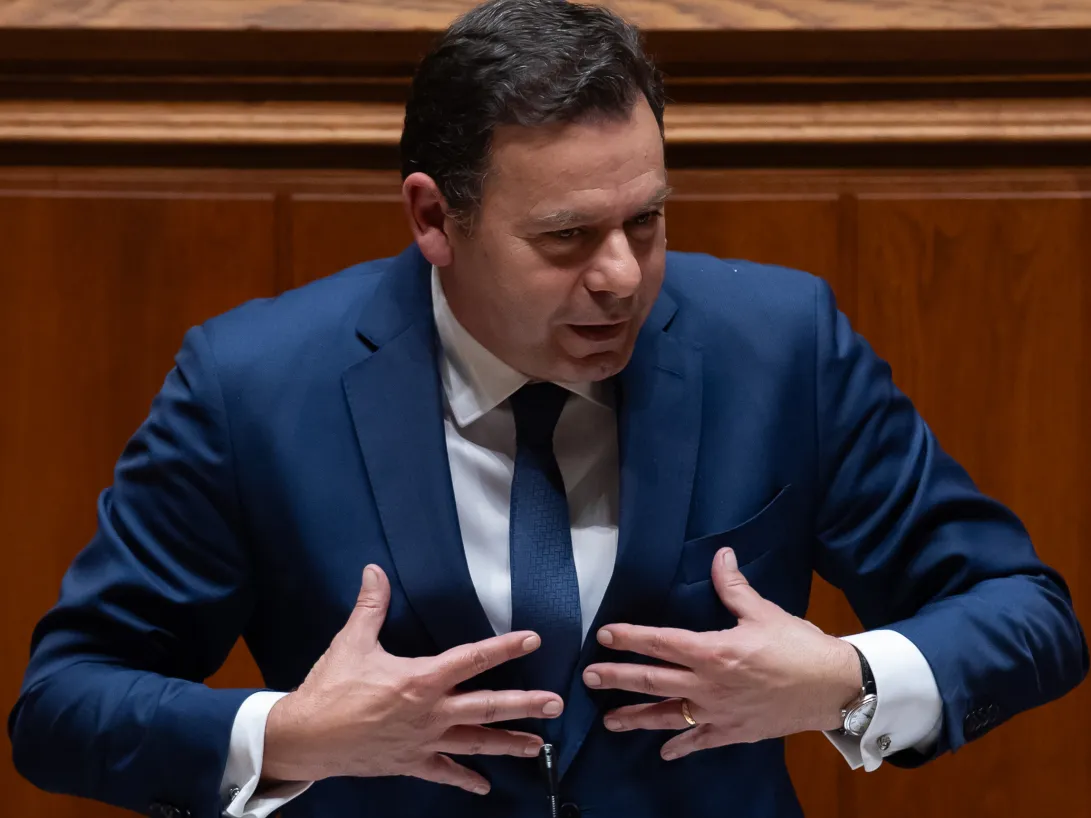
The trip to the two countries, with a total of four days of official program, comes nine years after the former Prime Minister, António Costa, visited China in 2016, and after the President of the Republic, Marcelo Rebelo de Sousa, visited Macau in 2019.
Joining the delegation are the Minister of State and Foreign Affairs, Paulo Rangel – who already today will have an official meeting with his Chinese counterpart – and the Minister of Economy and Territorial Cohesion, Manuel Castro Almeida, as well as the president of AICEP, Madalena Oliveira e Silva.
The Prime Minister’s official agenda begins on Tuesday with a wreath-laying ceremony at the Monument to the People’s Heroes in Tiananmen Square, followed by a visit to the Great Hall of the People.
In addition to his meeting with the President of the People’s Republic of China, Xi Jinping – the most politically significant moment, as the Chinese head of state grants audiences to very few foreign prime ministers – Luís Montenegro will first meet with the chairman of China’s National People’s Congress, Zhao Leji.
Later in the afternoon, he will hold a working meeting with Chinese Premier Li Qiang, with a ceremony for the signing of legal instruments scheduled to take place.
The Portuguese Prime Minister’s visit to China comes in the week following the meeting in Beijing between Chinese leader Xi Jinping, Russian President Vladimir Putin, and North Korean leader Kim Jong-un, during a military parade marking the 80th anniversary of the end of World War II in the Pacific.
That meeting was described last Wednesday by the European Union’s foreign policy chief, Kaja Kallas, as a “direct challenge” to the rules-based international order, sending “anti-Western signals.”
A source from the Prime Minister’s office framed Luís Montenegro’s visit to China within Portugal’s “diplomatic tradition,” noting that all Portuguese presidents and several prime ministers have visited the country, the “world’s second-largest economy” and a permanent member of the United Nations Security Council.
In addition to the “highest-level” political meetings, the economic goal is to improve the trade balance between the two countries, which is “heavily skewed” in Beijing’s favor. Some memorandums of understanding in the agri-food sector are expected to be signed.
The Prime Minister will also depart on Tuesday night for Macau, where he has engagements scheduled for Wednesday morning, before continuing that day to Japan, with a program in Tokyo and Osaka until Friday, returning to Lisbon that night.
