

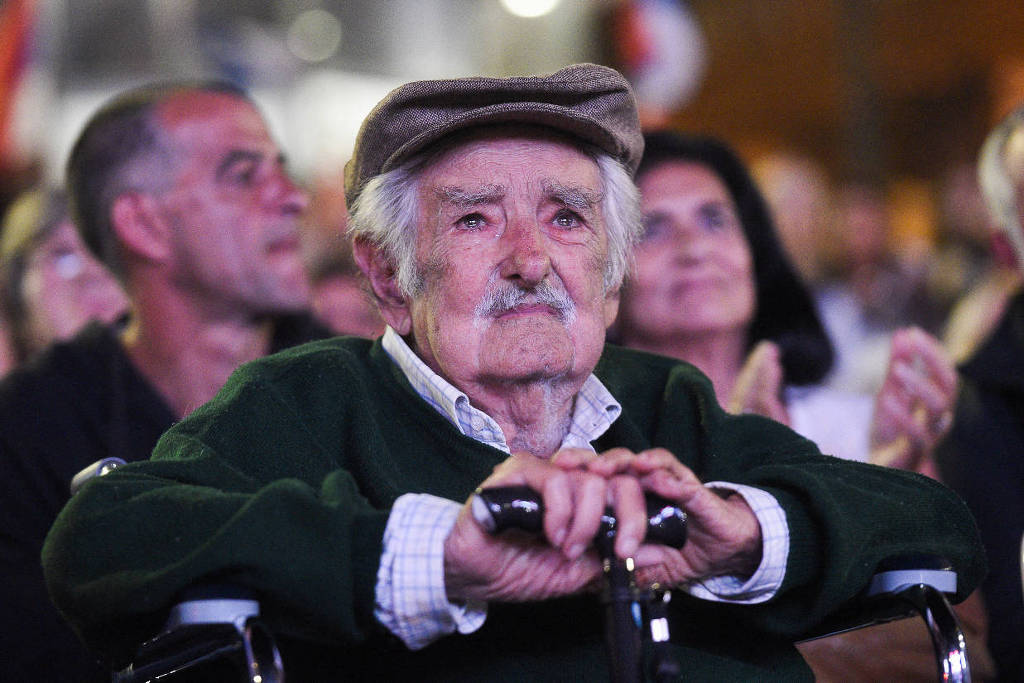
The history of Latin America’s left is filled with champions of the poor, ex-guerrillas, democrats, and dictators — but “Pepe” Mujica stood above them all with a rare trait in politics. A kind of South American version of Nelson Mandela, he was practically canonized while still alive.
His simple demeanor, life of resilience, and poetic idealism turned the Uruguayan into the moral conscience of the continent — even for many who don’t identify as left-wing.
Nothing symbolized that role better than his stance against Venezuelan authoritarianism at a time when younger leaders like Lula and Argentina’s Cristina Kirchner were hesitant to criticize chavismo. “Call it a dictatorship,” he said — one of the few with the authority to state the obvious.
For a younger generation, such as Chile’s Gabriel Boric, Mujica was a source of inspiration. He embodied the romantic left, a contrast to the hard-nosed pragmatism of other progressive governments.
He was not without contradictions, as seen in his reluctance to criticize the Cuban regime. His relationship with Fidel Castro was marked by respect and admiration.
An analog influencer, Mujica understood the power of symbolism in shaping a public image. His old blue VW Beetle, life on a modest farm, and worn-out clothes helped establish his reputation as the kind and humble grandfather.
And in his case, it didn’t seem like PR spin. His authenticity gave him stature.
His presidency (2010–2015) coincided with Lula’s departure from power and the crisis that would later topple Dilma Rousseff. Despite leading a small and peripheral country, he became a continental statesman.
Largely thanks to him, Uruguay came to be seen as a model of civility in political debate — a merit he shared with center-right opponents.
While politics turned into a battleground in Brazil and Argentina, Uruguay became an experiment in treating political opponents with respect.
Mujica, in a way, embodied the phases Latin America’s left has gone through over the past century — from persecution to democratic alternative. After the failure of armed struggle, it learned that the path to power was through the ballot box.
Once in office, Mujica governed without vengeance or abrupt shifts, maintaining a moderate economic policy.
His death comes at a time of turbulence for the left.
In Brazil, Lula’s approval is stagnating. In Argentina, Milei has taken full control of the political stage. In Chile and Colombia, the left appears to be nearing the end of a cycle, and in Bolivia, it faces internal strife.
Even after stepping away from formal politics, Mujica remained a key reference, a symbol of a more hopeful time for South American progressivism. His passing marks a moment of uncertainty for the region’s left.
